Re-reading the Memory of the Past
Telipinu is an independent publication dedicated to exploring the ancient worlds of Anatolia and the Near East through mythology, history, archaeology, art, and cultural history.
We take our name from the god at the heart of one of the most remarkable myths preserved on the clay tablets of ancient Anatolia. The Myth of Telipinu’s Disappearance tells of a world thrown into disorder by the absence of a god—and of life restored when he finally returns.
In the story, Telipinu becomes angry and disappears. His absence affects not only the realm of the gods, but the entire living world:
“Telipinu too went away and removed grain, animal fecundity, luxuriance, growth and abundance to the steppe, to the meadow.”
With Telipinu gone, wheat and barley fail to ripen; animals and human beings can no longer reproduce; mountains and trees wither; pastures and springs run dry. Gods and mortals alike are threatened by hunger. [1]
The myth offers a remarkable window into the ancient Anatolian understanding of the world. Nature, humanity, and the divine are not separate realms. The anger of a god can disturb the order of the natural world, while his return can set life in motion once again.
The tablets record Telipinu’s return in a deceptively simple sentence:
“Telipinu came back to his house and cared for his land.”
Within these few words lies an entire conception of the relationship between nature, fertility, and cosmic order. [2]
The journey of Telipinu also takes us into a darker realm. The myth describes the underworld as the “Dark Earth,” a place guarded by seven gates and seven bolts. The tablet tells us:
“The gatekeeper opened the seven doors. He drew back the seven bars.”
Such details reveal that Hittite mythology was not simply a collection of stories about gods and heroes. It was part of a sophisticated intellectual and ritual world in which the underworld, cosmic order, fertility, ritual practice, and the cycles of nature were deeply interconnected. [3]
Why Telipinu?
Because the myth of Telipinu is more than an ancient story.
It speaks of absence and return, barrenness and abundance, disorder and renewal, death and life—questions that have occupied human imagination from antiquity to the present.
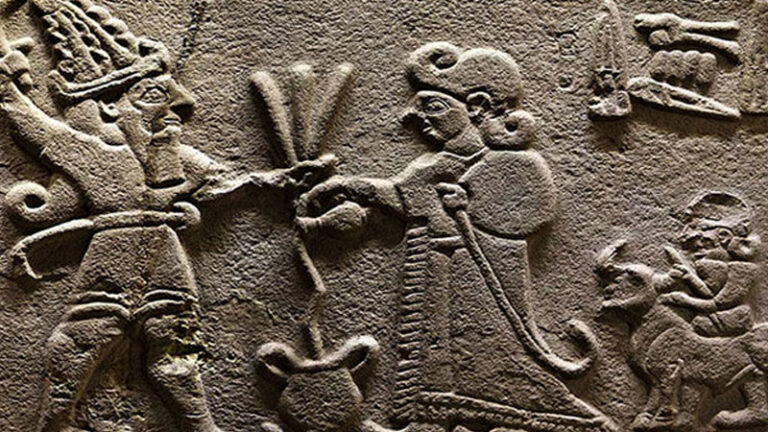
Following Telipinu’s trail, we believe that the past is more than a collection of objects preserved in museums or inscriptions carved into tablets that can be difficult to read. A cuneiform sign, a divine figure, a temple relief, a mythological narrative, or a work of art created centuries ago is also a trace left by humanity in its attempt to understand itself.
Telipinu follows those traces.
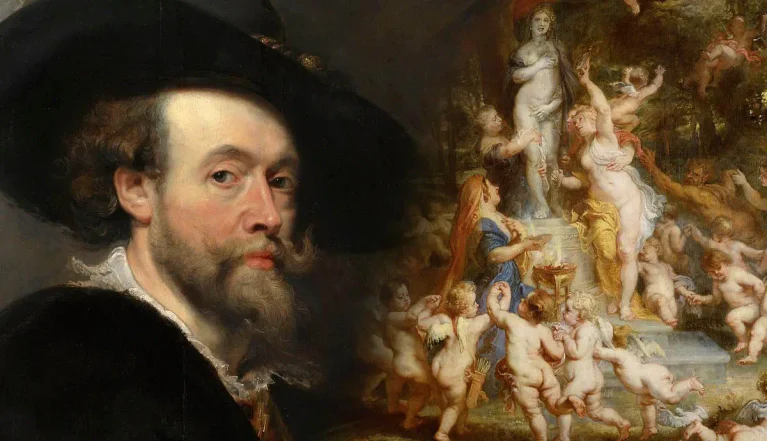
From the Hittites and the civilizations of Mesopotamia to the worlds of ancient Greece and Rome, and from the Renaissance to modern art, we explore a broad cultural landscape encompassing mythology, iconography, archaeology, art history, and cultural memory.
We do more than simply recount ancient stories. We examine them within their historical contexts and explore the symbols, artworks, texts, and cultural traditions through which they have survived.
Sometimes our starting point is a handful of lines inscribed on a Hittite tablet. Sometimes it is the iconography of a sculpture preserved in a museum collection. At other times, it is a myth that artists have reimagined across centuries.
What connects these subjects is a single conviction:
the past is not a silent place left behind.
The past continues to speak.
A few marks impressed into a clay tablet thousands of years ago can still provoke questions about nature, humanity, the gods, power, death, and life.
As in the story of Telipinu, sometimes the search for what has been lost begins by following the traces it left behind.
Telipinu exists to follow those traces across the ancient world—and to bring their stories into conversation with the present.
Sources
- Chicago Hittite Dictionary — passages relating to šara and the Myth of Telipinu
- University of Chicago — Chicago Hittite Dictionary, texts relating to Telipinu
- Gods and Languages in Ancient Anatolia — the Myth of Telipinu and KUB 17.10+
- Cambridge University Press — Hattian Mythology and Hittite Monarchy