History does not follow a simple, predetermined path. Cultural change arises from internal contradictions, external influences and interactions with other societies. Although large civilizations often move toward greater integration, smaller cultural identities can resist, fragment or disappear. Therefore, historical unity and cultural diversity remain competing forces.
People often imagine cultures as stable systems with clear identities. We speak about ancient Greek culture, medieval European culture or traditional Asian societies as if each possessed an unchanging character.
However, cultures never remain completely still. Their values, institutions and traditions change through conflict, adaptation and contact with other communities.
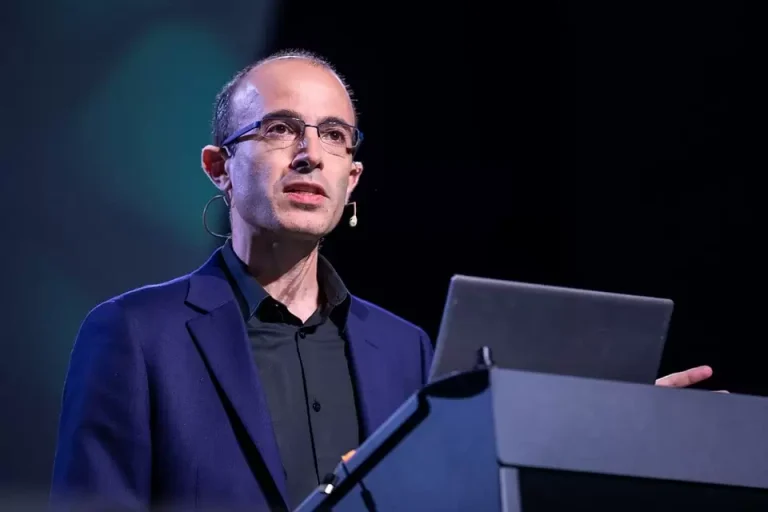
In Chapter 9 of Sapiens: A Brief History of Humankind, Yuval Noah Harari examines the direction of historical change. He challenges the idea that cultures possess permanent identities and explores how contradictions within societies generate transformation.
His discussion raises a fundamental question: if cultures constantly change, what exactly do we mean when we claim to preserve a cultural identity?
Is Cultural Change Constant, or Are Cultures Stable?
Earlier approaches to cultural history often described societies as coherent systems with relatively fixed characteristics.
Harari challenges this interpretation. He argues that cultures constantly transform themselves, even when they remain geographically isolated.
Environmental changes, contact with neighboring societies and internal conflicts all contribute to cultural change.
More importantly, cultures contain contradictions that they cannot always resolve.
A society may defend religious humility while celebrating military glory. It may praise equality while maintaining inherited privileges. It may value individual freedom while demanding obedience to collective authority.
These contradictions create tensions. Over time, people respond to them through new ideas, institutions and social practices.
Therefore, cultural change does not always require an external force. Sometimes a society transforms itself through conflicts within its own value system.
Can Contradictions Drive Cultural Change?
Harari illustrates this argument through medieval European society.
European nobles often embraced Christian teachings that praised humility, restraint and nonviolence. At the same time, aristocratic culture celebrated military courage, honor and revenge.
These values did not fit together easily.
A nobleman could listen to a sermon about humility in the morning and attend a banquet celebrating military glory in the evening.
The contradiction did not disappear. Instead, it influenced the development of medieval institutions and cultural practices.
Harari connects this tension to the Crusades and military orders such as the Templars and Hospitallers.
The example reveals something important about cultural change: societies do not always change because they discover a completely new set of values. Sometimes they change because existing values conflict with one another.
Does History Move Toward Unity?
Harari also examines a broader historical pattern: the gradual integration of separate human societies.
For much of human history, communities lived in relatively isolated worlds. Geography, limited transportation and weak communication networks restricted contact.
Over time, however, trade, migration, conquest and cultural exchange connected distant populations.
Foods, technologies, languages and ideas crossed geographical boundaries. Mexican chili peppers entered Indian cuisine, while Spanish cattle became part of agricultural life in Argentina.
These exchanges illustrate how societies increasingly influence one another.
Nevertheless, integration does not eliminate fragmentation. The Mongol Empire expanded across large territories before breaking apart. Christianity spread across continents while also dividing into numerous religious traditions.
Thus, historical unity and cultural fragmentation can occur simultaneously.
Does Globalization Destroy Cultural Diversity?
Global connections can create shared institutions, technologies and cultural practices. Yet they can also weaken local traditions.
A global language may improve communication while reducing the everyday use of smaller languages. International markets may create economic opportunities while undermining local production. Popular culture may connect distant communities while encouraging similar patterns of consumption.
However, cultural exchange does not always produce uniformity.
Communities reinterpret external influences through their own histories and social conditions. They may adopt foreign technologies while preserving local artistic traditions. They may participate in international networks while maintaining distinct languages and identities.
For this reason, globalization should not be understood as a simple process in which one culture replaces all others.
The more useful question concerns the conditions under which cultural exchange preserves diversity or accelerates its disappearance.
Can We Preserve a Culture Without Cultural Change?
The idea of preserving a culture often suggests that traditions should remain exactly as they were in the past.
Yet this expectation creates a paradox. If cultures constantly change, then demanding complete cultural stability may actually prevent them from developing naturally.
A living culture depends on interpretation, debate and adaptation. Literature, music, language and social customs gain new meanings as different generations engage with them.
Therefore, cultural preservation does not necessarily require freezing traditions in their historical form.
Instead, it may require protecting the conditions that allow communities to maintain, reinterpret and transmit their cultural heritage.
Key Takeaways
- Cultures constantly change through internal and external influences.
- Contradictions within societies can generate historical transformation.
- Global integration and cultural fragmentation can happen simultaneously.
- Cultural exchange does not always eliminate local identities.
- Preserving culture requires more than reproducing the past.
Conclusion: Is Cultural Identity a Fixed Inheritance or an Ongoing Process?
Harari’s discussion of cultural change challenges the idea that cultures possess permanent identities.
A culture does not remain alive simply because people repeat inherited customs. It survives through continuous interpretation and adaptation.
Nevertheless, not every transformation represents progress. Some changes expand cultural possibilities, while others weaken linguistic, artistic and historical diversity.
For this reason, we should approach cultural identity as an ongoing process rather than a fixed inheritance.
The most important question may not be how to prevent cultures from changing, but how to ensure that communities retain the freedom to shape their own transformations.
References
Harari, Yuval Noah. Sapiens: A Brief History of Humankind. Signal, 2014. Chapter 9, “The Arrow of History”; sections “The Spy Satellite” and “The Global Vision.”
About the Author