Utopian Socialism and Underground Organization
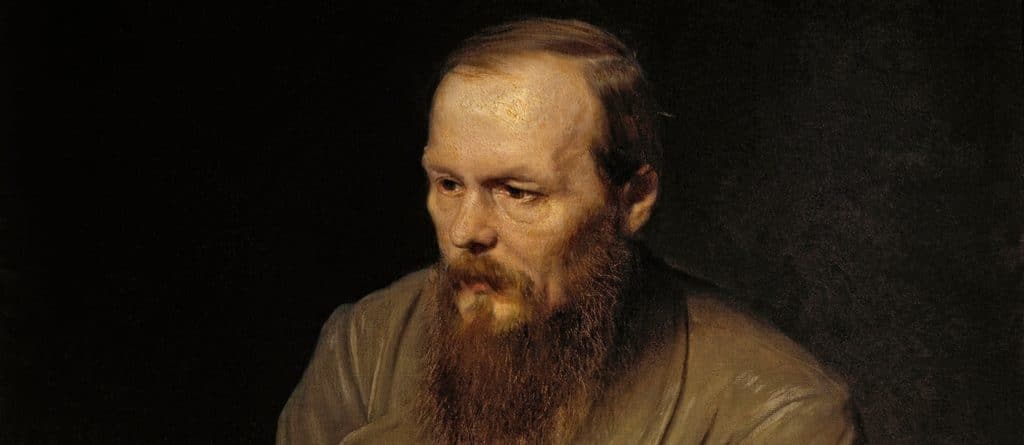
Dostoevsky’s mock execution in December 1849 became the turning point of his life. Its roots, however, lie in his political activism. During the 1840s, Utopian Socialism, particularly Fourierism and Saint-Simonism, spread rapidly among Russia’s intellectual circles. Dostoevsky did not understand these movements primarily as secular-materialist political doctrines. Instead, he interpreted them as attempts to apply Christianity’s universal principles of love and justice to social life (Frank, 2017, pp. 15, 157–160).
During this period, the young writer first joined the “progressive” circle of A. N. Beketov. Later, he became involved with the Petrashevsky Circle, which met at the home of M. V. Butashevich-Petrashevsky to discuss utopian socialist theories (Frank, 2017, pp. 157–166).
However, the Petrashevsky Circle’s predominantly theoretical discussions failed to satisfy Dostoevsky’s desire for more direct political action. As a result, he joined a secret and radical underground cell led by Nikolai Speshnev. The group aimed to abolish serfdom (krepostnoy), promote revolutionary activity, and incite the population through the establishment of an illegal printing press (Frank, 2017, pp. 15, 174). Notably, the existence of this clandestine revolutionary organization would not come to light until long after the writer’s death (Frank, 2017, p. 15).
The Incident Involving the Imperial Courier and Its Socio-Political Symbolism
Behind Dostoevsky’s political radicalization and his fierce hostility toward the Tsarist regime lay a single violent scene he witnessed during a journey to St. Petersburg in 1837 (Frank, 2017, pp. 37–38). At a postal station, an imperial courier (feldjäger), dressed in an imposing uniform, climbed into his troika and began punching the young peasant driver in front of him with relentless fury, seemingly without any provocation. In response to the blows, the driver angrily whipped the horses with equal brutality (Frank, 2017, pp. 37–38).
Consequently, this cycle of violence left an indelible mark on Dostoevsky’s mind. It became a concrete socio-political symbol of the system of serfdom in Tsarist Russia, the oppression exercised by state authorities, and the machinery of violence that extended into even the lowest levels of society (Frank, 2017, pp. 37–38).
In fact, the writer later stated that, during his radical period in the late 1840s, he had considered engraving the courier’s troika onto the seal of the secret revolutionary society he envisioned establishing (Frank, 2017, p. 38).
Peter and Paul Fortress and Dostoevsky’s Mock Execution
In April 1849, the authorities arrested Dostoevsky alongside members of the Petrashevsky Circle. They imprisoned him in the somber Peter and Paul Fortress, where the Tsarist regime detained political prisoners (Frank, 2017, pp. 15, 193–195). After months of grueling interrogation, he faced a death sentence and endured the staged execution at Semenovsky Square. The events unfolded in the following chronological sequence:
- Arrival at the Square and Announcement of the Sentence (December 22, 1849): The prisoners were brought to Semenovsky Square, where the official court sentence condemning them to death by firing squad was read aloud (Frank, 2017, pp. 15, 208).
- White Execution Garments and Restraint at the Posts: The first group of three prisoners, including Petrashevsky, were dressed in white execution shirts and tied to posts. Dostoevsky waited for his turn among the prisoners in the second group (Frank, 2017, pp. 15, 208).
- Aiming the Rifles and the Simulation of Imminent Death: Then the soldiers raised their rifles and took aim. As the prisoners awaited the order to fire, the soldiers lowered their weapons to the accompaniment of military music (Frank, 2017, p. 208).
- Announcement of the Pardon: An imperial decree was read out, announcing that Tsar Nicholas I had commuted the original death sentences to penal labor in Siberia and exile. Only then did the prisoners learn that they had endured the psychological torment of a merciless mock execution (Frank, 2017, pp. 15, 208).
This staged execution brought about an existential transformation in Dostoevsky’s consciousness. Above all, it fundamentally altered his perception of time and existence, compelling him to reconsider the boundaries and significance of faith (Frank, 2017, pp. 15–16).
How Dostoevsky’s Mock Execution Shaped His Work
The memory of those minutes on Semenovsky Square never left the writer. Years later, in The Idiot, Prince Myshkin describes the thoughts of a condemned man in his final moments before execution. Indeed, many readers see this passage as a reflection of Dostoevsky’s own experience. Moreover, the themes of guilt, suffering, and the sudden value of every living moment run through his later novels. In this sense, the mock execution did not end his life; instead, it gave his work its tragic intensity. For an overview of his life, see the Encyclopaedia Britannica biography of Dostoevsky. To explore the earlier roots of his inner world, read Dostoevsky’s Father: The Roots of Guilt.
Reference
Frank, J. (2017). Dostoyevski: Çağının bir yazarı [Dostoevsky: A Writer in His Time] (Ü. İnce, Trans.; C. Alpan, Ed.). Everest Yayınları.
About the Author