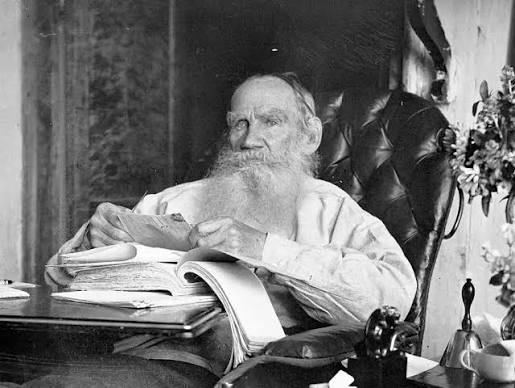
Written between 1895 and 1910, the late diaries of Leo Tolstoy offer a profound examination of death...
Leo Tolstoy
Leo Tolstoy (1828–1910) was the author of War and Peace and Anna Karenina and one of the greatest novelists in history. In later life he became a moral and religious thinker whose ideas on nonviolence influenced Gandhi. Our essays explore his fiction, his radical ethics and his legacy.
Featured Articles
Leo Tolstoy and Mahatma Gandhi: Nonviolence, Pacifism, and the Ethics of Resistance (1909–1910)
Between Conscience and Order: Radical Philosophy, Anti-Statism, and Family Tragedy in L. N. Tolstoy’s Late Diaries (1895–1910)
The Definition of Art in Lev N. Tolstoy’s Aesthetic Theory: From the Critique of Pleasure to Emotional Contagion and Religious Consciousness
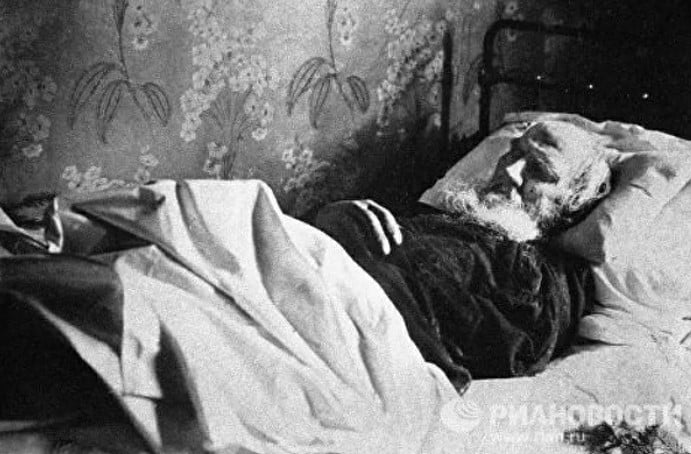
Tolstoy’s Final Journey and the Search for Spiritual Freedom Tolstoy’s final journey began on 28 October 1910,...
The Tolstoy excommunication of 1901 was the result of an irreconcilable conflict. On one side stood the...
Following his excommunication in February 1901 by the Holy Synod, the highest governing body of the Russian...
Introduction: Tolstoy on Chekhov and Gorky In his diaries from 1895 to 1910, Leo Tolstoy offers valuable...
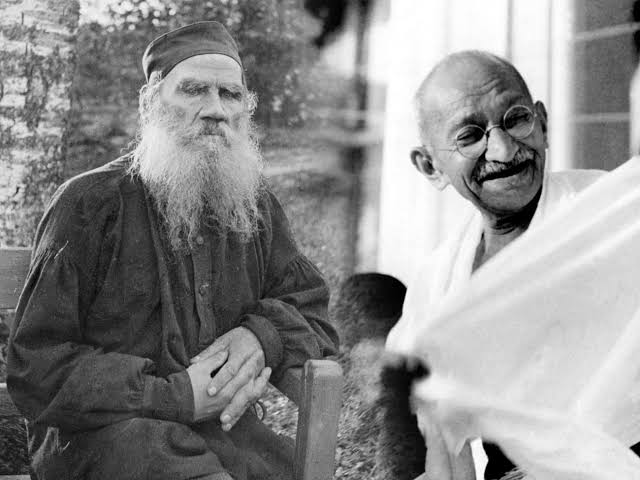
Introduction: Leo Tolstoy and Mahatma Gandhi’s Historic Intellectual Exchange The correspondence between Leo Tolstoy and Mahatma Gandhi...
Abstract Tolstoy’s diaries from his final years (1895–1910) offer a comprehensive account of his radical ideas on...
Leo Tolstoy published What Is Art? in 1897. In this book, Tolstoy challenges the leading aesthetic theories...
Introduction: Tolstoy’s Radical Philosophy and the Inner Turmoil of a Literary Giant Lev Nikolayevich Tolstoy, one of...
In What Is Art?, Lev N. Tolstoy harshly criticizes Ludwig van Beethoven and Richard Wagner. In his...