Empedocles and Anaxagoras developed theories of nature that addressed the philosophical challenge posed by Parmenides. Both thinkers attempted to explain the appearance of change without accepting creation from nothing. Robert Roecklein examines whether their theories genuinely preserve Parmenides’ central assumptions or offer a different understanding of natural processes.
How Did Parmenides Influence Empedocles and Anaxagoras?
Parmenides created a fundamental challenge for subsequent natural philosophers.
If Being cannot originate from non-Being, how can philosophers explain the formation, transformation, and disappearance of ordinary objects?
Empedocles and Anaxagoras approached this problem by developing theories that distinguish underlying material reality from the changing appearances of the natural world.
Roecklein examines their relationship with Eleatic philosophy in Chapter Three.
He questions the widespread interpretation that both philosophers simply accepted Parmenides’ rejection of genuine qualitative change.
Instead, he investigates how their theories explain the natural world while responding to the philosophical difficulties surrounding coming-into-being.
How Did Empedocles Explain Change in Nature?
Empedocles proposed a natural philosophy based on four fundamental elements:
- Earth
- Water
- Air
- Fire
These elements do not originate from nothing or disappear into nothing. Instead, natural objects emerge through their combination and separation.
Empedocles also introduces two important cosmic forces: Love and Strife.
Love brings elements together, while Strife separates them. Their interaction explains the processes through which different natural formations emerge.
This theory provides an alternative to the idea that objects simply appear or disappear.
However, an important philosophical question remains: does the combination of unchanging elements adequately explain genuine qualitative change?
Roecklein considers this issue within the broader debate about the influence of Parmenides.
What Was Anaxagoras’ Theory of Matter?
Anaxagoras offers another explanation of natural change.
His philosophy emphasizes the presence of numerous material constituents within the natural world. Rather than treating ordinary objects as simple substances, he argues that things contain portions of other things.
The theory challenges the idea that a substance can emerge from something entirely different.
Anaxagoras also gives Mind (Nous) a fundamental role in cosmic organization.
Mind initiates movement and helps establish order within the mixture of material constituents.
Consequently, his philosophy combines an account of matter with an explanation of the forces that organize the natural world.
Did Empedocles and Anaxagoras Agree with Parmenides?
This question forms the central problem of Roecklein’s third chapter.
A common scholarly interpretation holds that Empedocles and Anaxagoras accepted Parmenides’ fundamental rejection of genuine qualitative change.
According to this reading, they attempted to explain the observable world through the movement and combination of underlying material constituents.
Roecklein examines this interpretation critically.
He emphasizes that the relationship between Parmenidean Being and the theories of the pluralist philosophers requires careful analysis.
Their theories do not simply repeat Parmenides. They introduce explanations of natural appearances that his account of the Way of Truth does not provide.
The distinction between an underlying material reality and the appearance of changing objects therefore becomes essential.
Why Are Mixture and Motion Important?
Mixture and motion allow Empedocles and Anaxagoras to explain the diversity of the natural world.
For Empedocles, the combination and separation of four elements produce different natural formations.
For Anaxagoras, the presence of multiple constituents and the organizing activity of Mind explain the emergence of observable arrangements.
Both theories attempt to account for the relationship between permanence and change.
Nevertheless, the philosophical question remains whether these explanations describe genuine transformation or merely rearrangement.
This problem connects their natural philosophies directly to the debate initiated by Parmenides.
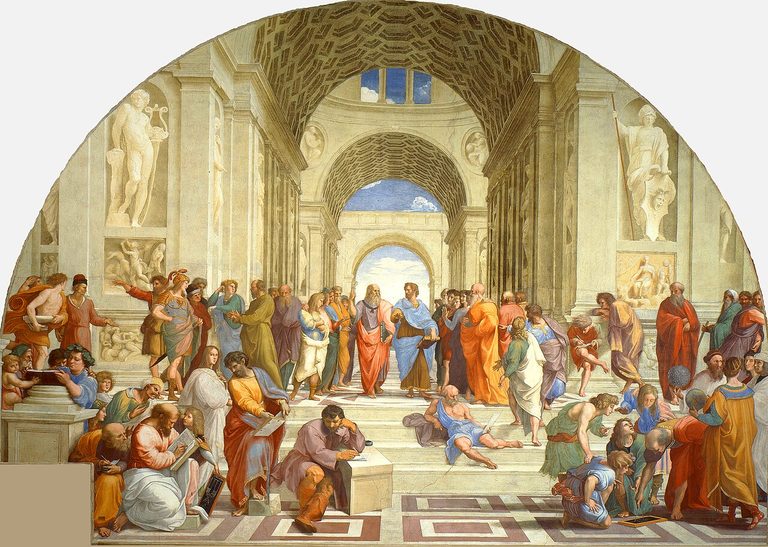
The legacy of Greek philosophers in Renaissance art is explored in Raphael’s School of Athens. For further reading on Empedocles and Anaxagoras, see the Stanford Encyclopedia of Philosophy entries on Empedocles and Anaxagoras.
Key Takeaways
- Empedocles and Anaxagoras developed theories in response to the Eleatic challenge.
- Empedocles explained natural formations through four elements, Love, and Strife.
- Anaxagoras emphasized material mixture and the organizing role of Mind.
- Both philosophers sought to explain observable change without creation from nothing.
- Their relationship with Parmenides remains an important interpretive question.
Source: Robert Roecklein, Plato versus Parmenides: The Debate over Coming-into-Being (2011), Chapter 3, “Parmenides’ Influence on Empedocles and Anaxagoras.”
Further reading: Parmenides and the Problem of Change in Ancient Greek Philosophy · The Milesian Philosophers and the Principle of Nothing from Nothing
About the Author