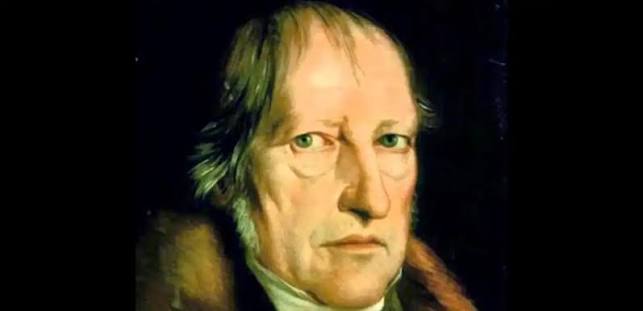
Georg Wilhelm Friedrich Hegel’s Owl of Minerva remains one of the most famous metaphors in modern philosophy. Hegel introduces the image near the end of the preface to Elements of the Philosophy of Right, first published in 1821. With this metaphor, he connects philosophy with historical development, maturity, and retrospective understanding. (OpenStax Marxists)
The image seems simple: Minerva’s owl begins its flight at dusk. However, Hegel uses this nocturnal image to express a complex claim about when philosophy can understand a historical form of life.
What Is the Owl of Minerva?
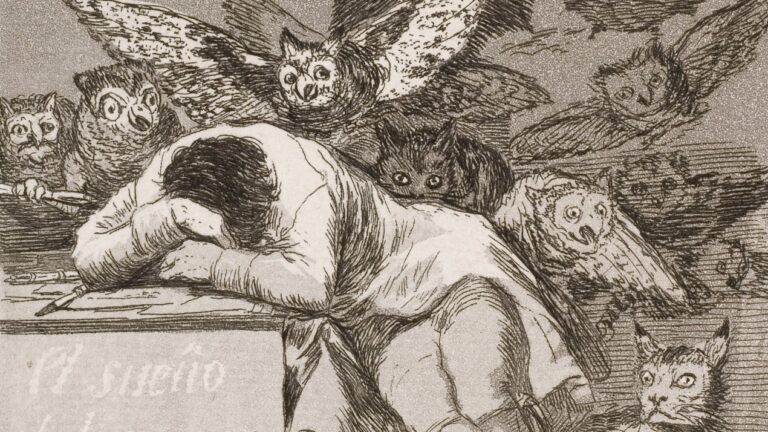
Minerva, the Roman goddess associated with wisdom, gives the metaphor its symbolic meaning. Her owl represents wisdom and philosophical reflection. Nevertheless, Hegel does not simply use the owl as a symbol of intelligence.
Instead, he emphasizes timing.
An owl becomes active as daylight fades. Similarly, philosophy reaches its fullest understanding only after a historical form has developed and reached maturity. Therefore, philosophical reflection does not normally precede historical reality. It interprets reality after that reality has acquired a determinate form. (OpenStax Marxists)
In this sense, the metaphor expresses a retrospective conception of philosophical understanding.
The Owl of Minerva in Hegel’s Original Context
Hegel introduces the metaphor in the preface to Elements of the Philosophy of Right. The passage appears in his discussion of philosophy’s relationship to the question of how the world ought to be.
Hegel argues that philosophy cannot simply prescribe an abstract model for the world from outside history. Instead, philosophy seeks to comprehend the rational structure of an existing historical reality.
Consequently, philosophy “comes too late” in a specific sense: it does not arrive before historical reality has developed. Rather, it becomes capable of comprehending that reality when its formative process has reached maturity. (OpenStax Marxists)
Thus, the metaphor does not merely concern the passage of time. It concerns the conditions under which understanding becomes possible. For a related account of how Hegel links self-consciousness and history, see our essay on Hegel’s master–slave dialectic.
Why Does Hegel Compare Philosophy to an Owl?
The owl provides Hegel with an effective image because it reverses the ordinary association between light and knowledge.
During the day, events unfold, institutions operate, and people act. At dusk, however, the immediate activity begins to recede. Philosophy then examines the historical world with greater conceptual distance.
Therefore, Hegel associates philosophy with the moment when an established form of life has begun to reach completion.
This does not mean that philosophers simply wait for history to end. Rather, they attempt to understand the rational structures that historical development has produced. In this sense, philosophy interprets a world that has already taken shape.
“Philosophy Always Comes Too Late”
Hegel’s statement that philosophy comes “too late” has generated extensive scholarly debate. Some interpreters have understood it as a limitation on philosophy’s critical or normative role. Others argue that Hegel does not completely exclude criticism or future-oriented reflection. (Sage Journals)
The distinction matters.
Hegel does not simply say that philosophy has no influence on the future. Instead, he argues that philosophy should not begin by inventing an abstract picture of an ideal society without understanding the historical reality in which human freedom actually develops.
Therefore, philosophical reflection requires historical comprehension before normative judgment.
The Meaning of “Grey in Grey”
Immediately before the owl metaphor, Hegel describes philosophy as painting “grey in grey.” The image suggests that philosophy does not rejuvenate an old form of life through theoretical reflection.
Instead, philosophy makes that form intelligible.
Hegel writes that when philosophy paints grey in grey, a form of life has grown old; philosophy cannot make it young again, but it can understand it. (OpenStax Marxists)
The metaphor therefore contains an important distinction between changing reality and comprehending reality.
Political action operates within historical reality. Philosophy, by contrast, seeks to understand the conceptual structure of that reality.
Does the Owl Mean That Philosophy Is Always Passive?
Not necessarily.
This question has generated significant disagreement among Hegel scholars. One interpretation emphasizes philosophy’s retrospective character: philosophy understands a historical formation after its development. Another interpretation argues that Hegel still leaves room for philosophical criticism because understanding an existing reality can reveal its contradictions and conceptual limitations. (Sage Journals)
Moreover, Hegel’s Philosophy of Right itself develops an extensive account of freedom, law, morality, civil society, and the state. The work therefore does more than record historical events. It reconstructs the conceptual structures through which Hegel understands modern ethical and political life. (Stanford Felsefe Ansiklopedisi)
Consequently, the owl metaphor should not automatically become a claim that philosophy has no practical significance.
Philosophy and Historical Maturity
The concept of maturity plays a crucial role in Hegel’s metaphor.
A historical form of life develops through time. Institutions, social practices, legal structures, and ideas interact with one another. Only when this development reaches a certain degree of completion can philosophy grasp its underlying conceptual structure.
Thus, philosophy does not simply observe isolated events.
Instead, it attempts to understand the whole historical configuration.
For this reason, Hegel connects philosophy with history rather than treating philosophical truth as completely detached from historical development.
The Owl of Minerva and Hegel’s Philosophy of History
The metaphor also connects with Hegel’s broader philosophy of history. Hegel views history as a process in which human freedom becomes increasingly explicit within social and institutional forms.
However, the owl metaphor introduces an important qualification. Philosophy cannot simply predict the precise shape of the future from abstract principles.
Instead, it comprehends historical development after significant forms have emerged.
Therefore, the owl represents a philosophy that looks backward in order to understand the rational structure of historical experience.
This retrospective dimension has become one of the most discussed aspects of Hegel’s philosophy. (Filozofija ve Toplum)
Why Does the Owl Fly at Dusk?
The choice of dusk rather than midnight is philosophically significant.
Dusk represents a transitional moment. The day has not completely disappeared, yet darkness has begun to arrive. Similarly, a historical form of life may still exist even when its development has reached a mature or declining stage.
Thus, Hegel does not necessarily describe a world that has completely vanished.
Instead, he describes a world that has reached the point at which its underlying structure can become conceptually visible.
In fact, the metaphor suggests that philosophy appears precisely when historical immediacy begins to lose its unquestioned character.
The Owl of Minerva and the Limits of Prediction
One important implication of the metaphor concerns philosophical prediction.
Hegel’s formulation suggests that philosophy should not simply function as a crystal ball. Philosophical understanding requires concepts capable of explaining an actual historical world.
Nevertheless, scholars disagree about how far this limitation extends. Some readings emphasize Hegel’s restriction of philosophy’s predictive role, whereas others argue that his philosophy still contains normative and critical dimensions. (Taylor & Francis Online)
Therefore, it would be too simple to conclude that Hegel believes philosophy can never contribute to social transformation.
A more precise interpretation is that philosophical understanding depends on historical actuality rather than abstract speculation alone.
Why the Metaphor Remains Important
The Owl of Minerva remains influential because it raises a fundamental question about the relationship between action and reflection.
Human beings act within historical circumstances. Philosophy subsequently asks what those circumstances mean and how their structures relate to concepts such as freedom, rationality, and social order.
Moreover, the metaphor challenges the assumption that philosophical wisdom must always arrive before events.
Instead, Hegel proposes a different model: sometimes understanding requires historical distance.
Consequently, philosophy may become clearest when the immediate urgency of a historical period begins to recede.
Conclusion: Philosophy Begins at Dusk
Hegel’s Owl of Minerva metaphor expresses a distinctive conception of philosophical understanding. Philosophy does not simply dictate what the world should become from outside history. Rather, it seeks to comprehend the rational structure of a historical reality after that reality has reached a certain degree of maturity. (OpenStax Marxists)
The owl’s flight therefore symbolizes the movement from historical experience to philosophical comprehension.
Furthermore, the metaphor does not necessarily imply that philosophy has no critical function. Contemporary scholarship continues to debate whether Hegel’s retrospective conception limits philosophy’s normative role or leaves room for criticism and reconstruction. (Sage Journals)
Ultimately, Hegel’s image remains powerful because it captures a persistent problem in philosophy: we often understand a historical transformation only after we have already lived through it.
References
- Hegel, G. W. F. Elements of the Philosophy of Right. Preface, 1820/1821. Hegel’s Philosophy of Right – Preface(OpenStax Marxists)
- Stanford Encyclopedia of Philosophy. “Hegel’s Social and Political Philosophy.” Revised March 31, 2025. Stanford Encyclopedia of Philosophy (Stanford Felsefe Ansiklopedisi)
- Dolar, Mladen. “The Owl of Minerva from Dusk Till Dawn, or, Two Shades of Gray.” Filozofija i društvo, 2015. (Filozofija ve Toplum)
- Ypi, Lea. “The Owl of Minerva Only Flies at Dusk, but to Where? A Reply to Critics.” European Journal of Philosophy, 2013. (Taylor & Francis Online)
- Ferro, Bernardo. “The Owl of Minerva and the Dialectic of Human Freedom: A Heterodox Reading.” Philosophy & Social Criticism, 2023/2025. (Sage Journals)
- Petersen, Jens. Die Eule der Minerva in Hegels Rechtsphilosophie. De Gruyter, 2010. (De Gruyter Brill)
About the Author