Short Answer
Georg Joachim Rheticus played a crucial role in communicating Copernicus’s astronomical ideas. He travelled to Frombork in 1539, studied with Copernicus, and helped introduce his theories through the Narratio Prima, published in 1540. His work connected Copernicus’s research with a wider European scholarly audience.
Who Was Georg Joachim Rheticus?
Georg Joachim von Lauchen, better known as Rheticus, was a German mathematician and astronomer. He studied at several European universities, including Zurich, Wittenberg, Nuremberg, and Tübingen.
By the time he met Copernicus, Rheticus already had a reputation as a capable young scholar. He also held a professorship at the University of Wittenberg.
His journey to Frombork in 1539 marked an important moment in the history of Renaissance astronomy. There, he met Copernicus and spent an extended period studying his astronomical work.
Why Did Rheticus Travel to Frombork?
Rheticus wanted to learn about Copernicus’s developing astronomical system directly from its author.
At the time, Copernicus had spent many years working on his major treatise. However, he had not yet brought the complete work to the public.
Rheticus recognised the importance of this research. Consequently, he travelled to Frombork to examine Copernicus’s ideas and discuss their mathematical foundations.
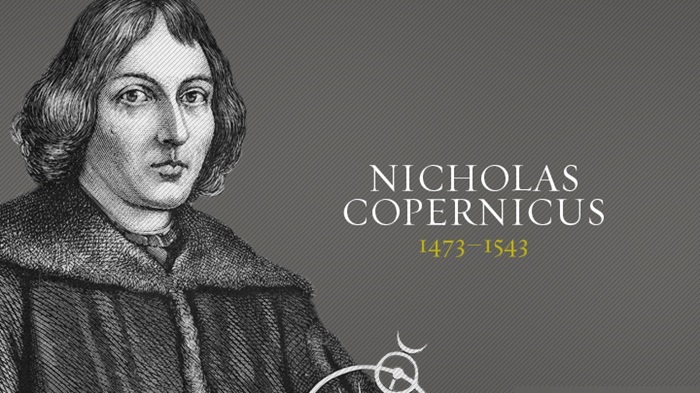
The two scholars developed a close intellectual relationship. Rheticus spent two years with Copernicus before returning to his academic career.
This encounter gave him an unusual opportunity: he could study an ambitious astronomical theory directly with the scholar who had developed it.
What Was the Narratio Prima?
In 1540, Rheticus published a summary of Copernicus’s astronomical work under the title De libris revolutionum erudissimi viri et mathematici excellentissimi Reverendi Doctoris Nicolai Copernici Torunnaei Narratio Prima.
Scholars generally refer to the work as the Narratio Prima, meaning “First Account.”
The publication introduced Copernicus’s astronomical ideas to readers beyond his immediate circle. Rather than waiting for the complete treatise, Rheticus presented an account of the research and its principal arguments.
This decision mattered because it gave other scholars an opportunity to engage with Copernican astronomy before the publication of the larger work.
A second edition appeared in Basel in 1541. Later, the publisher included the text as an appendix to the second Basel edition of De revolutionibus in 1566.
Why Did Rheticus Matter More Than an Ordinary Student?
Rheticus did more than attend lectures or study mathematical techniques. He actively helped communicate Copernicus’s research.
For years, friends and fellow astronomers had encouraged Copernicus to publish his major work. Nevertheless, he hesitated to release it.
Rheticus helped change this situation. He persuaded Copernicus to allow the publication of a summary and contributed to the wider circulation of his ideas.
Furthermore, his own reputation as a mathematician and professor gave him access to scholarly networks. He could therefore connect the relatively secluded research environment at Frombork with intellectual communities elsewhere in Europe.
His contribution illustrates the importance of intermediaries in the history of knowledge. A major intellectual achievement may require not only an original thinker but also people who can explain, defend, publish, and circulate that person’s work.
How Did the Relationship Influence the History of Astronomy?
The relationship between Copernicus and Rheticus created a direct connection between two generations of scholars.
Copernicus developed his astronomical ideas over many years. Rheticus, however, helped introduce those ideas to a broader intellectual audience.
Moreover, the Narratio Prima established an important stage in the public discussion of Copernican astronomy. It allowed scholars to encounter the theory before the complete publication of De revolutionibus.
This distinction matters. The history of a scientific theory includes several stages: its development, communication, criticism, and wider reception.
Rheticus contributed particularly to the communication stage. Without his involvement, Copernicus’s work might have reached other scholars through a different and potentially slower route.
What Does Rheticus’s Story Teach Us About Scientific Collaboration?
The relationship between the two scholars reminds us that scientific history rarely depends on one individual alone.
Copernicus developed the central astronomical arguments. Rheticus helped explain and circulate them. Later scholars examined, criticised, and extended the resulting ideas.
Therefore, the history of Copernican astronomy also belongs to the history of collaboration and intellectual exchange.
Ultimately, Rheticus deserves recognition not simply as Copernicus’s student, but as one of the most important figures in the early communication of his astronomical work.
Key Points
- Rheticus was a German mathematician and astronomer.
- He travelled to Frombork in 1539 to study with Copernicus.
- He spent two years with Copernicus.
- He published the Narratio Prima in 1540.
- A second edition appeared in Basel in 1541.
- His work helped introduce Copernican astronomy to a wider scholarly audience.
References
- Rheticus, Georg Joachim. Narratio Prima. Danzig: Franz Rhode, 1540.
- Burmeister, Karl. Georg Joachim Rheticus, 1514–1574. Wiesbaden: Guido Pressler Verlag, 1968.
- Rosen, Edward, trans. Three Copernican Treatises. New York: Dover, 1959.
- Information Canada. Mikołaj Kopernik, 1473–1543. Ottawa, 1973, pp. 25–26.
Related reading
- The Printing Revolution and Renaissance Astronomy: How Books Changed the Circulation of Scientific Knowledge
- The Commentariolus: How Copernicus Shared His Ideas Before Publishing His Masterwork
- Copernicus and Johannes Werner: A Forgotten Astronomical Controversy
- Copernicus in Rome: The Jubilee of 1500, Astronomy, and the Observation of a Lunar Eclipse
- Nicolaus Copernicus as an Economist: Inflation, Currency Reform, and the Value of Money
About the Author