Short Answer
The spread of printing transformed Renaissance astronomy and the circulation of astronomical knowledge. Between 1450 and 1550, printers produced large numbers of scientific books, including ancient and medieval astronomical works. Consequently, scholars gained new opportunities to compare earlier theories, examine mathematical arguments, and develop new approaches to understanding the heavens.
How Did Printing Change Renaissance Astronomy?
The development of printing created new opportunities for the circulation of knowledge in Renaissance Europe.
Before printing became widespread, scholars relied heavily on handwritten manuscripts. Copying a scientific work required time, skill, and access to suitable materials. As a result, the circulation of many texts remained relatively limited.
Printing changed this situation. Printers could reproduce texts in larger numbers, while scholars and students could consult copies in different intellectual centres.
However, printing did not immediately make knowledge accessible to everyone. Books still required financial resources, and readers needed the education to understand specialised subjects.
Nevertheless, the new technology transformed the conditions under which scholars exchanged information.
Why Did Renaissance Astronomy Books Attract Early Printers?
Renaissance astronomy occupied an important position in the scientific publishing of the period.
A bibliography by Margaret Bingham Stillwell, The Awakening Interest in Science during the First Century of Printing, 1450–1550, examined early scientific editions according to their subject matter.
The historical catalogue notes that the first 124 titles in this bibliography concern astronomy and related subjects. These works include both classical and medieval authors.
This detail reveals the strong interest in astronomical knowledge during the early age of printing. It also demonstrates that readers and printers valued older scientific traditions alongside contemporary research.
Why Did Renaissance Astronomy Return to Ancient Texts?
Renaissance intellectual culture placed considerable emphasis on the recovery and examination of ancient knowledge.
Scholars studied Greek and Arabic scientific traditions, translated earlier works, and compared different mathematical explanations.
Renaissance astronomy provided an especially important field for this activity. Ancient authors had developed extensive theories about celestial motion, planetary arrangements, and the structure of the heavens.
For example, the works associated with Ptolemy continued to influence European astronomy. Meanwhile, later scholars such as Regiomontanus worked to examine and improve the mathematical foundations of earlier astronomical systems.
Printing helped preserve and circulate these intellectual traditions. Furthermore, it allowed readers in different regions to consult similar editions and compare their arguments.
Did Printing Encourage New Scientific Ideas?
Printing did more than preserve existing knowledge. It also created conditions for new debates.
When scholars could consult published texts, they gained opportunities to examine arguments more systematically. They could compare mathematical procedures, identify disagreements, and refer to specific passages in works that circulated beyond a single university or city.
Moreover, printed books helped authors establish intellectual reputations. A scholar could reach readers who had never met him personally.
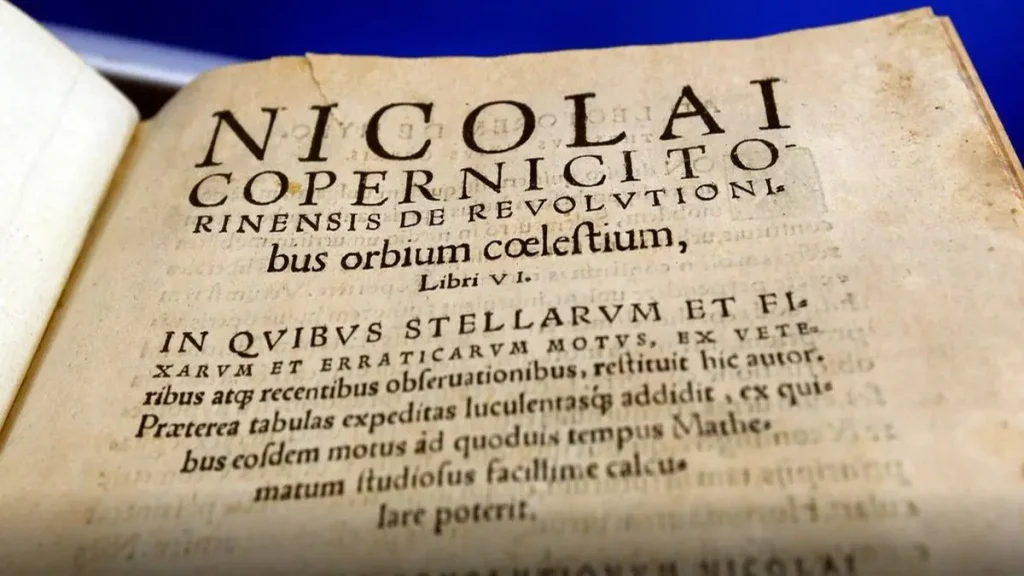
Copernicus’s own publishing history belongs to this broader transformation. His astronomical research emerged within a European culture that increasingly relied on printed scientific literature, although he also used manuscript circulation to communicate some of his ideas.
Consequently, printing and Renaissance astronomy formed closely connected histories.
How Did the Printing Market Influence Scientific Publishing?
Early printers did not publish every available manuscript. They had to consider the commercial prospects of each edition.
Margaret Bingham Stillwell’s study, as described in the historical catalogue, emphasises that early printers selected texts partly according to their expectations about public demand.
In other words, the subjects that appeared in print reflected both intellectual interests and commercial decisions.
This point adds an important dimension to the history of science. Scientific publishing did not develop independently of economic conditions. Printers needed readers, buyers, and institutions that could support their businesses.
Therefore, the growth of astronomical publishing reflected an interaction between scholarly curiosity and the practical economics of the book trade.
What Can the History of Printing Tell Us About Copernicus?
Copernicus worked during a period when printed scientific books increasingly shaped European intellectual life.
The recovery of ancient astronomical texts, the publication of mathematical studies, and the exchange of new arguments created an environment in which scholars could examine inherited ideas more critically.
Nevertheless, the printing press did not automatically produce scientific progress. Authors still needed mathematical skill, reliable observations, and persuasive arguments.
The technology provided a means of communication, not a substitute for intellectual work.
Ultimately, the relationship between printing and Renaissance astronomy shows how technological change can transform the conditions of knowledge. The printing press expanded the circulation of scientific texts, while scholars used those texts to question older explanations and develop new ones.
Key Points
- Printing transformed the circulation of scientific knowledge during the Renaissance.
- Margaret Bingham Stillwell examined scientific books published between 1450 and 1550.
- The first 124 titles in her bibliography concern astronomy and related subjects.
- Early scientific publishing included classical and medieval works.
- Printers considered commercial demand when selecting books.
- Copernicus’s intellectual environment depended on both printed texts and manuscript exchange.
References
- Stillwell, Margaret Bingham. The Awakening Interest in Science during the First Century of Printing, 1450–1550: An Annotated Checklist of First Editions Viewed from the Angle of Their Subject Content. New York: Bibliographical Society of America, 1970.
- Boas, Marie. The Scientific Renaissance, 1450–1630. New York: Harper & Row, 1966.
- Sarton, George. Six Wings: Men of Science in the Renaissance. London: Bodley Head, 1957.
- Information Canada. Mikołaj Kopernik, 1473–1543. Ottawa, 1973, pp. 12–13.
Related reading
- Rheticus and Copernicus: The Young Scholar Who Helped Bring a New Astronomy to Europe
- The Commentariolus: How Copernicus Shared His Ideas Before Publishing His Masterwork
- Copernicus in Rome: The Jubilee of 1500, Astronomy, and the Observation of a Lunar Eclipse
- Copernicus and Johannes Werner: A Forgotten Astronomical Controversy
- Copernicus and Renaissance Medicine: The Physician Behind the Astronomer
About the Author