Short Answer
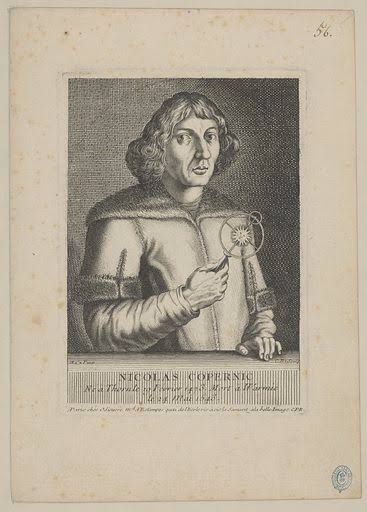
Nicolaus Copernicus spent the Jubilee year of 1500 in Rome, where he attended religious celebrations, occasionally lectured on mathematics and astronomy, and continued his astronomical observations. One particularly significant event occurred on 6 November 1500, when he observed a lunar eclipse. His Roman experience reveals how travel, scholarship, and observation intersected in Renaissance intellectual life.
Why Did Copernicus Travel to Rome in 1500?
The year 1500 held particular religious significance for the Catholic Church. It marked a Jubilee year, a period associated with pilgrimage, religious ceremonies, and the spiritual renewal of Christian communities. Rome consequently attracted visitors from different parts of Europe.
Copernicus travelled to the city during this important year. According to the 1973 exhibition catalogue Mikołaj Kopernik, 1473–1543, he remained in Rome for approximately one year.
His visit did not consist exclusively of religious participation. In addition to attending Easter celebrations, he continued his intellectual activities. The catalogue specifically mentions his occasional lectures on mathematics and astronomy.
This detail offers an important perspective on Copernicus’s early career. He did not develop his astronomical interests in isolation. Instead, he moved through European intellectual environments in which scholars exchanged mathematical knowledge, discussed astronomical problems, and encountered different traditions of learning.
Did Copernicus Teach Mathematics and Astronomy in Rome?
The catalogue reports that Copernicus occasionally delivered lectures on mathematics and astronomy during his stay.
Although it does not provide detailed lecture transcripts or identify the precise subjects he discussed, the reference suggests that his mathematical and astronomical knowledge had already reached a level that allowed him to participate in scholarly communication.
Moreover, his presence in Rome placed him within one of Renaissance Europe’s most significant cultural and intellectual centres.
Rome brought together religious authorities, diplomats, scholars, artists, and visitors. Therefore, the city offered an environment in which scientific knowledge circulated alongside theological, political, and artistic debates.
Copernicus’s lectures also remind us that the history of science depends on more than famous books. Informal teaching, personal encounters, and scholarly communication helped shape intellectual developments long before the publication of major works.
What Did Copernicus Observe on 6 November 1500?
One of the most specific details about Copernicus’s Roman stay concerns a lunar eclipse.
The exhibition catalogue records that he observed the lunar eclipse of 6 November 1500. This observation provides a concrete example of his continuing astronomical activity during his travels.
A lunar eclipse occurs when the Earth passes between the Sun and the Moon, casting its shadow across the lunar surface. Astronomers could observe such events without telescopes, using the naked eye and mathematical methods to record their timing and appearance.
For Renaissance astronomers, observations of celestial events served several purposes. They helped scholars compare astronomical predictions with actual phenomena, assess existing tables, and investigate the movements of heavenly bodies.
However, the catalogue does not provide the precise observational notes or calculations that Copernicus made on that date. We should therefore distinguish the documented observation from any reconstruction of his methods.
How Did Rome Contribute to Copernicus’s Intellectual Development?
Rome formed one part of a wider European experience. Copernicus had already studied at the University of Cracow and later continued his education in Italy.
His Roman stay illustrates the mobility of Renaissance scholars. Universities and major cities created networks through which individuals encountered new ideas, methods, and intellectual traditions.
Furthermore, the combination of public lectures and astronomical observation demonstrates that Copernicus pursued both theoretical and practical aspects of astronomy.
His later achievements should not obscure these earlier experiences. The development of a major scientific thinker often begins through a series of smaller activities: attending lectures, teaching, observing, reading, and exchanging ideas.
Rome was one of the places where these activities came together.
Key Points
- Copernicus travelled to Rome during the Jubilee year of 1500.
- He remained in the city for approximately one year.
- He attended the Easter celebrations.
- He occasionally lectured on mathematics and astronomy.
- He observed a lunar eclipse on 6 November 1500.
- His Roman experience illustrates the connection between travel, teaching, and astronomical observation.
References
- Information Canada. Mikołaj Kopernik, 1473–1543. Ottawa: Information Canada, 1973, p. 19.
- Aubrey Menen. Rome for Ourselves. New York: McGraw-Hill, 1960. The catalogue refers to a sixteenth-century map of Rome reproduced in this work.
Related reading
- Copernicus and Renaissance Medicine: The Physician Behind the Astronomer
- Copernicus at Olsztyn: Administration, War, and the Defence of a Renaissance Castle
- Copernicus and Canon Law: The Legal Education Behind His Ecclesiastical Career
- The Printing Revolution and Renaissance Astronomy: How Books Changed the Circulation of Scientific Knowledge
- The Cracow Circle: The Scholars and Intellectual Networks Surrounding Copernicus
About the Author