Shakespeare’s Psychological Complexity and Human Nature
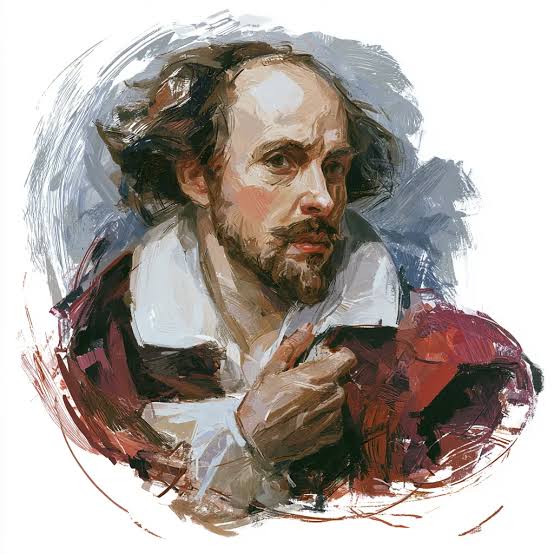
William Shakespeare remains one of the most influential writers in world literature because he explores the contradictions that shape human behavior. His characters rarely fit simple categories of good and evil. Instead, they struggle with jealousy, guilt, ambition, uncertainty, and self-deception. Consequently, Shakespeare’s psychological complexity continues to attract scholars from literary criticism, philosophy, and psychoanalysis.
Among his dramatic creations, Hamlet offers one of the richest explorations of the human mind. At first glance, the play presents a familiar revenge narrative: a prince seeks justice for his murdered father. However, Shakespeare transforms this conventional plot into a profound investigation of consciousness, moral responsibility, and the difficulty of translating thought into action.
Moreover, Hamlet does not simply hesitate because he lacks courage. He questions the reliability of appearances, examines his own motives, and struggles to determine whether revenge can ever serve justice. Therefore, his inner conflicts turn a personal tragedy into a broader inquiry into human nature.
1. Shakespeare’s Psychological Complexity: Characters Beyond Good and Evil
Shakespeare challenges the assumption that human beings act according to stable moral categories. His protagonists often possess admirable qualities alongside destructive impulses. As a result, their decisions reveal the tension between ethical principles and personal desires.
For example, Macbeth combines extraordinary ambition with moments of fear and moral awareness. Othello values honor and loyalty, yet jealousy gradually undermines his judgment. Similarly, King Lear begins with an intense desire for recognition and discovers the consequences of his own vanity.
These contradictions lie at the heart of Shakespeare’s psychological complexity and give his characters real depth. Rather than presenting a simple opposition between virtue and vice, Shakespeare examines how circumstances, emotions, and personal choices interact.
Furthermore, his characters frequently misunderstand themselves. They may justify selfish actions through moral language or mistake emotional impulses for rational conclusions. In this respect, Shakespeare anticipates questions that later became central to psychological theories of motivation and self-deception.
2. Hamlet: More Than a Revenge Tragedy
Hamlet seeks revenge after the Ghost of his father accuses Claudius, the new king of Denmark, of murder. Nevertheless, the play develops far beyond the conventional structure of a revenge tragedy. Shakespeare directs much of the audience’s attention toward Hamlet’s thoughts, doubts, and changing interpretations of events.
The central question concerns not only what Hamlet should do but also how he can know what deserves action. The Ghost may reveal the truth, yet Hamlet must consider whether the apparition speaks honestly. Consequently, he arranges a theatrical performance that reproduces the alleged murder and observes Claudius’s reaction.
This strategy demonstrates Hamlet’s desire to test appearances against evidence. However, his search for certainty also complicates his responsibility to act. Even after he gains strong reasons to believe Claudius’s guilt, he continues to confront questions about timing, morality, and the consequences of revenge.
The Folger Shakespeare Library identifies these uncertainties as central to the play’s enduring fascination.
2.1. Indecision and the Burden of Thought
Hamlet’s hesitation has generated centuries of debate. Some critics interpret it as a weakness of will, whereas others emphasize his intellectual sensitivity and moral uncertainty.
However, neither explanation fully captures his predicament. Hamlet does not merely struggle to choose between action and inaction. He also questions the assumptions that make action meaningful.
For instance, revenge may satisfy his obligation to his father, but it may also reproduce the violence and corruption that surround him. Likewise, immediate action might demonstrate resolve without guaranteeing justice.
Therefore, Hamlet’s indecision reveals a conflict between competing responsibilities. His intellectual activity helps him recognize the consequences of his choices, yet the same activity makes decisive action increasingly difficult.
2.2. Self-Consciousness and the Divided Self
Hamlet frequently observes his own thoughts as though he were both the person experiencing an emotion and the critic examining it. This self-consciousness distinguishes him from characters who act primarily through immediate desire.
His soliloquies provide direct access to this internal struggle. Through them, Shakespeare allows the audience to witness Hamlet question his motives, evaluate his fears, and reconsider his understanding of reality. In this sense, Hamlet’s inner monologue anticipates later philosophical accounts of anxiety, such as Kierkegaard’s view of anxiety as the consciousness of freedom.
Nevertheless, self-examination does not necessarily produce self-knowledge. Hamlet can analyze his behavior without resolving the conflicts that motivate it. Indeed, his reflections sometimes intensify his uncertainty rather than overcome it. This restless self-analysis is a defining feature of Shakespeare’s psychological complexity.
In this sense, Shakespeare presents consciousness as both a source of insight and an obstacle to action.
3. Guilt, Jealousy, and Self-Deception: Shakespeare’s Psychological Complexity in Tragedy
Hamlet’s psychological complexity becomes clearer when we compare him with other Shakespearean protagonists. Although their circumstances differ, Macbeth, Othello, and King Lear also struggle to understand the relationship between their desires and their judgments.
Macbeth: Ambition and Guilt
Macbeth initially recognizes the moral consequences of murdering King Duncan. Nevertheless, his desire for power gradually overrides his judgment. After the murder, hallucinations and fear expose the psychological cost of his ambition. Thus, Shakespeare portrays guilt as a force that disrupts the very identity Macbeth hopes to strengthen.
Othello: Jealousy and Distorted Judgment
Othello trusts Iago’s insinuations and interprets uncertain evidence as proof of Desdemona’s infidelity. Consequently, jealousy overwhelms his capacity for independent judgment. His tragedy demonstrates how emotional insecurity can transform suspicion into apparent certainty.
King Lear: Pride and Recognition
Lear demands declarations of love from his daughters and confuses flattering language with genuine affection. However, his loss of authority gradually exposes the limits of his judgment. His suffering eventually forces him to confront the difference between appearance and emotional truth.
These characters illustrate a recurring principle in Shakespeare’s drama: people often contribute to their own suffering because they misunderstand their motives or misinterpret the behavior of others.
Furthermore, Shakespeare rarely allows a single psychological explanation to account for every decision. His characters respond to personal weaknesses, social pressures, political circumstances, and unpredictable events. As a result, their tragedies resist simplistic moral judgments.
4. Sigmund Freud and the Psychoanalytic Interpretation of Hamlet
Sigmund Freud helped establish a lasting connection between Shakespearean literature and psychoanalytic interpretation. In The Interpretation of Dreams (1900), Freud discusses Hamlet through the concept of the Oedipus complex, drawing attention to unconscious desire, repression, and the emotional significance of family relationships.
Freud argues that Hamlet’s difficulty in killing Claudius may reflect a deeper psychological conflict. Claudius has committed the act that Hamlet’s unconscious desires allegedly make especially disturbing: he has killed Hamlet’s father and married his mother. From this perspective, Hamlet’s revulsion toward Claudius carries a complicated personal dimension.
However, Freud’s interpretation remains a theoretical reading rather than an established psychological fact. Scholars continue to debate its assumptions, especially its treatment of Hamlet’s relationship with Gertrude and the extent to which unconscious desire explains his hesitation.
Norman N. Holland examines Freud’s influence on Shakespeare criticism in his scholarly essay “Freud on Shakespeare”. Holland explains how psychoanalysis shaped twentieth-century interpretations of Shakespeare while also distinguishing Freud’s psychological interests from the methods of literary criticism.
4.1. The Unconscious and Hidden Motivation
Psychoanalytic criticism asks whether characters understand the forces that guide their actions. From this perspective, Hamlet’s conscious explanations may not reveal the full complexity of his motives.
Nevertheless, literary analysis must distinguish interpretation from diagnosis. Shakespeare created a dramatic character, not a clinical case history. Therefore, psychoanalytic concepts offer one possible framework for understanding Hamlet, rather than a definitive explanation of his behavior.
Moreover, other critical approaches emphasize different dimensions of the play, including political corruption, religious uncertainty, gender relations, and the conventions of Renaissance revenge drama.
5. Why Shakespeare’s Psychological Complexity in Hamlet Still Matters to Modern Psychology
Hamlet continues to resonate with contemporary readers because his conflicts involve recognizable features of human experience. People often struggle to distinguish reasonable caution from avoidance, moral reflection from rationalization, and genuine self-knowledge from self-deception. Therefore, Shakespeare’s psychological complexity still speaks directly to modern psychology.
For example, excessive deliberation can delay decisions even when individuals possess sufficient information to act. Similarly, emotional distress can influence how people interpret ambiguous evidence. Hamlet dramatizes these difficulties without reducing them to a single universal formula.
Furthermore, his self-questioning reveals a central paradox of consciousness: understanding a problem does not automatically provide the ability to resolve it.
Modern psychology offers empirical methods for studying decision-making, emotional regulation, and cognitive bias. Shakespeare, by contrast, explores these concerns through dramatic language, character interaction, and moral conflict. Although the two disciplines use different methods, their shared interest in human motivation makes dialogue between them productive.
Ultimately, Hamlet remains compelling because he asks questions that exceed his immediate circumstances. How can people act responsibly when certainty remains elusive? When does reflection become avoidance? And how reliably can individuals understand the motives that shape their choices?
Conclusion: Shakespeare’s Psychological Complexity and Human Contradictions
Shakespeare’s psychological complexity emerges from his refusal to portray human beings as morally or emotionally consistent. His characters combine noble intentions with destructive desires, intellectual insight with practical failure, and self-awareness with persistent self-deception.
Hamlet embodies these tensions particularly clearly. His hesitation reflects not merely an inability to act but also a struggle to reconcile revenge, morality, evidence, and personal responsibility. Meanwhile, Freud’s interpretation demonstrates how Shakespeare’s characters can support new theoretical readings across different historical periods.
Nevertheless, no single psychological theory exhausts the meaning of Hamlet. The play continues to invite competing interpretations because Shakespeare connects individual experience with broader questions about identity, ethics, power, and consciousness.
For this reason, Shakespeare remains essential to literary studies. He does not simply describe human behavior; he dramatizes the contradictions through which people attempt to understand themselves.
Frequently Asked Questions
What creates Shakespeare’s psychological complexity in his characters?
Shakespeare gives his characters conflicting desires, moral uncertainties, emotional vulnerabilities, and imperfect self-knowledge. Consequently, their decisions rarely follow a simple distinction between good and evil.
Why does Hamlet hesitate to kill Claudius?
Hamlet confronts uncertainty about the Ghost, the morality of revenge, and the consequences of his actions. Critics disagree about which factors most strongly explain his hesitation.
How did Sigmund Freud interpret Hamlet?
Freud connected Hamlet’s hesitation with the Oedipus complex and unconscious conflict. However, scholars debate this interpretation, and it does not represent a universally accepted explanation of the character.
Which Shakespeare plays offer the strongest examples of psychological conflict?
Hamlet, Macbeth, Othello, and King Lear provide particularly rich explorations of indecision, ambition, jealousy, guilt, pride, and self-deception.
References
1. Freud, S. (1900). The Interpretation of Dreams. Translated by James Strachey. Standard Edition, Volumes 4–5. Hogarth Press.
2. Holland, N. N. “Freud on Shakespeare.” PMLA. Cambridge University Press.
3. Shakespeare, W. Hamlet. Folger Shakespeare Library. Read the play and scholarly resources.
4. Shakespeare, W. Hamlet: A Modern Perspective. Essay by Michael Neill. Folger Shakespeare Library. Read the critical essay.
5. Shakespeare, W. Hamlet: Further Reading and Critical Studies. Folger Shakespeare Library. Explore academic references.
6. Jones, E. (1949). Hamlet and Oedipus. Victor Gollancz.
7. Bradley, A. C. (1904). Shakespearean Tragedy: Lectures on Hamlet, Othello, King Lear and Macbeth. Macmillan.
About the Author