Short Answer
Egyptian pyramids emerged through a long development in royal burial architecture. Early rulers used relatively simple tombs, while later kings introduced increasingly monumental structures. King and Hall trace this transformation through the tombs of the first dynasties, Djoser’s Step Pyramid at Saqqara, Snefru’s pyramids, and the great monuments at Giza.
How Did Early Royal Tombs Lead to Egyptian Pyramids?
The earliest royal tombs did not resemble the monumental Egyptian pyramids that later defined the Egyptian landscape.
King and Hall trace their development from simple chamber graves to more elaborate burial structures. Early examples included brick-built tombs and chambers that gradually acquired additional architectural features.
At Abydos, the authors discuss royal tombs that contained chambers and structures associated with burial rituals. Some graves also featured granite elements, although brick remained an important construction material.
Moreover, the tombs reveal changing ideas about royal status and the afterlife. As royal authority developed, burial architecture increasingly reflected the power and prestige of the ruler.
Why Does Djoser’s Step Pyramid Mark an Important Stage?
King and Hall identify Djoser, whom they also call Tjeser, with the Step Pyramid at Saqqara.
The monument represents a major stage in the development of Egyptian royal architecture. Instead of relying on the earlier forms of royal tombs, Djoser’s complex introduced a monumental structure that later generations could use as a reference point.
The authors also discuss Djoser’s tomb near Abydos and the possibility that the king maintained more than one funerary monument.
This point matters because Egyptian royal burial practices did not always follow a single architectural pattern. A ruler could maintain connections with different religious and geographical centers.
How Did Snefru Prepare the Way for Egyptian Pyramids at Giza?
Snefru, the final king of the Third Dynasty in the authors’ account, represents another important stage in pyramid development.
King and Hall associate him with pyramids at Meidum and Dashur. These monuments illustrate the experimentation that preceded the great Fourth Dynasty pyramids.
Furthermore, the authors describe how royal burial architecture developed alongside the growing importance of Memphis and its surrounding cemetery landscape.
The gradual movement of the royal center toward Memphis also strengthened the connection between political authority and monumental burial grounds.
Why Do Khufu, Khafra, and Menkaura Matter?
The Fourth Dynasty produced the three great pyramids at Giza associated with Khufu, Khafra, and Menkaura.
King and Hall identify these monuments as outstanding examples of Egyptian pyramids. Their scale and architectural ambition distinguish them from earlier royal tombs.
However, the authors do not treat Egyptian pyramids as isolated achievements. Instead, they place them within a longer sequence of architectural developments that began with simpler graves and continued through the Step Pyramid and Snefru’s monuments.
Consequently, the pyramids at Giza represent the culmination of a process rather than a sudden invention.
Key Points
- Early royal tombs included simple graves and brick-built chambers.
- Djoser’s Step Pyramid at Saqqara marks a major architectural development.
- Snefru connects the earlier pyramid tradition with the Fourth Dynasty.
- Meidum and Dashur form part of the architectural sequence discussed by the authors.
- Khufu, Khafra, and Menkaura built the famous pyramids at Giza.
Source and page references: King and Hall, Chapters II–III, especially pp. 80–82 and 92. These pages discuss Tjeser, the Step Pyramid, Snefru, the development of royal tombs, and the Fourth Dynasty pyramids.
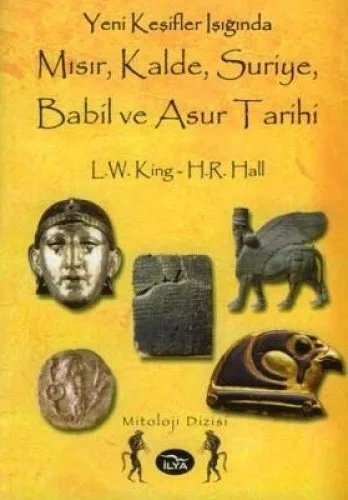
King, Leonard William, and Henry Reginald Holland Hall. History of Egypt, Chaldaea, Syria, Babylonia, and Assyria in the Light of Recent Discovery. Turkish edition: Yeni Keşifler Işığında Mısır, Kalde, Suriye, Babil ve Asur Tarihi. Translated by Arıcan Uysal. İstanbul: İlya Yayınevi, 6th printing, 2012.
Related reading
- Abydos and the First Egyptian Dynasties: Why Do Royal Tombs Matter?
- Elam and Babylon: How Did Two Ancient Cultures Interact?
- The Temples of Thebes: What Do Their Monuments Reveal About Ancient Egyptian Religion?
- Prehistoric Egypt: What Do the Earliest Archaeological Discoveries Reveal?
About the Author