Short Answer
The temples of Thebes reveal the close relationship between religion, royal authority, and monumental architecture in ancient Egypt. King and Hall examine Deir el-Bahari, the Temple of Mut, Luxor, and Karnak to explain how sacred buildings preserved religious traditions, royal memory, sculpture, and evidence of everyday devotional practices.
Why Did Thebes Become Such an Important Religious Center?
Thebes occupies a major place in King and Hall’s account of ancient Egyptian religious architecture.
The authors describe a landscape in which temples, royal monuments, tombs, and sacred spaces formed a connected religious environment.
Rather than treating each building as an isolated monument, they examine the relationship between architecture and the surrounding landscape.
For example, Deir el-Bahari stands beneath dramatic cliffs. Its temples combine monumental terraces, courtyards, ramps, columns, and religious spaces.
The natural setting contributes to the visual character of the complex. Moreover, the relationship between the temples and nearby royal burial areas reveals how Egyptian rulers connected religious architecture with funerary traditions.
What Makes the Temple of Hatshepsut at Deir el-Bahari Special?
King and Hall discuss the great Eighteenth Dynasty temple at Deir el-Bahari, which they associate with Queen Hatshepsut.
The building includes terraces, courtyards, ramps, and monumental gateways. Its architectural arrangement creates a strong visual relationship between the temple and the surrounding cliffs.
The authors also describe discoveries from the excavations led by Édouard Naville.
One particularly important discovery concerns the sanctuary of Ra-Harmachis. Researchers also uncovered architectural elements, decorated surfaces, and objects associated with the cults of Anubis and Hathor.
Furthermore, the excavations revealed numerous small votive objects. These included beads, figurines, glazed faience objects, and representations of sacred animals.
Such discoveries offer a glimpse into religious practices beyond royal ceremonies. Ordinary worshippers also visited sacred spaces and presented offerings to the gods.
What Do the Temple of Mut and Karnak Tell Us About Theban Religion?
The Temple of Mut stands between Luxor and Karnak. King and Hall associate Mut with Amen’s consort and the protective goddess of Thebes.
The authors describe excavations at the temple during the nineteenth century. These investigations uncovered sculptures, religious objects, and portraits that enriched the archaeological record.
Among the notable discoveries, they mention a portrait head and shoulders associated with Mentuemhat, a governor of Thebes during the period of the Assyrian attack under Ashurbanipal.
Karnak occupies an even more prominent position in their discussion.
King and Hall describe the Great Temple of Karnak as a monumental religious complex that required continuous archaeological investigation. Its scale, architectural history, and numerous building phases made excavation particularly challenging.
Moreover, the authors discuss the collapse of a column in the Great Hypostyle Hall in 1899. They connect the damage with water infiltration and weaknesses in the foundations.
This example demonstrates that archaeological work involves more than uncovering ancient structures. Researchers must also understand the materials, construction methods, and environmental conditions that affect their preservation.
How Did Royal Tombs Shape the Religious Landscape of Thebes?
The authors also examine the relationship between temples and royal tombs.
Behind Deir el-Bahari, a valley contains royal burial complexes associated with powerful Theban rulers. The region includes tombs connected with the Eighteenth, Nineteenth, and Twentieth Dynasties.
King and Hall discuss the tomb of Thutmose I and its relationship with nearby temples. They also describe the royal burial traditions that developed in the Valley of the Kings.
Consequently, Thebes emerges as a religious landscape where royal funerary practices, temple worship, and monumental architecture supported one another.
Key Points
- Thebes served as an important center of Egyptian religious architecture.
- Deir el-Bahari contains the monumental temple associated with Hatshepsut.
- Excavations revealed sanctuaries, decorated architectural elements, and votive objects.
- The Temple of Mut preserves evidence of religious worship and sculpture.
- Karnak demonstrates the scale and complexity of Egyptian temple construction.
- Royal tombs connected Theban temples with funerary traditions.
Source and page references: King and Hall, Chapters VII–VIII, especially pp. 308–312 and 333–337. These pages discuss Deir el-Bahari, Hatshepsut’s temple, the Temple of Mut, Karnak, and the royal burial landscape of Thebes.
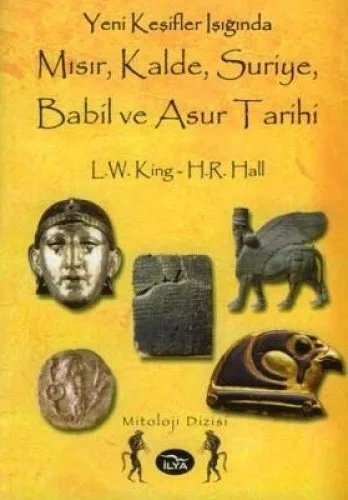
King, Leonard William, and Henry Reginald Holland Hall. History of Egypt, Chaldaea, Syria, Babylonia, and Assyria in the Light of Recent Discovery. Turkish edition: Yeni Keşifler Işığında Mısır, Kalde, Suriye, Babil ve Asur Tarihi. Translated by Arıcan Uysal. İstanbul: İlya Yayınevi, 6th printing, 2012.
Related reading
- Elam and Babylon: How Did Two Ancient Cultures Interact?
- The Evolution of Egyptian Pyramids: From Early Royal Tombs to Giza
- Abydos and the First Egyptian Dynasties: Why Do Royal Tombs Matter?
- Prehistoric Egypt: What Do the Earliest Archaeological Discoveries Reveal?
About the Author