Short Answer
Prehistoric Egypt did not emerge as a single, fully developed civilization. Archaeological discoveries across the Nile Valley reveal different communities, burial practices, and cultural stages. Leonard William King and H. R. Hall examine these remains to explain how early populations developed, interacted, and eventually contributed to the formation of Egyptian kingship.
Why Do Prehistoric Cemeteries Matter?
Archaeological cemeteries offer valuable evidence about societies that left few written records. In prehistoric Egypt, burial structures help researchers distinguish between different stages of cultural development.
King and Hall discuss the excavations at Nag’ed-Der, where George Reisner and Lythgoe investigated numerous prehistoric graves in 1901. These graves included small, oval-shaped pits just below the surface. The authors describe them as examples of an early and relatively simple burial form.
By contrast, graves at El-‘Amra often displayed more developed brick structures. Consequently, the authors connect these differences with changes in burial customs and the gradual emergence of more complex social practices.
Moreover, the location of cemeteries matters. Archaeologists investigated sites around Abydos, Thebes, el-Kab, and other parts of Upper Egypt. These discoveries helped researchers examine the geographical distribution of early Egyptian communities.
Where Did the First Egyptians Come From?
King and Hall consider the possibility that some early populations entered the Nile Valley from the Red Sea coast. They discuss a proposed route through Wadi Hammamat, which connects the Red Sea region with the Nile near Koptos and Kus.
However, the authors do not present this explanation as an unquestionable fact. Instead, they examine archaeological remains alongside older traditions about Egyptian origins.
The distribution of prehistoric material also raises questions about regional differences. For example, researchers identified stone tools in areas such as Fayum and Helwan, while other excavations revealed early cemeteries and domestic remains in Upper Egypt.
Furthermore, the authors consider whether different populations inhabited northern and southern Egypt before the formation of the monarchy. They discuss possible cultural and physical distinctions, although the available evidence does not allow them to reach a definitive conclusion.
How Did Early Communities Develop Before the Monarchy?
The archaeological record suggests a gradual transition from relatively simple Neolithic conditions to more developed communities that used copper.
According to King and Hall, this transition may help explain why researchers find different types of prehistoric remains across Egypt. Some communities may have maintained older traditions, while others moved toward more complex social and political structures.
Nevertheless, the authors emphasize the limitations of the evidence. The absence of archaeological remains in a particular region does not necessarily prove that no population lived there.
Therefore, prehistoric Egypt requires careful interpretation. Cemeteries, tools, settlement remains, and geographical patterns each contribute to a broader picture.
Key Points
- Nag’ed-Der contains examples of early oval-shaped graves.
- El-‘Amra displays more developed brick burial structures.
- Abydos and Thebes play important roles in the archaeological study of early Egypt.
- The authors examine a possible migration route from the Red Sea through Wadi Hammamat.
- The evidence suggests regional differences before the formation of the Egyptian monarchy.
Source and page references: King and Hall, Chapter I, especially pp. 33–36. The discussion covers Nag’ed-Der, El-‘Amra, prehistoric sites, and theories about the origins of early Egyptian populations.
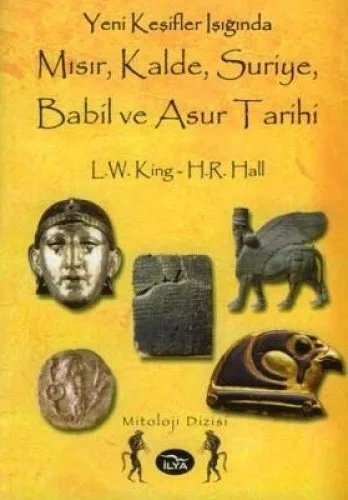
King, Leonard William, and Henry Reginald Holland Hall. History of Egypt, Chaldaea, Syria, Babylonia, and Assyria in the Light of Recent Discovery. Turkish edition: Yeni Keşifler Işığında Mısır, Kalde, Suriye, Babil ve Asur Tarihi. Translated by Arıcan Uysal. İstanbul: İlya Yayınevi, 6th printing, 2012.
Related reading
- Abydos and the First Egyptian Dynasties: Why Do Royal Tombs Matter?
- The Evolution of Egyptian Pyramids: From Early Royal Tombs to Giza
- Elam and Babylon: How Did Two Ancient Cultures Interact?
- The Temples of Thebes: What Do Their Monuments Reveal About Ancient Egyptian Religion?
About the Author