Two Different Views of Human Behavior
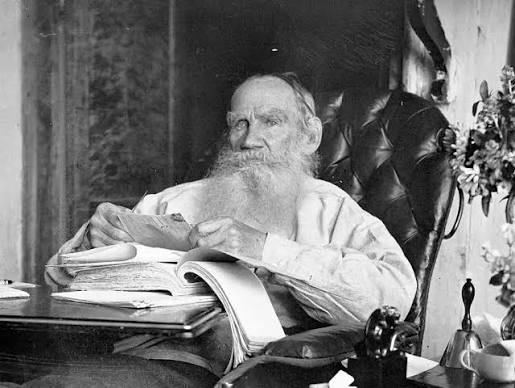
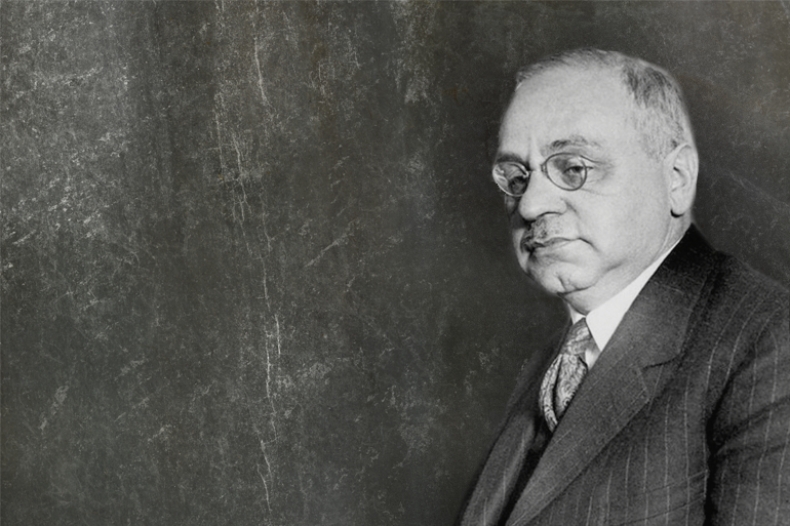
Alfred Adler developed a distinctive approach to psychology that differed significantly from Sigmund Freud’s psychoanalytic model. Both thinkers considered past experiences important, yet they interpreted human behavior through different conceptual frameworks.
Freud emphasized unconscious conflicts, childhood experiences, and the influence of the past. In contrast, Adler gave greater attention to the purposes and goals that guide human behavior. Therefore, he asked not only what had happened to a person but also what the person wanted to achieve.
This difference represents one of the important distinctions between Freudian psychoanalysis and Adlerian Individual Psychology.
Freud and the Psychological Importance of the Past
Freud regarded unconscious processes as fundamental to human behavior. His 1915 work “The Unconscious” provides an important example of this theoretical orientation. The work forms part of his metapsychological writings and examines the role of unconscious mental processes. (Freud Edition)
Indeed, Freud often examined present behavior by tracing it back to earlier experiences. Childhood experiences, repressed wishes, and psychological conflicts therefore occupied a central position in psychoanalytic interpretation. Notably, this fascination with the past also shaped his private world, as seen in Sigmund Freud’s antiquities collection.
However, Alfred Adler did not consider the past irrelevant. He accepted that childhood experiences could influence personality, but he questioned whether past events alone could fully explain human behavior.
For Adler, the crucial issue involved the meaning that an individual gives to experience.
Alfred Adler and the Future-Oriented Perspective
Alfred Adler introduced a more purposive understanding of human psychology. He argued that people do not simply react to their past; they also organize their behavior around goals.
Therefore, understanding a person’s behavior requires attention to both experience and purpose. The question “What happened to this person?” remains important, but another question becomes equally significant: “What is this person trying to achieve?”
Adler called attention to the direction of human behavior. A person’s actions can make greater sense when we examine the goal toward which those actions move.
Consequently, Adler’s psychology presents human beings as active participants in their psychological development rather than merely as products of previous experiences.
Adler developed these ideas in works such as Understanding Human Nature, originally published in 1927. The book examines personality development, character formation, perception, and the ways people develop their characteristic psychological patterns. (Açık Kütüphane)
The Role of Goals According to Alfred Adler
Alfred Adler believed that individuals develop goals that give coherence to their lives. These goals can involve achievement, recognition, security, belonging, competence, or personal significance.
For this reason, Adlerian psychology examines the individual’s life style, which describes a person’s characteristic way of interpreting life and responding to its challenges.
A person may experience failure during childhood, for example, and later develop an intense desire for achievement. The childhood experience matters, but the individual’s interpretation of that experience and subsequent goal also matter.
Thus, Adler shifts psychological attention from simple causation toward purpose and direction.
The Meaning of Experience
One of Adler’s important contributions involves his emphasis on interpretation. Two people can experience similar circumstances and develop very different psychological responses.
In fact, Adler argued that people respond not simply to objective events but to the meanings they construct from those events.
A difficult childhood does not automatically produce a particular adult personality. Instead, the individual interprets the experience within a broader psychological framework and develops a characteristic way of approaching life.
Moreover, this perspective helps explain why people who encounter similar circumstances can pursue entirely different goals.
From Inferiority to Development
Adler’s concept of inferiority feelings further illustrates his future-oriented approach. He considered feelings of inadequacy a common part of human development.
A child may feel physically weak, intellectually inadequate, socially unsuccessful, or dependent on adults. Nevertheless, such feelings do not necessarily produce psychological dysfunction.
The individual may respond by developing new abilities and seeking greater competence. As a result, an experience of inferiority can become a motivation for psychological growth.
Adler described this movement as a striving for superiority, meaning an effort to overcome limitations and move toward greater competence and fulfillment.
Fictional Final Goals
Adler also developed the idea of a fictional final goal. This concept refers to an imagined ideal or endpoint that can organize a person’s behavior.
For example, someone may organize their life around the belief that they must become completely successful, independent, powerful, or admired. The person may never consciously formulate this goal, yet it can influence decisions and relationships.
On the other hand, the goal does not need to correspond perfectly to objective reality. Its psychological importance comes from the direction it gives to behavior.
Ultimately, Adler considered human action easier to understand when we examine the person’s subjective goal rather than simply searching for a mechanical cause in the past.
Alfred Adler and the Concept of Life Style
The concept of life style occupies a central position in Adlerian Individual Psychology. It describes the distinctive pattern through which an individual interprets the world, understands the self, relates to others, and approaches problems.
Furthermore, life style develops through early experiences and the meanings that individuals attach to those experiences.
A person’s future goals therefore interact with earlier experiences. Despite this, Adler did not describe people as prisoners of childhood.
Instead, he emphasized the possibility of change. A person can reconsider established patterns and develop a more constructive orientation toward life.
Human Beings as Active Participants
Adler’s future-oriented psychology presents people as active agents. They interpret their experiences, establish goals, and choose ways of responding to life’s challenges.
Accordingly, psychological development involves more than uncovering hidden memories. It also involves understanding the direction of a person’s life.
This idea gives Adlerian psychology a particularly strong connection with psychotherapy, education, and counseling. The practitioner can ask what purpose a particular behavior serves and what alternative goals might produce healthier outcomes.
Freud and Alfred Adler: A Conceptual Comparison
The difference between Freud and Adler does not simply involve “past versus future.” Both psychologists recognized the importance of childhood and psychological development.
The fundamental difference concerns the role of purpose in explaining behavior.
| Freud | Adler |
|---|---|
| Emphasized unconscious conflicts | Emphasized purposive direction |
| Gave major importance to childhood experiences | Considered childhood experiences within a broader life pattern |
| Examined the influence of the past | Examined experience together with future goals |
| Focused strongly on unconscious motivation | Focused strongly on purpose and meaning |
| Developed psychoanalysis | Developed Individual Psychology |
In short, Freud frequently asked how earlier psychological conflicts shaped present behavior, whereas Adler also asked what purpose present behavior served.
Why Alfred Adler’s Approach Remains Important
Adler’s future-oriented perspective remains influential because it gives psychological interpretation a strong emphasis on agency and purpose.
Especially in counseling and psychotherapy, the question of what a person wants to accomplish can reveal dimensions that a purely historical analysis might overlook.
A student who avoids challenging tasks, for instance, may not simply fear failure because of a past experience. The avoidance may also protect a particular self-image or help the student avoid a feared judgment.
For this purpose, Adlerian psychology encourages practitioners to examine the function and goal of behavior.
Adler’s What Life Should Mean to You, first published in 1931, further illustrates his interest in the individual’s relationship with other people, society, and the broader meaning of life. Bibliographic records confirm the 1931 publication by Little, Brown and Company. (Açık Kütüphane)
References
- Adler, Alfred. (1927). Understanding Human Nature. Greenberg.
Open Library – Understanding Human Nature - Adler, Alfred. (1931). What Life Should Mean to You. Little, Brown and Company.
Open Library – What Life Should Mean to You - Freud, Sigmund. (1915). “The Unconscious.”
Freud Edition – The Unconscious - Ansbacher, Heinz L., & Ansbacher, Rowena R. (Eds.). (1956). The Individual Psychology of Alfred Adler: A Systematic Presentation in Selections from His Writings. Basic Books.
- Mosak, Harold H., & Maniacci, Michael P. (1999). A Primer of Adlerian Psychology. Routledge.
About the Author