Introduction: Conceiving the Universe as a Whole
The philosophy of nature developed by Giordano Bruno emphasizes the search for unity in opposition to the idea that the universe consists of disconnected parts. In his view, nature was a comprehensive reality that deserved to occupy a central position in philosophical thought. For this reason, Bruno’s conception of the universe also called into question the boundaries between cosmology and metaphysics.
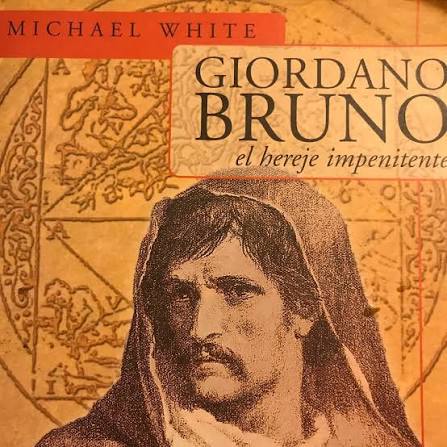
In the fourth chapter of his book, Michael White examines Bruno’s ideas concerning matter, infinity, and the unity of the universe. Drawing on this analysis, the following sections explore three themes: the relationship between nature and God, the continuity of matter, and the idea of an infinite universe.
Giordano Bruno on the Relationship Between Nature and God
In Bruno’s philosophy, the relationship between God and the universe extends beyond traditional theological explanations. While defending the idea of an infinite universe, Bruno also sought to rethink the relationship between the divine and nature. For a broader overview of his life and works, see the entry in the Stanford Encyclopedia of Philosophy.
This approach differs from conceptions that regard God solely as a creator standing outside the universe. Nevertheless, reducing Bruno’s views to a single modern philosophical term requires caution. The concept of pantheism, in particular, can explain certain aspects of his thought, but it does not fully encompass his entire philosophy.
Furthermore, Bruno believed that a profound connection existed among the entities within the universe. Consequently, studying nature did not mean merely explaining physical phenomena. It was also an attempt to understand the fundamental structure of existence.
Giordano Bruno and the Continuity of Matter
Bruno’s conception of the universe rests on the idea that nature forms a comprehensive and continuous whole. Rather than treating different beings as entirely independent entities, he sought to understand the relationships connecting them.
On the other hand, equating these ideas with contemporary physical theories of matter and energy would be historically inaccurate. Bruno relied not on the methods of modern experimental science but on the philosophical and metaphysical debates of his time.
The Infinite Universe and the Plurality of Worlds
One of the boldest elements of Giordano Bruno’s cosmology is his claim that the universe is infinite. Building on the Copernican model, he went further than Copernicus himself. In his view, the stars were suns, and countless worlds might surround them. As a result, the Earth lost its privileged position at the center of creation.
This idea was not simply an astronomical hypothesis. For Bruno, an infinite God could only express itself in an infinite universe. Therefore, the boundlessness of the cosmos followed from his understanding of the divine. Nature, in this sense, became the living image of God’s infinite power.
These views placed him in deep conflict with the religious authorities of his time. After a long trial by the Roman Inquisition, he was burned at the stake in Rome in 1600. Historians still debate which of his ideas weighed most heavily in his condemnation. Nevertheless, his name has become a symbol of intellectual courage and freedom of thought.
Conclusion: The Legacy of Giordano Bruno
Ultimately, his philosophy of nature demonstrates that questions concerning the structure of the universe have not only scientific but also philosophical dimensions. This approach provides an important starting point for examining the understanding of nature in Renaissance thought. Similar questions about life, death, and the order of the world also found powerful expression in the visual arts of the period, as seen in Pieter Bruegel the Elder’s The Triumph of Death. Seen from this perspective, Giordano Bruno remains not only a figure of the past but also a thinker who invites us to reconsider our place in an infinite cosmos.
References
- White, Michael. Giordano Bruno, el hereje impenitente. 2001. Chapter 4: “Prisca Sapienta.”
- Bruno, Giordano. De la causa, principio et uno (On Cause, Principle, and Unity). 1584.
Related reading
- Giordano Bruno’s Venetian Trial: From a Philosophical Dispute to an Inquisition Case
- Giordano Bruno’s Renaissance Philosophy: Ancient Wisdom and the Search for New Ideas
- Giordano Bruno and the Idea of an Infinite Universe: The Intellectual Origins of Modern Cosmology
About the Author