Building a New World Through the Wisdom of the Past
Giordano Bruno philosophy took shape during the Renaissance, a period in European history marked by growing interest in ancient texts, philosophy, art, and the study of nature. Bruno developed his ideas within this intellectual environment. However, his thought went beyond simply reinterpreting ancient sources. Instead, he sought to construct a comprehensive philosophical system by bringing together different intellectual traditions.
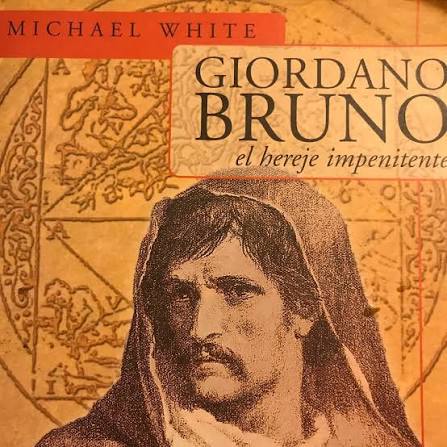
In the second chapter of his book, Michael White examines this historical context and Bruno’s intellectual development. White shows how the young Dominican friar absorbed the learning of his age while gradually moving beyond its accepted limits. As a result, the chapter offers a useful starting point for anyone who wants to understand where Bruno’s bold ideas came from.
Prisca Theologia: In Search of Primordial Wisdom
Prisca theologia refers to the idea that religious and philosophical traditions emerging in different historical periods preserve traces of a common ancient wisdom. Renaissance thinkers often believed that ancient texts could reveal fundamental truths about the nature of the universe and humanity. For this reason, figures such as Hermes Trismegistus, Zoroaster, Orpheus, and Pythagoras were seen as early links in a single chain of sacred knowledge.
Bruno also showed a profound interest in ancient systems of thought. However, rather than accepting the authorities of the past without question, he established connections between different intellectual traditions. In other words, he treated ancient wisdom not as a finished doctrine but as raw material for new thinking.
Hermetic and Platonic Sources of Giordano Bruno’s Philosophy
Furthermore, the Hermetic tradition, Platonic influences, and natural philosophy played significant roles in Bruno’s thought. These sources contributed to his understanding of the universe as a living, integrated order open to human understanding. In particular, the Neoplatonic idea of a world soul allowed him to describe nature as animated from within rather than moved from outside.
Historian Frances A. Yates famously argued that the Hermetic tradition was central to Giordano Bruno philosophy. Later scholars have questioned how far this reading should go. Even so, her work made it clear that Bruno cannot be understood apart from the esoteric currents of his time. For a balanced overview of these debates, see the Stanford Encyclopedia of Philosophy entry on Giordano Bruno.
The Tension Between Tradition and Innovation
Bruno’s philosophy combined an admiration for the past with a search for innovation. On the one hand, he drew upon ancient wisdom; on the other, he challenged the cosmological and theological assumptions of his time. This double movement gives his work its restless and provocative character.
Nevertheless, interpreting his approach solely as the beginning of scientific progress would be insufficient. When reflecting on nature, Bruno did not separate metaphysics, religion, and philosophy into strictly defined categories. His defence of an infinite universe, for example, grew out of metaphysical and theological arguments as much as astronomical ones. You can explore this theme further in our article on Giordano Bruno and the idea of an infinite universe.
Why Giordano Bruno Philosophy Still Matters
Ultimately, Bruno’s significance in Renaissance philosophy lies in his synthesis of different intellectual traditions. Moreover, this synthesis is essential to understanding both his development of original ideas and his conflicts with the authorities of his time. Those conflicts eventually led to his trial and to his execution in Rome in 1600.
Today, Giordano Bruno philosophy continues to attract readers because it refuses easy labels. It is neither purely mystical nor purely scientific. Instead, it shows how a Renaissance thinker could look back to ancient wisdom and, at the same time, imagine a radically new world.
References
- White, Michael. Giordano Bruno, el hereje impenitente. 2001. Chapter 2: “Prisca Theologica”; Chapter 4: “Prisca Sapienta.”
- Yates, Frances A. Giordano Bruno and the Hermetic Tradition. University of Chicago Press, 1964.
About the Author