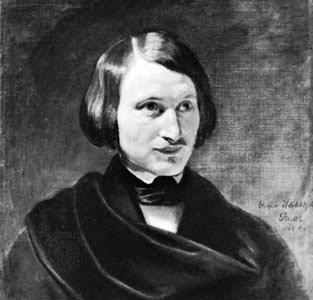
Nikolai Gogol, one of the most important writers in Russian literature, is particularly known for works such as The Overcoat, The Nose, Dead Souls, and The Government Inspector. However, one of the most intriguing periods of Gogol’s life had less to do with his literary career: in 1834, Gogol became a professor of history at St. Petersburg University. If you want to explore more of his unusual biography, see our article on interesting facts about Nikolai Gogol’s life.
On July 24, 1834, Gogol began working as an adjunct professor of Medieval History at St. Petersburg University. An important detail stands out here: Gogol was not a historian who had received a modern university education in the field. He had studied at the Nizhyn Lyceum and later pursued various ventures in government service and literature. Therefore, his teaching of history at a university was highly unusual according to the academic standards of the period. biography.wikireading.ru
Moreover, Gogol’s academic career did not last long. Although he initially demonstrated an impressive ability to lecture, serious problems soon emerged concerning the academic depth of his historical knowledge. Eventually, he stopped attending his classes regularly and avoided participating in his students’ examinations. During this period, the excuse of a toothache became one of the most famous details of Gogol’s academic adventure. The New Yorker
How Did Gogol Become a Professor of History at the University?
Gogol’s university position had less to do with his academic expertise in history than with the intellectual and bureaucratic networks of the period. In the early 1830s, the writer had begun to take a serious interest in Ukrainian history and the Middle Ages.
At the same time, he was rapidly gaining recognition in the literary world. His collection of stories, Evenings on a Farm Near Dikanka, brought him considerable fame. Alexander Pushkin’s admiration for Gogol also strengthened his position within intellectual circles.
This environment helped Gogol obtain an academic position. Indeed, Donald Fanger interprets Gogol’s brief professorship as an undertaking that developed around his literary career. During the same period, Gogol was planning extensive projects on history, geography, and Ukrainian history. Scribd
Gogol’s Historical Education Was Not Academic
To understand Gogol’s position at the university, we need to examine his educational background. Gogol was not a professional historian who had received university-level training in history. Nevertheless, his interest in history was far from superficial.
He was particularly fascinated by Ukrainian history, folk culture, the Middle Ages, and European history. Before taking his university position, he had written several texts on historical subjects. His 1834 essay titled On the Middle Ages was also a product of this intellectual interest.
Gogol used this text as the introductory lecture for his Medieval History course at St. Petersburg University. Therefore, it would be inaccurate to dismiss his interest in history simply as a form of “fraud.” The central problem lay in the gap between his intellectual curiosity about history and his ability to provide systematic historical instruction at the university level. biography.wikireading.ru
Why Did Gogol’s Lectures as a Professor of History Attract Attention?
Gogol’s history lectures were not entirely unsuccessful. On the contrary, some students were deeply impressed by his manner of presentation.
The main reason was Gogol’s literary talent. Rather than behaving like a conventional academic who simply transmitted chronological information, he preferred to explain history through major ideas and dramatic relationships.
For example, when discussing medieval history, he placed particular emphasis on the influence of the papacy on Europe. In his introductory lecture, On the Middle Ages, he placed the pope at the center of the historical development of the period. This approach was closer to a philosophical and literary interpretation of history than to the source-critical methodology of academic historiography. biography.wikireading.ru
Furthermore, students remembered some of Gogol’s lectures because of their literary qualities. Modern research likewise emphasizes that his lectures had a strong rhetorical impact on students, although they had serious limitations from the perspective of professional historical scholarship. CISS Journal
Why Did Gogol Stop Attending His Lectures?
Gogol’s academic position quickly became problematic. The impressive style of his early lectures could not conceal his lack of historical knowledge for long.
Sources report that Gogol did not attend his lectures regularly and sometimes appeared unprepared. According to one account, he missed a considerable number of classes and, when he did appear, presented historical information in a highly general and fragmented manner. The New Yorker
Here, a tension emerged between Gogol’s personality and the academic institution. As a literary writer, intuition, imagination, and rhetoric were among his strengths. As a university professor, however, he needed regular preparation, knowledge of sources, chronological accuracy, and methodological discipline.
Therefore, Gogol’s failure at the university cannot be explained simply by his failure to attend classes. The difference between literary talent and academic expertise lies at the heart of the episode.
How Did the “Toothache” Story Emerge?
The most famous detail associated with Gogol’s university career occurred during his students’ examinations.
According to accounts from the period, instead of examining his students, Gogol wrapped a handkerchief around his head and pretended to suffer from a toothache. In this way, he avoided speaking and asking questions during the examination. Another professor examined the students instead. Writer’s Almanac
Different biographical sources recount the details of this episode with minor variations. Nevertheless, the story that Gogol used a toothache as an excuse during examinations remains one of the most widely repeated historical anecdotes concerning his brief university career.
What makes the anecdote particularly interesting is that Gogol himself experienced a conflict between bureaucracy, official position, and appearance versus reality—themes that he would later explore extensively in his literature.
Why Did Gogol Fail as a Professor of History?
Several factors help explain Gogol’s failure.
1. Lack of Academic Expertise
Gogol had not received systematic university training in history. Although he had a strong interest in the subject, he lacked the methodological foundation required for professional historical scholarship. CISS Journal
2. The Difference Between Literature and Academia
Gogol’s strength did not lie in systematically analyzing historical sources. Instead, he excelled at presenting major historical processes through powerful and evocative images.
3. Uncertainty About His Career Goals
In the mid-1830s, Gogol was still searching for a direction between literature, history, and government service. Fanger’s research indicates that Gogol planned numerous projects involving history and geography during this period. However, most of these projects remained unfinished. Scribd
4. The Expectations of the University
A university professorship required more than effective public speaking. It also required regular teaching and the evaluation of students. Gogol was unable to sustain these institutional responsibilities.
The Impact of Gogol’s Academic Experience on His Literature
Gogol’s brief university experience was not completely separate from his literary world.
Institutions, bureaucracy, official positions, and people’s behavior toward those positions occupy an important place in Gogol’s works. In works such as The Government Inspector and The Overcoat, we can see how institutions shape human behavior.
From this perspective, his university experience provides an interesting biographical background. When Gogol became part of an institution, he experienced a significant mismatch between institutional expectations and his own abilities.
Moreover, his position as a professor of history gave him an opportunity to observe how academic authority functioned from close range. It is difficult to claim that this experience directly caused his later literary treatment of the absurdity of the bureaucratic world. Nevertheless, a striking parallel exists between his life experience and his literary themes.
When Did Gogol Stop Being a Professor of History?
Gogol’s position at the university lasted approximately one year. He left his academic post in 1835 and increasingly turned toward literature. The same period marked the beginning of an exceptionally productive literary phase in Gogol’s career.
In 1835, Mirgorod and Arabesques were published. Later, works such as The Government Inspector and Dead Souls further strengthened Gogol’s position in Russian literature.
Therefore, Gogol’s failure as a professor of history did not mark the end of his intellectual life. Rather, it can be regarded as one of the experiences that accelerated his movement toward a literary career.
Conclusion: Gogol, a Failed Professor of History and a Great Writer
Nikolai Gogol’s brief tenure as a professor of Medieval History at St. Petersburg University in 1834 represents one of the most unusual academic episodes in literary history.
Gogol was not an academic historian. Nevertheless, he thought seriously about history, prepared lecture materials, and wrote texts concerning medieval history. His strong ability as a storyteller attracted students during his early lectures. However, his shortcomings in academic discipline, expertise, and regular teaching soon became apparent. Wikisource
The toothache excuse eventually became a symbol of this failure. Nevertheless, viewing the episode merely as a comic anecdote would be incomplete. Gogol’s university experience also demonstrates how fluid the boundaries between literature, history, and academia were in nineteenth-century Russian intellectual life.
Gogol did not become a successful professor of history. Yet his interest in historical thought, combined with his literary imagination, contributed to the development of one of the most distinctive writers in Russian literature.
References
- Fanger, Donald. The Creation of Nikolai Gogol. Cambridge, MA: Harvard University Press, 1982. Scribd
- Gogol, Nikolai. “О средних веках” (On the Middle Ages). 1834. The text was published in connection with Gogol’s introductory lecture at St. Petersburg University. biography.wikireading.ru
- Proffer, Carl. Biographical and literary studies on Gogol, including assessments of his brief academic career at St. Petersburg University. Library and Archives Canada
- Saint Petersburg State University. Institutional research on the history of St. Petersburg University, including Gogol’s teaching of Medieval History in 1834. Saint Petersburg University historical resource
- The New Yorker. “The Prankster and the Prophet.” A biographical discussion of Gogol’s professorship in 1834 and the toothache anecdote. The New Yorker
Related reading
- What Connection Might There Be Between Nikolai Gogol Burning Hans Küchelgarten and Destroying the Second Volume of Dead Souls?
- Interesting Facts and the Dark Atmosphere of Nikolai Gogol’s Life
- Nikolai Gogol’s Handicraft Skills: The Role of Sewing, Embroidery, and Knitting in the Writer’s Life
- Why Does Gogol’s The Overcoat Still Matter Today?
Further reading: How Does Pushkin Unite History and the Individual in The Captain’s Daughter?
About the Author