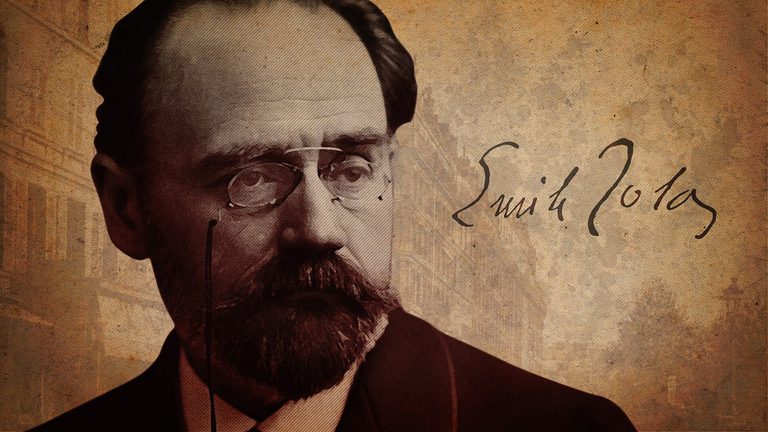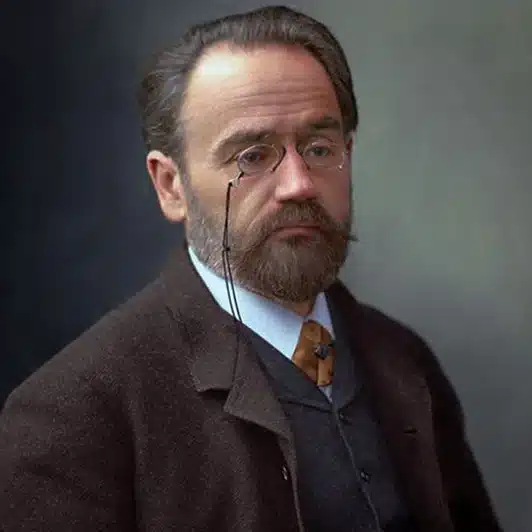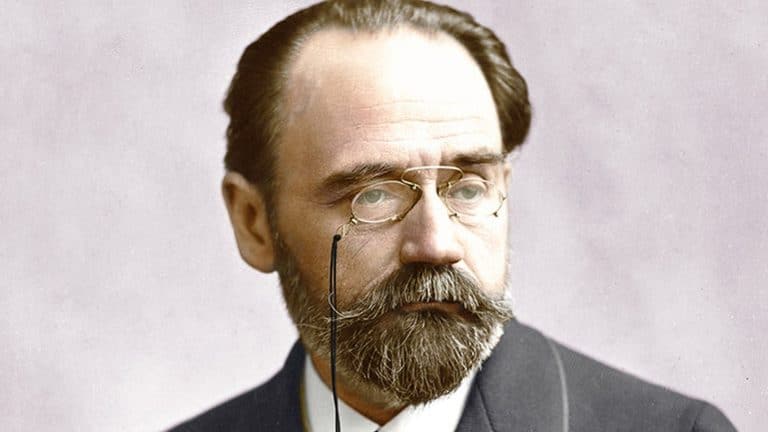
In Victorian England, the reception of Zola exposed a conflict between literary freedom and moral censorship. His novels attracted readers while provoking campaigns against supposedly indecent literature. Michael Rosen examines Zola’s encounters with British publishers, critics, and reformers, showing how debates about obscenity also reflected wider anxieties about education, class, and cultural authority.
Why Did Zola’s Novels Provoke Controversy in Britain?
Émile Zola became a controversial figure in Britain because his novels challenged conventional expectations about literary subjects and acceptable language. His naturalist fiction explored poverty, labor, sexuality, alcoholism, and the physical conditions of everyday life.
Many readers and critics regarded these subjects as unsuitable for respectable literature. Others saw Zola’s willingness to portray uncomfortable realities as a legitimate literary method.
The controversy intensified during the 1880s, when the British publisher Henry Vizetelly issued English translations of Zola’s works. Between 1884 and 1888, Vizetelly and his publishing company produced numerous translations, helping British readers encounter a writer whose reputation already provoked intense debate.
Michael Rosen returns to this history in Chapter 10, “‘Grossest bad taste.’” He examines the background to Zola’s English reception and connects the controversy to the circumstances of the novelist’s later exile.
The dispute demonstrates that literature does not circulate independently of social values. Publishers, reviewers, legal authorities, and campaigners all influence which books reach readers and how audiences interpret them.
How Did Victorian Campaigns Against Obscenity Work?
One important organization in Rosen’s account is the National Vigilance Association (NVA), founded amid concerns about public morality. Under the leadership of figures such as W. T. Stead, the association campaigned against material it considered indecent.
The NVA established a literary subcommittee that monitored publications and supported action against works it regarded as immoral. Zola’s novels became part of this wider struggle over the boundaries of acceptable reading.
The prosecution of Henry Vizetelly illustrates the consequences for publishers who issued controversial literature. Legal action could impose financial penalties and discourage the publication or translation of works that challenged prevailing moral expectations.
However, the controversy involved more than the question of whether a particular passage offended readers. It also raised questions about who possessed the authority to regulate literature and whose standards should determine public morality.
Moreover, the growth of literacy and the expansion of readerships created new anxieties among cultural authorities. As more people gained access to printed material, debates about Zola and censorship became debates about education, social class, and the influence of reading on public behavior.
What Was at Stake in the Debate Over Zola’s Naturalism?
Zola’s naturalism sought to represent human behavior within social and material conditions. His novels often examined the pressures of poverty, work, environment, and inherited circumstances.
For his supporters, this approach offered a serious examination of society. For his critics, however, his emphasis on bodily experience and unpleasant realities could appear indecent or degrading.
The disagreement therefore involved competing ideas about the purpose of literature. Should novels present morally exemplary lives, or could they investigate human behavior without idealizing their subjects?
Zola’s work made this question difficult to avoid. By depicting aspects of life that polite society preferred to ignore, he challenged the assumption that literature should protect readers from disturbing realities.
Nevertheless, controversy alone does not establish literary merit. A more useful assessment considers how a writer’s choices serve the work’s artistic and intellectual aims.
Rosen’s historical account helps readers understand why the reputation of Zola became entangled with censorship rather than treating the conflict as a simple disagreement between enlightened authors and ignorant critics.
How Did Zola’s Earlier Visit to England Shape His Later Exile?
Zola had visited England before his 1898 exile. In September 1893, he attended a banquet at the Crystal Palace associated with the Institute of Journalists.
His speech presented literature as a force capable of connecting people across national divisions. He described a shared intellectual realm that could transcend the rivalries and prejudices of states.
This earlier visit provides an important contrast with the circumstances of 1898. On his first visit, Zola appeared as a celebrated foreign author participating in an international literary gathering. During his exile, he arrived under the pressure of a criminal conviction and an increasingly hostile political climate.
Rosen’s seventh and tenth chapters connect these two episodes to the wider history of Zola’s reception in Britain.
The contrast also highlights a central tension in the cultural life of the period. British audiences could celebrate Zola as an internationally important writer while British campaigners and publishers disputed the acceptability of his work.
Why Does Zola Still Matter in Debates on Censorship?
The Zola controversy remains relevant because societies continue to debate the relationship between artistic expression and public morality.
As the case of Zola shows, censorship rarely operates through a single institution. Instead, it can involve legal restrictions, commercial pressure, public campaigns, reputational attacks, and informal decisions about which works deserve publication.
Zola’s experience illustrates how these forces can interact. A novelist’s reputation may attract readers while simultaneously encouraging authorities to restrict access to his books.
Furthermore, debates about obscenity can conceal broader conflicts over social power. When critics condemn literature for depicting poverty, sexuality, or inequality, they may also be responding to the writer’s challenge to conventional social arrangements.
Zola’s career therefore offers a valuable historical case study of the competing claims of literary freedom and moral regulation.
Exile also reshaped his family relationships; read more about Émile Zola’s private life in exile.
Key Takeaways
- Zola’s naturalist novels provoked controversy because of their treatment of social and bodily realities.
- Henry Vizetelly’s translations helped introduce Zola’s fiction to British readers.
- The National Vigilance Association campaigned against literature it considered immoral.
- Zola’s 1893 visit to England contrasted sharply with his exile in 1898.
- The Zola censorship debate raised lasting questions about artistic freedom and cultural authority.
References
- Rosen, Michael. The Disappearance of Émile Zola: Love, Literature and the Dreyfus Case. London: Faber & Faber, 2017. See Chapters 7 and 10.
- Michael Rosen’s official book description
- The Guardian’s review of the book
- For historical context, consult the book’s bibliography and source notes.
About the Author