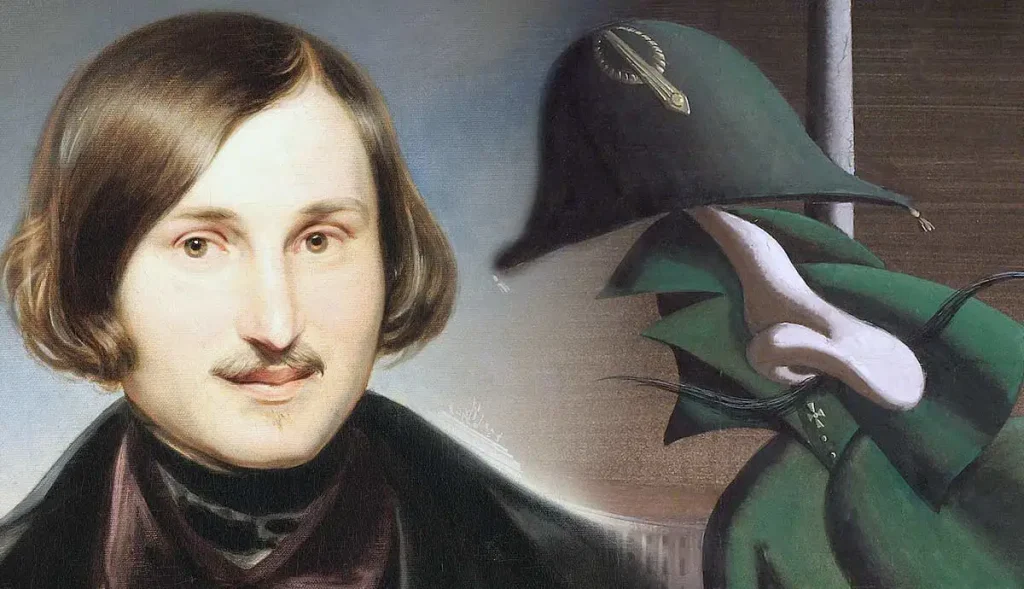
Nikolai Gogol was one of the most original writers of 19th-century Russian literature. With works such as The Overcoat, The Nose, Diary of a Madman, The Government Inspector, and Dead Souls, he influenced not only Russian literature but also the development of modern literature. However, Gogol’s personality was almost as striking as the grotesque and dark atmosphere of his works.
A growing conflict emerged in the life of Nikolai Gogol between literature and his personal religious beliefs. The humor and social criticism of his youth gradually gave way to intense religious searching and an ascetic way of life. Moreover, the writer developed an extraordinary perfectionism toward his own works. This tendency had particularly dramatic consequences for the second volume of Dead Souls. (Wikisource)
Therefore, Gogol’s biography is not simply the life story of a famous writer. It also provides a striking example of the tension between humor and tragedy, creativity and religious anxiety, and art and conscience.
What Was Gogol’s Real Name?
Nikolai Gogol was born in 1809 near Sorochyntsi in the Poltava region, which is now part of Ukraine. His birth name was Nikolai Vasilyevich Yanovsky. He later adopted the surname Gogol in the literary world. (Wikipedia)
Gogol’s childhood developed in close connection with Ukrainian culture, folk tales, and local folklore. This cultural environment became particularly visible in his early works. In texts such as Evenings on a Farm Near Dikanka, folk beliefs, supernatural events, and rural Ukrainian life occupy an important place.
For this reason, it would be incomplete to interpret Gogol’s literary world solely through St. Petersburg and Russian bureaucracy. Ukrainian cultural heritage also formed one of the fundamental sources of his imagination.
Young Nikolai Gogol Wanted to Become an Actor
Gogol’s literary career did not follow a definite path from the beginning. After moving to St. Petersburg, he worked as a civil servant and also became interested in theater. However, he was unsuccessful as an actor. Consequently, he turned increasingly toward literature. (Wikisource)
One of his earliest literary attempts reveals an interesting characteristic of Gogol’s personality: an extreme sensitivity to criticism.
In 1829, he published a poem entitled Hanz Küchelgarten. After the work received harsh criticism, Gogol attempted to remove copies from the market and burned the remaining books. (Wikisource)
This event can be regarded as an early example of a behavior that would appear on a much larger scale in later years. Gogol displayed not only critical judgment toward his works but also, at times, a destructive form of perfectionism.
Why Was Pushkin Important in Gogol’s Life?
Alexander Pushkin played an important role in Gogol’s literary development. The relationship between the two writers extended beyond friendship. Pushkin was among the first literary figures to recognize Gogol’s talent.
Furthermore, Pushkin reportedly influenced the formation of the basic ideas behind The Government Inspector and Dead Souls. While working on Dead Souls, Gogol attached great importance to Pushkin’s judgment. (Wikisource)
This relationship reveals an important aspect of Gogol’s literary approach. While developing his own artistic standards, the writer relied on the judgment of a powerful literary authority.
Rome Changed Gogol’s World
From 1836 onward, Gogol spent long periods in Europe and lived particularly important years in Rome. He also wrote significant parts of Dead Souls in Italy. (Project Gutenberg)
Rome was not simply a city from which Gogol became geographically distant. Instead, it became an environment in which important changes took place in his understanding of art and religion.
In particular, Gogol’s religious thinking became increasingly influential in his later years. The writer, who had become famous for humor and social criticism, gradually began to focus on the moral and religious responsibilities of art.
Why Did Nikolai Gogol Become Increasingly Religious?
Religion assumed a central position in the final period of Gogol’s life. He increasingly believed that literature should transform people morally.
This transformation represents one of the most important differences between the early and late Gogol. His early works treated bureaucracy, social hypocrisy, and human weaknesses with powerful humor. In later years, however, the writer began to question his own art as well.
In 1845, he burned the second part of Dead Souls, providing one of the clearest indications of this transformation. Gogol later attempted to rewrite the work. Nevertheless, he experienced a profound internal struggle while working on the manuscript. (Wikisource)
Why Did Nikolai Gogol Burn the Second Volume of Dead Souls?
This event remains one of the most debated aspects of Gogol’s biography.
Gogol had planned Dead Souls as a large three-part work. The first part appeared in 1842. However, he became dissatisfied with the manuscript while working on the second volume. In 1845, he burned the first version and later began rewriting it. (Russia Beyond)
During his final years, his religious anxieties, perfectionism, and psychological distress became increasingly intense. In 1852, he again committed much of the second volume to the fire. Different explanations have been offered for this event. Some sources emphasize religious remorse, while others point to a sense of artistic failure or an error that occurred during the burning. (Wikisource)
Therefore, it would be inaccurate to provide one definitive answer to the question, “Why did Gogol burn his book?” A more cautious explanation recognizes the combined influence of religious anxiety, perfectionism, and psychological crisis.
His Perfectionism Led Him to Destroy His Own Works
One of the most striking aspects of Gogol’s literary personality was his perfectionism.
His decision to collect and burn copies of his first poem after its failure provides an early example. His repeated rewriting of the second volume of Dead Souls demonstrates the same tendency at a much more advanced stage. (Wikisource)
An important distinction should be made here. Explaining Gogol’s behavior simply through the concept of “madness” would be historically inadequate. During his final years, his religious ideas, physical asceticism, understanding of artistic responsibility, and intense anxieties influenced one another.
For this reason, Gogol’s final period should be understood through psychological, religious, and literary factors together.
Why Was There a Dark World Behind Gogol’s Humor?
Although the humor in the literature of Nikolai Gogol may appear comic on the surface, it often carries a profound sense of unease.
In The Nose, he transforms the human body into a grotesque object. In The Overcoat, he combines the tragedy of an ordinary clerk with the absurdity of the bureaucratic world. Diary of a Madman, meanwhile, presents the fragmentation of a person’s perception of reality somewhere between humor and tragedy.
Thus, the humor of Nikolai Gogol does not merely seek to make readers laugh. Instead, humor becomes a literary instrument that reveals the social and psychological condition of human beings. In a similar way, later thinkers explored the hidden layers of the psyche, as seen in Carl Jung’s Red Book.
Indeed, the first volume of Dead Souls also addresses social corruption, bureaucracy, property, and human greed through grotesque narration. In this respect, the novel constitutes an extensive critique of 19th-century Russian society. (Project Gutenberg)
Is There a Connection Between Gogol’s Loneliness and His Works?
During the final period of his life, Gogol became increasingly withdrawn. In particular, during his years in Europe, he devoted himself intensely to literature, religion, and personal morality.
Consequently, the boundary between his life and his works also became less distinct. Initially, Gogol criticized society; later, he subjected his own art to the same process of scrutiny.
From this perspective, Dead Souls is not merely a novel about Russian society. It also preserves traces of the transformation in Gogol’s understanding of art.
Why Was Gogol’s Journey to Jerusalem Important?
In 1848, Gogol traveled to Jerusalem on a pilgrimage. The journey took place during a period when his religious search had become increasingly intense. (Wikisource)
The visit to Jerusalem further strengthened Gogol’s religious ideas. Afterward, his tendency to regard literature solely as an aesthetic activity became even weaker.
For Gogol, art now also possessed a moral function. This idea became increasingly visible in his later writings.
The Death of Nikolai Gogol Was as Controversial as His Life
Gogol died in Moscow on February 21, 1852. During his final days, he became seriously weakened and refused to eat. Shortly before his death, he experienced intense religious and physical distress. (JSTOR)
After his death, various legends emerged about Gogol. One of the most famous claims states that his body was found face down when his grave was opened, leading to speculation that he might have been buried alive. However, historians do not regard this story as reliable evidence.
Therefore, popular stories surrounding Gogol’s death should be distinguished from historical documentation.
Why Is Nikolai Gogol One of the Important Figures of Modern Russian Literature?
Gogol’s significance cannot be explained simply by the number of works he produced. His primary influence emerged from bringing the absurdity of ordinary life to the center of literature.
Bureaucrats, minor officials, provincial landowners, and people living on the margins of society acquire major literary significance in Gogol’s works. In this way, the ordinary person became one of the fundamental figures of modern Russian literature.
Moreover, Gogol’s grotesque narrative style influenced later Russian writers. Dostoevsky’s relationship with the Gogolian tradition, in particular, demonstrates the writer’s lasting influence on Russian literature.
In this respect, the peculiarities of Gogol’s life were not completely independent of the grotesque world of his literature. His humor, personal anxieties, and religious searches represented different aspects of the same personality.
References
- Gogol, N. V. Dead Souls. Project Gutenberg – Dead Souls
- Phelps, W. L. Essays on Russian Novelists: Gogol. Wikisource – Essays on Russian Novelists/Gogol
- Encyclopædia Britannica. “Gogol, Nikolai Vasilievich.” 1911. Encyclopædia Britannica – Gogol
- Gogol House – Memorial Museum and Scientific Library. Gogol House – Nikolay Gogol Biographical Chronology
- Finkelstein, S. Gogol’s Afterlife: The Evolution of a Classic in Imperial and Soviet Russia. Stanford University Press. JSTOR
About the Author