Dr. Mikhail Dostoevsky: Social Mobility and Personality
Fyodor Dostoevsky’s father, Dr. Mikhail Dostoevsky (Mikhail Andreyevich), pursued an ambitious path toward socioeconomic advancement in Tsarist Russia. At the time, Russian society was structured by rigid caste boundaries and a strict social hierarchy (Frank, 2017, pp. 30–34). Step by step, his rise across social classes unfolded in several historical stages:
- Breaking Away from the Clerical Estate (Caste): Mikhail Andreyevich was the son of a town priest affiliated with the Eastern Orthodox Church in Ukraine. However, he rejected the religious profession imposed upon him. At fifteen, he left home and traveled to Moscow (Frank, 2017, p. 30).
- Medical Education and Military Medicine: In 1809, he gained admission to the Imperial Medical-Surgical Academy. Then, during and after the Napoleonic Wars of 1812, he worked as a military doctor under hard conditions (Frank, 2017, p. 30).
- State Service and a Merit-Based Distinction: In 1821, he received an appointment at the Mariinsky Hospital for the Poor in Moscow. Thanks to his disciplined service, he received the Order of Saint Anna, Third Class, in 1828 (Frank, 2017, p. 30).
- Registration of Hereditary Nobility: Through the Order of Saint Anna, he acquired the right to civil nobility under the Tsarist Table of Ranks (Tabel o rangakh). Finally, on June 28, 1828, he registered himself and his sons, Mikhail and Fyodor, in Moscow’s hereditary nobility register (Frank, 2017, p. 30).
Dr. Mikhail Dostoevsky earned his social position through his own efforts. Nevertheless, he lived with pathological insecurity and chronic suspicion. He was also extremely sensitive to perceived slights and had a volatile temper (Frank, 2017, pp. 30–34). Above all, he feared losing his social respectability. As a result, he became convinced that others, including his servants, were mistreating or deceiving him (Frank, 2017, pp. 33–34).
Family Tensions and the Tragedy of 1839
Family life unfolded in a cramped, low-ceilinged apartment provided by the Mariinsky Hospital for the Poor. In this home, tensions grew between two very different temperaments. Marya Fyodorovna was affectionate, constructive, and cheerful, while Dr. Mikhail was melancholic and authoritarian (Frank, 2017, pp. 30–37). Although he was deeply attached to his wife, his pathological insecurity often triggered intense episodes of jealousy. In fact, he repeatedly accused Marya Fyodorovna of infidelity, creating a gloomy atmosphere within the household (Frank, 2017, pp. 35–37).
After Marya Fyodorovna died of tuberculosis in 1837, Dr. Mikhail withdrew to the family’s small estate at Darovoe. There, he increasingly turned to alcohol, which set the stage for a tragic conclusion (Frank, 2017, pp. 38–39). Then, in the summer of 1839, Dr. Mikhail Dostoevsky died under suspicious circumstances (Frank, 2017, pp. 39–40). The official autopsy report recorded a “stroke” as the cause of death. However, rumors spread among local residents and peasants that his own serfs (krepostnoy) had strangled him. These serfs had long endured his harsh treatment (Frank, 2017, pp. 39–40).
Rumors, Land Disputes and a Son’s Guilt
These rumors also had a socioeconomic dimension. Major Khotyaintsev, a neighboring landowner, was involved in a boundary dispute with the Dostoevsky family. He allegedly incited the peasants and spread the accusations in order to buy the land at a lower price. This episode therefore shows how property disputes and economic interests could shape the stories surrounding the death (Frank, 2017, p. 41).
Meanwhile, Fyodor was studying at the Military Engineering Academy in St. Petersburg. At this time, he developed an intense sense of guilt. In his mind, there was a direct moral link between three things: his repeated requests for money from his father, his father’s economic oppression of the peasants, and his father’s tragic death (Frank, 2017, pp. 39–41). For a closer look at this theme, see Dostoevsky’s Father: The Roots of Guilt.
Reflections of Mikhail Dostoevsky in Literary Works
The neurotic and contradictory temperament of Mikhail Dostoevsky left direct traces in his son’s early literary works. In particular, it shaped the following character types:
- Poor Folk (Varvara’s Father): Varvara’s father is portrayed as a troubled, sorrowful, and ultimately pitiable figure. He spends everything he has on his children’s education. Yet he takes out the bitterness of his failures and social humiliation on his household (Frank, 2017, p. 42).
- Netochka Nezvanova (Fyodor Ferapontovich): Fyodor Ferapontovich, a minor government official, serves as a satirical caricature of the author’s father. He accuses his children of ingratitude and constantly reminds his family of his sacrifices. Moreover, his wounded pride turns the home into a place of misery (Frank, 2017, p. 42).
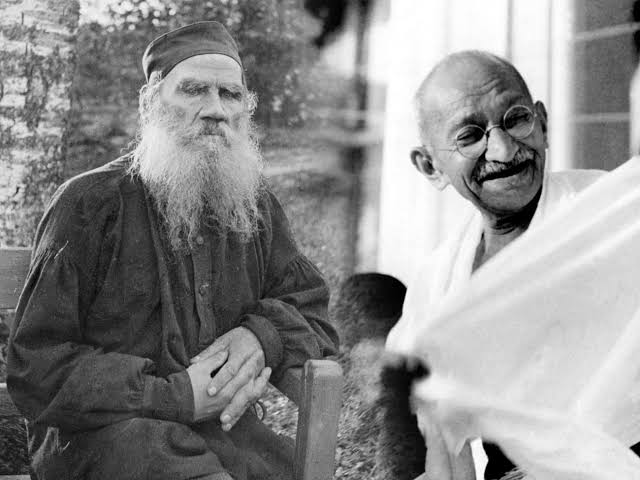
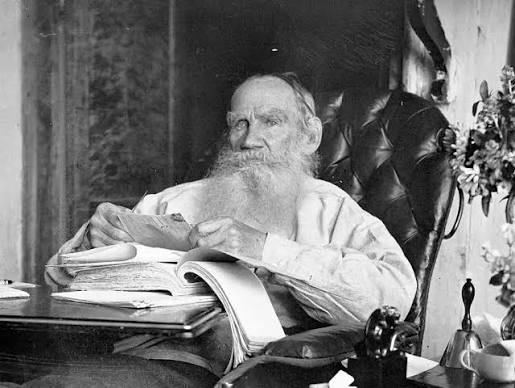
From a textual and sociological perspective, the contrast between Dostoevsky and writers such as Leo Tolstoy is particularly revealing. Tolstoy and other authors from established landed-noble families (dvorianstvo) often depicted the aesthetic stability of the upper classes. They also portrayed the seemingly unified social order of the past. Dostoevsky, by contrast, grew up amid turmoil, uncertain social status, and family crises. Consequently, his literary imagination engaged directly with the existential fragmentation and disorder of his age (Frank, 2017, p. 29).
Tolstoy’s aristocratic background helped shape the cohesive, monologic epic form of War and Peace. On the other hand, Dostoevsky came from a more fragmented, urban, bourgeois background. Ultimately, this background contributed to a new kind of novel built on polyphony, that is, the coexistence of multiple independent voices. In addition, this new novel kept a sustained focus on crisis (Frank, 2017, p. 29).
References
Frank, J. (2017). Dostoyevski: Çağının bir yazarı [Dostoevsky: A Writer in His Time] (Ü. İnce, Trans.; C. Alpan, Ed.). Everest Publishing.
About the Author