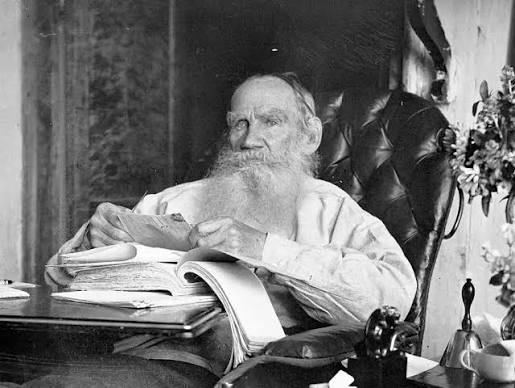
Introduction: Tolstoy’s Radical Philosophy and the Inner Turmoil of a Literary Giant
Lev Nikolayevich Tolstoy, one of the towering figures of world literature, came to be regarded during the final twenty-five years of his life not merely as a great novelist, but also as a radical moral thinker and spiritual guide. However, his diary entries from 1895 to 1910 reveal a painful gap between Tolstoy’s radical philosophy and his daily life. In reality, the man who appeared from the outside to be a sage struggled with relentless remorse and bitter family conflicts within his own estate.
Tolstoy’s mature philosophy rested on several fundamental principles: religion, opposition to the state, nonviolence, and the rejection of private property. Yet putting these ideals into practice in everyday life gave rise to profound personal crises. In fact, his moral rigor even extended to art, as seen in why Tolstoy criticized Wagner and Beethoven.
1. From Religious Dogma to Authentic Conscience: A Critique of the Institutional Church
To begin with, in his diaries Tolstoy sharply criticizes the Orthodox Church and the doctrines it teaches. Moreover, in his view, the institutional structures of churches, founded on miracles, rituals, and the doctrine of the Trinity, constitute a form of “deception” that renders the human mind passive.
- The Role of Religious Education: First of all, Tolstoy argues that many of society’s evils originate in the dogmatic and irrational religious instruction imposed on children from an early age.
- A Universal Moral Law: True religion, stripped of ritual, requires individuals to follow their consciences and embody the principle of universal love. Although the Russian Orthodox Church formally excommunicated Tolstoy in 1901, he continued to regard God as the source of moral development within human consciousness.
2. Tolstoy’s Radical Philosophy of the State: “An Organized Instrument of Violence”
Furthermore, Tolstoy’s political philosophy rests on a radical opposition to authority that can be described as Christian anarchism.
- The State as a Band of Robbers: Specifically, in his diary entries, Tolstoy explicitly characterizes the state as a “band of robbers.” In particular, taxation, landownership, and compulsory military service, he argues, are mechanisms designed to exploit the population and preserve the privileges of the elites.
- Refusal to Participate in State Institutions: Tolstoy maintains that a reasonable person guided by conscience cannot participate in state institutions such as courts, tax offices, or the military. Therefore, he regards attempts to reform the state through legislation or elections as a “childish game.”
3. “Non-Resistance to Evil by Force” and Passive Disobedience
At the heart of Tolstoy’s radical philosophy lies the principle of “non-resistance to evil by force.”
- A Critique of Revolutionary Violence: For example, Tolstoy criticizes nihilists and revolutionaries who use bombs and terror against the Tsarist regime. Instead, he argues that overthrowing a government through violence merely transfers power from one group to another. In turn, this only intensifies the cycle of oppression.
- Conscientious Objection and Passive Disobedience: Opposed to war and compulsory military service, Tolstoy likewise insists that humanity can achieve liberation only when individuals refuse to serve the state and instead listen to the dictates of their consciences.
4. Hell Within the Estate: Tolstoy’s Radical Philosophy Versus Family Life
Consequently, Tolstoy’s radical philosophy stood in direct conflict with the aristocratic lifestyle maintained at Yasnaya Polyana.
| Tolstoy’s Ideals | His Family’s Reality |
|---|---|
| Poverty and simplicity | Aristocratic luxury |
| Rejection of copyright income | Protection of family income and property |
| Conscientious objection and pacifism | Military service and participation in state institutions |
| Privacy and a secret diary | Surveillance and the reading of personal diaries |
A. Luxury Versus the Ideal of Simplicity
Overwhelmed by the severe poverty endured by peasants, Tolstoy felt deeply ashamed of the comfortable life he and his family maintained at their estate. Indeed, he even described himself as a “parasite.” However, his proposal to distribute his wealth and live simply, like a peasant, was rejected by his family and met with ridicule.
B. Copyright and the Battle Over Property
Tolstoy wanted to transfer the copyright to his works into the public domain, effectively relinquishing his exclusive rights to them. However, his wife, Sofya Andreyevna (Sonya), strongly opposed this plan because she wanted to safeguard the family’s financial future. As a result, the disagreement fueled endless arguments within the household and culminated in crises surrounding secret wills and inheritance arrangements.
C. His Children’s Materialism
Similarly, in his diaries, Tolstoy expresses profound anguish over his sons’ attachment to luxury, gambling, hunting, and military service. While he himself rejected private property, he feared that his children were becoming landowners who benefited from the exploitation of peasants. This contradiction weighed heavily on his conscience.
D. The Crisis of Privacy and the Tragic End at Astapovo
Then, in 1908, after growing increasingly distressed by his wife Sofya’s persistent reading and monitoring of his diaries, Tolstoy began keeping a “Secret Diary” intended for his eyes alone. Above all, in these private reflections, he condemned himself as a “hypocrite” who lived in luxury while failing to practice the principles he professed.
The mounting strain of family pressure, disputes over his will, and his wife’s nighttime searches through his desk contributed to a final crisis. Finally, on the night of 28 October 1910, at the age of 82, Tolstoy secretly left his home. He subsequently fell ill at Astapovo railway station, where he died on 7 November 1910 according to the Gregorian calendar.
Tolstoy’s Radical Philosophy in Memorable Quotations from the Diaries
“If my circumstances lead me away from love, the sole principle of my soul, then the fault is entirely my own.”
“The state is a band of robbers. Trying to reform it from within means becoming part of a game designed to preserve the regime itself.”
“Anyone looking at me from the outside would be justified in seeing me as a hypocrite who lives in luxury, exploits the peasants, and hides behind his wife.”
Note: These quotations are English renderings of the Turkish versions supplied in the source text. They should not be treated as verified verbatim quotations from Tolstoy’s original diaries without checking the corresponding passages in the published edition.
References and Notes
- R. F. Christian (ed.), Tolstoy’s Diaries, Volume 2: 1895–1910. Faber & Faber.
- Diary entries from 1895: Reflections on the nature of the state, conscientious objection, and copyright.
- Diary entries from 1897–1898: Criticism of a luxurious lifestyle, feelings of being a “parasite,” and family conflicts.
- Diary entries from 1901–1904: Excommunication, criticism of the Church, opposition to the military and war, and the characterization of the state as a “band of robbers.”
- The 1908 Secret Diary: Pressure on personal privacy, remorse, and self-criticism.
- Diary entries from 1910: Disputes over Tolstoy’s will, final family tensions, and his departure from home.
- Title: Tolstoy’s Diaries, Volume 2: 1895–1910
- Author: Leo Tolstoy (Lev Nikolayevich Tolstoy)
- Compiled, Edited, and Translated by: R. F. Christian (Reginald Frank Christian)
- Foreword by: Rosamund Bartlett
- Publisher: Faber & Faber (Faber Finds)
- Language: English (selected and translated from the original Russian)
- Copyright / Publication Year: 1985 (copyright for the translation and selection: R. F. Christian, 1985; foreword: 2010/2015)
About the Author

1 thought on “A Prophet at Yasnaya Polyana: Tolstoy’s Radical Philosophy and the Two Worlds of His Estate”