Short Answer
The Cracow Circle shaped Copernicus’s intellectual formation within a wider scholarly environment at the University of Cracow. His contemporaries and teachers included astronomers, mathematicians, philosophers, historians, and astrologers. Figures such as Wojciech Brudzewski, Bernard Wapowski, Martin Bylica, and Jan of Głogów help reconstruct the academic world that surrounded the young Copernicus.
Why Was Cracow Important in Copernicus’s Intellectual Formation?
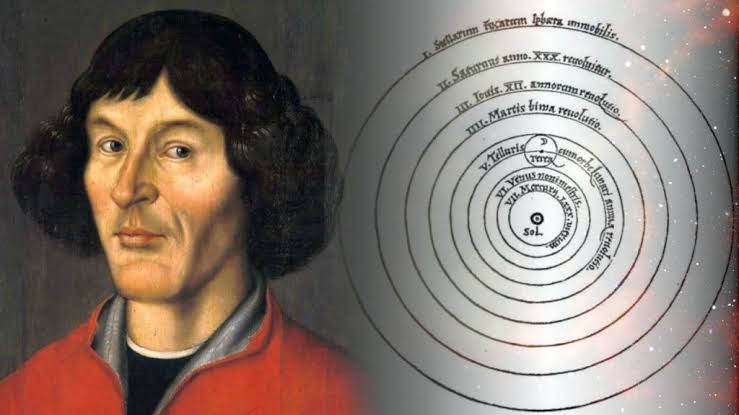
Copernicus registered at the University of Cracow in 1491. The university, founded in 1364 by King Casimir the Great, belonged to an established tradition of higher education in Central Europe.
The curriculum included several subjects associated with medieval university learning. Astronomy formed part of Copernicus’s studies, and he encountered the discipline through the teaching of Wojciech (Adalbert) Brudzewski, a former student of Regiomontanus.
The significance of Cracow, however, extends beyond one teacher.
The university provided an intellectual environment in which different disciplines interacted. Astronomy, mathematics, philosophy, and the interpretation of nature formed part of a broader scholarly culture.
To understand Copernicus’s early development, we must therefore examine the academic community around him.
Who Were the Scholars of the Cracow Circle?
The 1973 exhibition catalogue identifies several scholars whose influence or relationship with Copernicus deserves attention.
These individuals occupied different positions within the intellectual life of the period.
Wojciech (Adalbert) Brudzewski (1445–1497) was an astronomer and teacher associated with Copernicus’s studies at Cracow. The catalogue identifies him as a former pupil of Regiomontanus.
Bernard Wapowski was a fellow student of Copernicus who later became a historian and cartographer. He also served as secretary to the King of Poland. His later correspondence with Copernicus, particularly concerning Johannes Werner, demonstrates the continuation of their intellectual relationship.
Martin Bylica was an astronomer and astrologer. His inclusion in the catalogue illustrates the close historical relationship between disciplines that modern academic classifications often separate.
Jan of Głogów was a philosopher whose place in the Cracow scholarly environment helps demonstrate the importance of philosophical education.
Martin Biem was an astronomer and meteorologist, representing another area of natural inquiry within the wider scholarly community.
Together, these figures of the Cracow Circle provide a broader picture of the intellectual world in which Copernicus developed.
How Did the Cracow Circle Connect Astronomy with Other Disciplines?
Renaissance astronomy did not operate as an isolated scientific discipline.
Astronomers frequently engaged with mathematics, philosophy, astrology, calendar calculation, and the interpretation of natural phenomena.
The catalogue’s list of scholars in the Cracow Circle reflects this interdisciplinary environment. Martin Bylica, for example, appears as both an astronomer and astrologer, while Martin Biem is associated with astronomy and meteorology.
These combinations were characteristic of a period in which scholars approached the natural world through several overlapping intellectual traditions.
Moreover, the study of astronomy depended on mathematical methods and inherited texts. Students encountered earlier authorities while also examining contemporary astronomical problems.
The Cracow Circle therefore offered Copernicus a foundation in the mathematical and intellectual traditions that shaped European astronomy.
What Do Copernicus’s Academic Connections Reveal About Renaissance Science?
The history of science often focuses on exceptional individuals. Copernicus naturally occupies a central position because of the transformation associated with his astronomical ideas.
Nevertheless, scientific developments rarely emerge from individual effort alone.
Teachers transmit methods, fellow students exchange arguments, and scholars maintain correspondence long after leaving university.
The relationship between Copernicus and Bernard Wapowski offers a useful example. Their connection extended beyond their student years and entered the wider scholarly communication of Renaissance Europe.
Similarly, Brudzewski’s connection with Regiomontanus places Copernicus within a longer chain of astronomical learning.
This perspective changes how we understand intellectual originality. Copernicus developed his work within inherited traditions, but he also questioned and reorganised important elements of those traditions.
His achievement becomes more historically meaningful when we examine the scholarly networks that made such intellectual work possible.
How Can We Reconstruct the Cracow Circle of Copernicus?
University records, biographies, surviving books, correspondence, and historical catalogues provide different forms of evidence.
The 1973 exhibition catalogue identifies the scholars connected with Copernicus and points readers towards specialist studies of the Cracow academic community.
One particularly relevant work is Josef Gierowski’s The Cracow Circle of Nicholas Copernicus, which examines the scholarly environment surrounding the astronomer.
Such studies help move beyond a simplified biography. Instead of treating Copernicus as an isolated genius, they place him within a network of teachers, colleagues, and intellectual predecessors.
Ultimately, this approach offers a more complete understanding of Renaissance scholarship.
Key Points
- Copernicus registered at the University of Cracow in 1491.
- The university had been founded in 1364 by King Casimir the Great.
- Wojciech Brudzewski taught astronomy and had studied under Regiomontanus.
- Bernard Wapowski became a historian, cartographer, and royal secretary.
- Martin Bylica combined astronomy and astrology.
- Jan of Głogów contributed to the philosophical environment.
- Martin Biem represented astronomy and meteorology.
- These connections reveal the collaborative intellectual culture surrounding Copernicus.
References
- Information Canada. Mikołaj Kopernik, 1473–1543. Ottawa: Information Canada, 1973, pp. 7–8.
- Josef Gierowski. The Cracow Circle of Nicholas Copernicus. Cracow: The Jagiellonian University Press, 1973.
- Henryk Bietkowski and Włodzimierz Zonn. The World of Copernicus. Warsaw: Arkady, 1973.
Related reading
- Copernicus and Canon Law: The Legal Education Behind His Ecclesiastical Career
- Copernicus at Olsztyn: Administration, War, and the Defence of a Renaissance Castle
- Copernicus and Renaissance Medicine: The Physician Behind the Astronomer
- Copernicus in Rome: The Jubilee of 1500, Astronomy, and the Observation of a Lunar Eclipse
- The Printing Revolution and Renaissance Astronomy: How Books Changed the Circulation of Scientific Knowledge
About the Author