Short Answer
Early Sumerian history reveals a political landscape dominated by competing city-states. Lagash and Girsu struggled over agricultural land, territorial boundaries, and regional influence. Their conflicts produced some of the earliest surviving records of warfare, diplomacy, and political authority, allowing historians to examine how ancient Mesopotamian rulers organized power.
Why Did Sumerian City-States Fight Over Territory?
Early Sumerian political life revolved around independent cities and their surrounding agricultural territories. These communities controlled fields, irrigation systems, temples, and important economic resources.
Lagash and Girsu provide a particularly revealing example. Their rulers repeatedly challenged one another over the ownership of agricultural land.
The conflict did not concern territory alone. Control over fields also meant control over agricultural production, taxation, and the resources that supported temples and political institutions.
Consequently, territorial disputes could threaten the economic stability of an entire city-state.
King and Hall describe how Ush, a ruler of Girsu, attempted to expand his territory at the expense of Lagash. He occupied the Gu-edin region and removed a boundary monument that earlier rulers had established.
However, this victory did not last. Lagash eventually defeated Ush’s forces, and the political situation changed under his successor, Enakalli.
What Does the Stele of the Vultures Tell Us About Ancient Diplomacy?
One of the most important documents in this conflict was the Stele of the Vultures.
The monument preserves the agreement between Enakalli of Girsu and Eannatum of Lagash. According to the account in the book, the agreement returned Gu-edin to Lagash and established a boundary between the two territories.
The rulers also restored an earlier monument and erected another to commemorate the new settlement.
Moreover, the agreement included compensation in grain for the temples of Ningirsu and Nina.
This detail reveals the close relationship between political authority and religious institutions. Temples did not simply provide places of worship; they also held land and received economic resources.
Therefore, the boundary agreement represented both a political settlement and an economic arrangement.
How Did Entemena Preserve the Memory of His Victory?
Entemena succeeded Eannatum and continued the struggle against Girsu.
His conflict with Urlumma, the ruler of Girsu, produced another important historical record. Entemena described his victory through inscriptions on clay cones.
These small objects played an important role in preserving the ruler’s account. Although large monuments could disappear, the clay cones offered another way to transmit political messages.
Furthermore, Entemena connected his military success with divine protection. His inscription called upon Ningirsu and Nina to defend the territory against future attacks.
The text also commemorated fallen soldiers and described the burial mounds that Entemena established for those who died in battle.
Consequently, the inscription combines several functions: historical record, political declaration, religious appeal, and commemoration of warfare.
What Can These Conflicts Teach Us About Early Government?
The rivalry between Lagash and Girsu reveals the complexity of early Sumerian political organization.
Rulers negotiated boundaries, imposed territorial claims, maintained military forces, and used religious institutions to legitimize their authority.
At the same time, they relied on written records to preserve agreements and communicate political decisions.
In fact, these documents show that early Mesopotamian rulers understood the importance of historical memory. They wanted future generations to recognize their victories, territorial rights, and relationships with the gods.
Key Points
- Lagash and Girsu competed over agricultural territories.
- The Gu-edin region became a major source of conflict.
- The Stele of the Vultures preserves an early territorial agreement.
- Entemena recorded his military victory on clay cones.
- Religious institutions played an important role in political and economic life.
- Written monuments helped rulers preserve their authority and historical reputation.
Bibliography
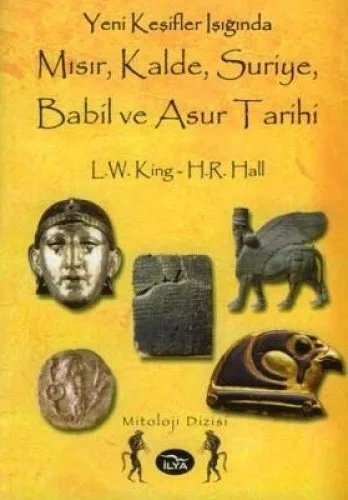
King, Leonard William, and Henry Reginald Holland Hall. Yeni Keşifler Işığında Mısır, Kalde, Suriye, Babil ve Asur Tarihi. Translated by Arıcan Uysal. İstanbul: İlya Yayınevi, 6th printing, 2012.
Relevant pages: 159–164. Chapter IV, discussion of Lagash, Girsu, Eannatum, Entemena, and the Stele of the Vultures.
Related reading
- Gudea of Lagash: How Did a Sumerian Ruler Build a Temple Through Divine Guidance?
- Hammurabi’s Government: How Did the Babylonian King Control His Empire?
- The Rise of the Assyrian Empire: Why Did Its Capital Move from Ashur to Nineveh?
- The Last Native Pharaohs of Egypt: How Did Foreign Powers Transform the Kingdom?
About the Author