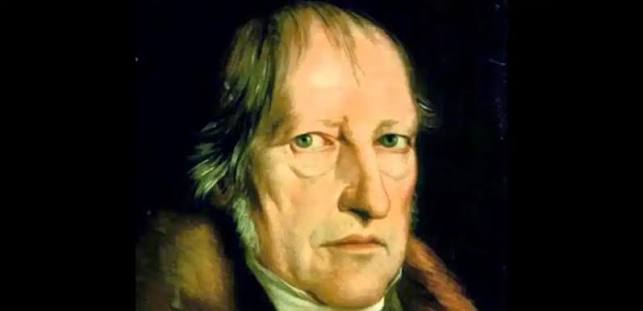
Heinrich Moritz Chalybäus published Historische Entwicklung der spekulativen Philosophie von Kant bis Hegel in 1837. This work presents the dialectic of Hegel as a rigid progression of thesis, antithesis, and synthesis. However, Hegel never employed those three terms together as a methodological formula. Consequently, Chalybäus’s account simplifies and misrepresents the actual movement of Hegelian thought.
The Context of Chalybäus’s 1837 Lectures and Book
Chalybäus delivered lectures in Dresden during the winter of 1835–1836. A group of older Kantians sought orientation regarding post-Kantian developments. Chalybäus then turned those lectures into a popular book that went through multiple editions. Moreover, the volume offered an accessible survey of German philosophy from Kant onward. In addition, it reached a wide academic audience and influenced later textbook treatments of Hegel. At that time, Hegel had died only six years earlier, after a long dominance in Berlin that even Schopenhauer’s academic rivalry with Hegel failed to shake. Readers can consult the original German text and its English translations for full context.
Chalybäus’s Explicit Reduction of Hegel’s Logic
Chalybäus examines the opening of Hegel’s Science of Logic. He treats Being, Nothing, and Becoming as the first trilogy. Furthermore, he labels this movement “the first methodical thesis, antithesis, and synthesis.” He presents the triad as an example or schema for everything that follows in Hegel’s system. As a result, readers encounter a neat, external formula rather than the internal, self-developing logic that Hegel actually describes. Primary evidence appears in the relevant sections of Chalybäus’s 1837 work.
Why Thesis, Antithesis, and Synthesis Misrepresent Hegel
Hegel develops concepts through immanent negation and determinate negation. Each category reveals its own limitation and thereby generates its successor. In contrast, the thesis-antithesis-synthesis model imposes an external pattern of opposition and reconciliation. Hegel himself criticizes rigid, lifeless schemas of this kind in the Preface to the Phenomenology of Spirit. Therefore, Chalybäus’s formulation reduces a dynamic process of sublation (Aufhebung) to a mechanical three-step procedure. Nevertheless, the schema became the standard popular description of “Hegelian dialectic.” Detailed discussion of this distortion appears in Gustav E. Mueller’s 1958 analysis.
How the Hegel Myth of Thesis, Antithesis, and Synthesis Spread
Karl Marx and later textbook authors adopted and disseminated the triadic formula. Similarly, many histories of philosophy repeated Chalybäus’s presentation without returning to Hegel’s primary texts. Gustav E. Mueller later identified the 1837 work as the principal source of what he called the “Hegel legend” of thesis-antithesis-synthesis. In addition, Walter Kaufmann and Terry Pinkard have reinforced the same critical diagnosis. Consequently, the distortion continues to shape introductory accounts even today. Many students still learn the supposed Hegel formula of thesis, antithesis, and synthesis before they ever open Hegel’s own books. Further background is available on the Hegelian dialectic overview and the Chalybäus biographical entry.
Implications for Accurate Hegel Scholarship
Scholars who seek a faithful understanding of Hegel must set aside the Chalybäus schema. In short, thesis, antithesis, and synthesis describe Chalybäus far better than they describe Hegel. Instead, they must attend to the concrete movements of thought in the Phenomenology of Spirit and the Science of Logic. For example, the transition from Being to Nothing arises from the pure indeterminacy of pure Being itself, not from the external confrontation of two opposing theses. Thus, recovering Hegel’s actual method requires rejecting the reductive triad that Chalybäus introduced.
References
Chalybäus, H. M. (1837). Historische Entwicklung der spekulativen Philosophie von Kant bis Hegel. Dresden: Arnoldsche Buchhandlung. Available at: https://archive.org/details/historischeentwi00chal
(English translations: Edersheim, A., 1854; Tulk, A., 1854).
Kaufmann, W. (1965). Hegel: A Reinterpretation. Garden City, NY: Doubleday.
Mueller, G. E. (1958). The Hegel legend of “thesis-antithesis-synthesis.” Journal of the History of Ideas, 19(3), 411–414. Available at: https://archive.org/details/mueller1958
Pinkard, T. (2000). Hegel: A Biography. Cambridge: Cambridge University Press.
Stern, R. (2002). Hegel and the Phenomenology of Spirit. London: Routledge.
Wikipedia contributors. (n.d.). Heinrich Moritz Chalybäus. Wikipedia. https://en.wikipedia.org/wiki/Heinrich_Moritz_Chalyb%C3%A4us
Wikipedia contributors. (n.d.). Hegelian dialectic. Wikipedia. https://en.wikipedia.org/wiki/Hegelian_dialectic
About the Author


1 thought on “Heinrich Moritz Chalybaus and the Misinterpretation of Hegel’s Dialectic: The Thesis–Antithesis–Synthesis Formula”