Short Answer
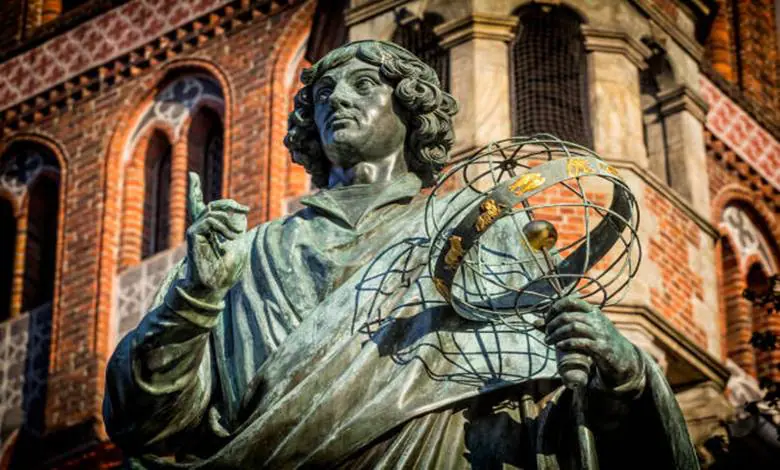
Nicolaus Copernicus did not spend his entire life studying astronomy. The story of Copernicus at Olsztyn shows this clearly. As an administrator of the Warmian Chapter’s estates, he had responsibilities at the castle. During the conflict with the Teutonic Order, these duties connected him with the defence of the town. His experience reveals the political and practical dimensions of Renaissance scholarly life.
Why Was Copernicus in Olsztyn?
Olsztyn formed part of the territories associated with the Warmian Chapter, an ecclesiastical institution that held both religious and administrative responsibilities.
Copernicus served as an administrator of the Chapter’s estates. This position required him to participate in the management of property and the practical affairs of the institution.
The 1973 exhibition catalogue specifically records his residence at the fortified castle of Olsztyn in connection with these duties.
This aspect of his life offers a striking contrast with the familiar image of the astronomer observing the heavens. Copernicus also worked within a political landscape shaped by territorial disputes, institutional obligations, and military threats.
What Was the Teutonic Order’s Conflict with Warmia?
The Teutonic Order was a major military and political power in the Baltic region during the medieval and early modern periods.
Its relations with Poland and neighbouring territories involved long-standing disputes over political authority and territorial control.
Warmia occupied a strategically important position within this environment. Its towns, estates, and ecclesiastical institutions operated within a region exposed to political and military pressure.
The exhibition catalogue connects the administrative service of Copernicus at Olsztyn with the defence of the town against the Teutonic Order.
However, the catalogue offers only a concise description. It does not provide a detailed military chronology or a complete account of Copernicus’s individual decisions during the conflict.
For that reason, we should avoid turning the historical record into an exaggerated story of a solitary astronomer commanding an entire military campaign.
What Were the Duties of Copernicus at Olsztyn Castle?
The catalogue describes Copernicus as an administrator of the Warmian Chapter’s estates and states that he sometimes had to supervise the defence of the town.
This responsibility demonstrates that ecclesiastical office could involve much more than religious activity.
Chapter administrators dealt with property, resources, and institutional security. In a region exposed to military conflict, the management of estates could also intersect with defensive preparations.
Olsztyn Castle therefore provides an important setting for understanding Copernicus’s public responsibilities.
His work required him to engage with the material conditions of political life: buildings, land, resources, and the security of a community.
In this respect, Copernicus’s experience resembles that of other educated administrators in Renaissance Europe, whose intellectual training did not exempt them from practical institutional obligations.
How Does Olsztyn Change Our Understanding of Copernicus?
Olsztyn complicates the familiar division between the scientist and the public official.
Copernicus belonged to a world in which educated individuals frequently occupied several roles. He combined ecclesiastical responsibilities with administrative work and scientific research.
Moreover, his connection with the castle shows that Renaissance intellectual history cannot be separated from political and military history.
The development of astronomy took place within societies shaped by territorial conflict, religious institutions, economic pressures, and political authority.
The life of Copernicus at Olsztyn makes this relationship particularly visible.
The astronomer who questioned traditional ideas about the structure of the universe also had to deal with the immediate concerns of a threatened town.
Key Points
- Copernicus served as administrator of the Warmian Chapter’s estates.
- He resided at the fortified castle of Olsztyn in connection with his duties.
- The region experienced conflict involving the Teutonic Order.
- The exhibition catalogue connects Copernicus with the supervision of the town’s defence.
- His administrative work reveals the practical responsibilities of a Renaissance canon.
References
- Information Canada. Mikołaj Kopernik, 1473–1543. Ottawa: Information Canada, 1973, p. 21.
- Henryk Bietkowski and Włodzimierz Zonn. The World of Copernicus. Warsaw: Arkady, 1973.
Related reading
- Copernicus and Renaissance Medicine: The Physician Behind the Astronomer
- Copernicus and Canon Law: The Legal Education Behind His Ecclesiastical Career
- Copernicus in Rome: The Jubilee of 1500, Astronomy, and the Observation of a Lunar Eclipse
- The Cracow Circle: The Scholars and Intellectual Networks Surrounding Copernicus
- The Printing Revolution and Renaissance Astronomy: How Books Changed the Circulation of Scientific Knowledge
About the Author