Short Answer
Gudea of Lagash connected political leadership with religious responsibility. According to his famous cylinder inscriptions, a divine dream instructed him to rebuild the temple of Ningirsu. He consulted the gods, interpreted the dream, organized craftsmen, and supervised construction. His account offers a remarkable insight into Sumerian religion, architecture, and royal ideology.
Who Was Gudea of Lagash?
Gudea ruled the Sumerian city of Shirpurla, commonly associated with Lagash, and left behind an unusually rich collection of inscriptions and statues.
King and Hall devote considerable attention to his famous clay cylinders. Archaeologists discovered these objects at Telloh during the excavations associated with Ernest de Sarzec.
The cylinders describe the rebuilding of E-ninnu, the great temple dedicated to Ningirsu.
However, the inscriptions do more than record a construction project. They explain how Gudea understood his responsibilities as a ruler and how he connected religious devotion with the prosperity of his city.
Why Did Gudea Decide to Rebuild the Temple of Ningirsu?
The account begins with a period of severe hardship.
Southern Babylonia experienced prolonged drought. Water levels in rivers and canals declined, crops suffered, and the country faced the threat of famine.
Gudea struggled to find a solution. Then he experienced a remarkable dream.
He saw a gigantic figure accompanied by sacred symbols and animals. The figure represented Ningirsu, the divine patron of his city.
Nevertheless, Gudea could not understand the dream’s meaning. Therefore, he sought help from the gods.
He visited Ningirsu and offered sacrifices. He also appealed to Gatumdug and Nina, asking them to help him understand the divine message.
Finally, Nina interpreted the dream and explained that Ningirsu wanted Gudea to rebuild E-ninnu.
What Role Did Dreams Play in Gudea’s Religious Decisions?
Gudea’s account presents dreams as an important channel of communication between human beings and the divine world.
The ruler did not immediately act on his own interpretation. Instead, he consulted several deities and sought confirmation.
Nina explained the symbolic elements of his dream. The enormous figure represented Ningirsu, while other figures and objects referred to divine powers connected with the temple’s construction.
For this reason, Gudea treated the dream as a religious instruction rather than a personal vision.
Moreover, his consultations demonstrate the interconnected character of the Sumerian pantheon. One deity could help a ruler understand the intentions of another.
How Did Gudea Organize the Temple Construction?
After receiving the divine instruction, Gudea began preparations.
He selected valuable materials, organized craftsmen, and arranged the offerings required for the temple. His inscriptions mention precious metals, stones, timber, and ceremonial objects.
The ruler also supervised the production of bricks.
According to the narrative, Gudea prepared a symbolic brick and presented it as a model for the larger construction project. He then organized skilled workers and assigned them their responsibilities.
Furthermore, the account describes divine assistance during construction. The gods participated symbolically in the process and supported the ruler’s efforts.
The temple therefore represented more than an architectural achievement. It embodied the cooperation between the ruler, the gods, and the people of Lagash.
What Do Gudea’s Statues and Inscriptions Reveal About His Authority?
Gudea commissioned numerous statues made from hard diorite, a material that he obtained from the Sinai Peninsula according to the book.
Their inscriptions identify the temples and deities associated with individual statues.
Some statues belonged to the temple of Ningirsu, while others related to the sanctuaries of Bau, Ninkharsag, Nina, and Gatumdug.
The inscriptions also explain the religious purpose of these monuments.
Gudea did not present himself simply as a powerful ruler. He portrayed himself as a devoted servant of the gods, a builder of temples, and a protector of his city.
Ultimately, this combination of religious devotion and political authority formed the central message of his monuments.
Key Points
- Gudea ruled the Sumerian city of Shirpurla.
- His cylinder inscriptions describe the rebuilding of E-ninnu.
- A dream connected him with the divine command of Ningirsu.
- Nina interpreted the dream and explained its meaning.
- Gudea organized craftsmen, materials, offerings, and construction.
- His statues and inscriptions connected royal authority with religious devotion.
Bibliography
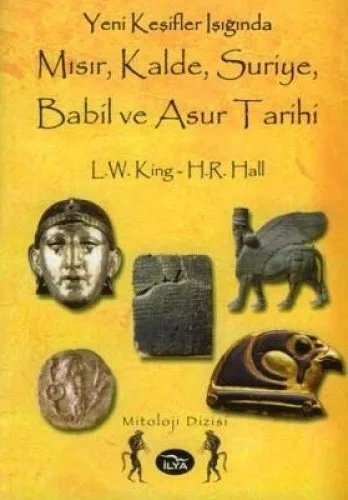
King, Leonard William, and Henry Reginald Holland Hall. Yeni Keşifler Işığında Mısır, Kalde, Suriye, Babil ve Asur Tarihi. Translated by Arıcan Uysal. İstanbul: İlya Yayınevi, 6th printing, 2012.
Relevant pages: 177–186 and 195. Chapter IV, discussion of Gudea’s statues, cylinder inscriptions, dream, and construction of E-ninnu.
Related reading
- Hammurabi’s Government: How Did the Babylonian King Control His Empire?
- The First Sumerian City-States: How Did Lagash and Girsu Compete for Power?
- The Rise of the Assyrian Empire: Why Did Its Capital Move from Ashur to Nineveh?
- The Last Native Pharaohs of Egypt: How Did Foreign Powers Transform the Kingdom?
About the Author