Short Answer
Hammurabi’s government relied on royal authority, administrative officials, taxation, and an extensive system of legal supervision. His surviving letters reveal how he monitored local officials, investigated corruption, collected agricultural revenues, and intervened in disputes. Together with his law monument, these records offer a detailed picture of Babylonian government.
How Did Hammurabi Govern Babylon?
Hammurabi ruled through a system that connected the royal court with local administrators and officials.
King and Hall emphasize the importance of Hammurabi’s surviving letters. These documents reveal that the king did not simply issue laws and leave their implementation to local authorities.
Instead, he monitored administrative activities across his territories.
The letters provide evidence of his involvement in judicial matters, taxation, official conduct, and the enforcement of royal decisions.
Consequently, Hammurabi’s government appears as an active administrative system rather than a monarchy that relied exclusively on symbolic authority.
Did Hammurabi Personally Supervise the Administration of Justice?
The king’s letters suggest that citizens could appeal directly to royal authority when they believed local courts had failed them.
Hammurabi paid attention to complaints and demanded investigations into administrative misconduct.
For example, the book describes a corruption case involving an official in Dûr-gurgurri. Hammurabi instructed the local governor to investigate the accusation and send those found guilty to Babylon for punishment.
Moreover, he ordered the confiscation of the bribe and its transfer to the capital.
This example reveals two important features of his administration.
First, the king expected officials to follow established rules. Second, he treated corruption as an offence that threatened both justice and royal authority.
Therefore, the administration of justice formed an important part of Hammurabi’s political responsibilities.
How Did Hammurabi Collect Taxes?
Taxation provided an essential source of revenue for the royal government.
The book describes officials who collected money and agricultural products, including sesame seeds.
Hammurabi also monitored the performance of tax collectors. When officials failed to deliver the required revenue, the king demanded explanations and insisted on full payment.
One letter concerns two tax collectors, Sheb-Sin and Sin-mushtal. They failed to appear in Babylon after the king summoned them.
They initially blamed the harvest season for their absence. However, they still failed to arrive later.
Hammurabi then ordered a reliable official to escort them to the capital with the outstanding taxes.
Furthermore, the government collected contributions from owners of large and small livestock.
Regional officials calculated these obligations and ensured that the animals reached the appropriate collection centers.
These records reveal the practical details of royal finance. Taxation involved people, animals, agricultural products, and administrative supervision.
What Was the Relationship Between the King and Local Officials?
Local officials carried out many administrative tasks, but they did not enjoy complete independence.
Hammurabi expected them to report their activities and follow royal instructions.
When an official neglected a duty, the king could demand an investigation. Likewise, he could impose financial penalties or require the official to appear before the royal administration.
This arrangement allowed the king to extend his authority beyond Babylon itself.
In addition, the correspondence demonstrates that written communication played a central role in imperial administration.
Letters connected the royal court with distant cities and helped Hammurabi monitor developments throughout his kingdom.
Why Are Hammurabi’s Letters Important for Understanding Ancient History?
The famous law monument provides information about legal principles and social relationships. However, the royal letters reveal how the administration operated in practice.
They show the king responding to concrete problems rather than discussing legal principles in the abstract.
For example, the correspondence addresses tax collection, official corruption, and administrative responsibility.
Therefore, the letters complement the law monument. Together, they reveal the relationship between legislation, political authority, and everyday government.
Key Points
- Hammurabi actively supervised his administration.
- Citizens could appeal to the king when local justice failed.
- Royal letters reveal investigations into corruption.
- Tax officials collected money, agricultural products, and livestock.
- The king demanded accountability from local administrators.
- Written correspondence connected Babylon with its territories.
Bibliography
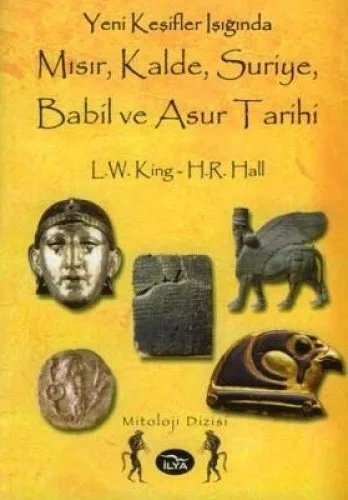
King, Leonard William, and Henry Reginald Holland Hall. Yeni Keşifler Işığında Mısır, Kalde, Suriye, Babil ve Asur Tarihi. Translated by Arıcan Uysal. İstanbul: İlya Yayınevi, 6th printing, 2012.
Relevant pages: 269–275. Chapter VI, discussion of Hammurabi’s royal letters, judicial supervision, corruption, taxation, and livestock contributions.
Related reading
- Gudea of Lagash: How Did a Sumerian Ruler Build a Temple Through Divine Guidance?
- The Rise of the Assyrian Empire: Why Did Its Capital Move from Ashur to Nineveh?
- The First Sumerian City-States: How Did Lagash and Girsu Compete for Power?
- The Last Native Pharaohs of Egypt: How Did Foreign Powers Transform the Kingdom?
About the Author