Short Answer
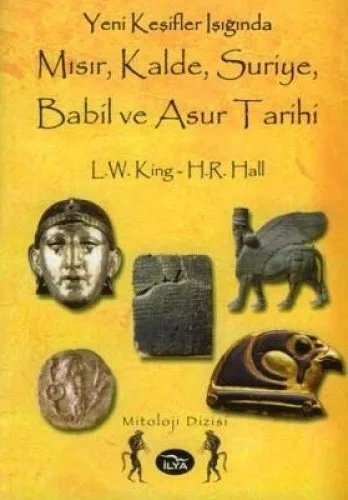
The Assyrian Empire developed through territorial expansion, military campaigns, and the creation of new political centers. Its capital cities reflected changing strategic and administrative priorities. King and Hall describe the roles of Ashur, Calah, and Kar-Tukulti-Ninib, as well as the eventual importance of Nineveh in Assyrian imperial history.
Why Did the Assyrian Empire Need More Than One Center?
The territorial expansion of the Assyrian Empire created new administrative demands.
As the kingdom conquered neighboring regions, its rulers needed effective centers for military organization, political control, and the collection of tribute.
The city of Ashur served as an important religious and political center. However, the growth of Assyrian power encouraged rulers to establish or develop additional capitals.
King and Hall explain that these changes reflected the kingdom’s expanding responsibilities.
A new city could provide a better strategic position, strengthen royal authority, and support the administration of newly conquered territories.
Consequently, the history of Assyrian capitals reveals the changing geography of imperial power.
Why Did Shalmaneser I Develop Calah?
King and Hall discuss the development of Calah, now commonly identified with Nimrud, under Shalmaneser I.
The city became an important royal center and contained monumental buildings, including palaces and religious structures.
Its location near the Tigris and the Upper Zab also connected it with important regional routes.
Moreover, the authors identify several Assyrian kings who built or restored palaces at Calah.
These rulers included Shalmaneser I, Ashurnasirpal, Shalmaneser II, Tiglath-pileser III, Sargon, Esarhaddon, and Ashur-etil-ilani.
The surviving architectural remains therefore reveal the long-term importance of Calah in Assyrian political history.
What Was the Significance of Kar-Tukulti-Ninib?
Tukulti-Ninib introduced another important stage in the development of Assyrian political geography.
The king founded a new city, Kar-Tukulti-Ninib, and connected its development with his military achievements.
King and Hall explain that he later restored the capital to Ashur.
His inscriptions describe the tribute that conquered peoples brought to the city.
This detail provides evidence of the relationship between military conquest and royal administration.
Furthermore, the creation of new urban centers reveals the scale of Assyria’s political ambitions. The empire needed more than military victories; it also needed places where rulers could organize and display their power.
Why Did Nineveh Become the Capital of the Assyrian Empire?
The history of Assyrian political centers eventually leads to Nineveh.
King and Hall explain that the changing relationship between Assyria and Babylonia influenced the development of the northern kingdom.
When Babylonia escaped Assyrian control after Tukulti-Ninib’s death, the Assyrian political center experienced another shift.
Over time, Nineveh became the permanent capital.
This development reflected the changing priorities of the Assyrian Empire and its expanding imperial responsibilities.
The excavations at Kuyunjik, the principal mound of ancient Nineveh, also revealed important palace remains and a temple dedicated to Nabu.
Consequently, archaeological discoveries at Nineveh helped researchers understand the later history of the Assyrian Empire.
What Can Cities Tell Us About the Assyrian Empire?
The movement between Ashur, Calah, Kar-Tukulti-Ninib, and Nineveh reveals a political system that constantly adapted to changing circumstances.
Rulers of the Assyrian Empire used cities to organize administration, demonstrate royal authority, and connect their military achievements with monumental architecture.
In addition, palace remains and inscriptions preserve evidence of successive rulers and their building projects.
Therefore, the history of Assyrian capitals offers a valuable way to understand the development of the empire itself.
Key Points
- Ashur served as an important religious and political center.
- Shalmaneser I developed Calah as a major royal city.
- Tukulti-Ninib founded Kar-Tukulti-Ninib and later restored the capital to Ashur.
- Assyrian territorial expansion encouraged changes in administrative geography.
- Nineveh eventually became the permanent capital.
- Archaeological remains at Calah and Nineveh reveal successive phases of royal construction.
Bibliography
King, Leonard William, and Henry Reginald Holland Hall. Yeni Keşifler Işığında Mısır, Kalde, Suriye, Babil ve Asur Tarihi. Translated by Arıcan Uysal. İstanbul: İlya Yayınevi, 6th printing, 2012.
Relevant pages: 359–366 and 365–366 in particular. Chapter VIII, discussion of Tukulti-Ninib, Ashur, Calah, and the transfer of the Assyrian capital to Nineveh.
Related reading
- The Last Native Pharaohs of Egypt: How Did Foreign Powers Transform the Kingdom?
- Hammurabi’s Government: How Did the Babylonian King Control His Empire?
- Gudea of Lagash: How Did a Sumerian Ruler Build a Temple Through Divine Guidance?
- The First Sumerian City-States: How Did Lagash and Girsu Compete for Power?
About the Author