Short Answer
The last native pharaohs of Egypt faced political conflict and growing foreign influence. The reigns of Apries and Amasis illustrate internal struggles over royal authority and relations with Greek communities. Meanwhile, Naukratis developed as an important center of Greek activity, while later rulers confronted the growing influence of foreign powers.
Why Did the Last Native Pharaohs Face Political Challenges?
The final centuries of the last native pharaohs involved political instability and changing international relationships.
King and Hall discuss the Twenty-Sixth Dynasty and the later rulers who attempted to preserve Egyptian authority.
One important episode concerns Apries and Amasis.
Apries lost support among sections of the Egyptian population because of his political decisions and his relationship with Greek forces.
Amasis eventually challenged his authority and defeated him.
The book connects this conflict with the Battle of Momemphis, which took place during the third year of Amasis’s reign.
Consequently, the struggle represented more than a personal dispute between two rulers. It also reflected disagreements about Egypt’s political direction and its relations with foreign communities.
How Did Amasis Treat His Defeated Rival?
One particularly interesting detail concerns Amasis’s treatment of Apries after his defeat.
King and Hall explain that Amasis referred to Apries as his friend and arranged a royal burial for him.
This gesture stands out because it contrasts with the treatment that defeated rulers often received in ancient political conflicts.
Moreover, the authors connect this act with Egyptian religious beliefs about the afterlife.
The burial allowed Amasis to present himself as a ruler who respected traditional obligations, even toward a former political opponent.
Therefore, the episode offers insight into the relationship between kingship, political legitimacy, and funerary customs.
Why Did Naukratis Become Important to Egypt?
Naukratis became an important center of Greek activity in Egypt.
According to King and Hall, Psammetichus I granted Greek merchants access to the city more than a century before the period discussed in the chapter.
This arrangement contributed to the development of commercial and cultural connections between Egypt and the Greek world.
However, the archaeological history of Naukratis also raises questions about the relationship between the earlier Egyptian settlement and the later Greek presence.
The authors discuss the excavations of Flinders Petrie and the later investigations of D. G. Hogarth.
Hogarth challenged some earlier conclusions about the location and organization of the site. In particular, he questioned Petrie’s identification of the Hellenion, the principal Greek meeting place.
Furthermore, the discoveries suggested that an Egyptian settlement existed at Naukratis before the arrival of Greek communities.
Thus, Naukratis illustrates the complexity of cultural contact. Greek activity developed within an existing Egyptian landscape rather than in an entirely new settlement.
What Does Tekhtnebf’s Monument Reveal About the Last Native Pharaohs?
King and Hall discuss an important black basalt monument associated with Tekhtnebf, whom they identify as Egypt’s last native king.
The inscription refers to the Egyptian name of Naukratis and its Greek rendering.
It also records offerings to the temples of Neith at Sais.
This monument reveals how Egyptian rulers continued to use traditional religious institutions and royal inscriptions even as foreign cultural influences became increasingly important.
Moreover, the authors observe that Demotic served practical writing purposes during this period, while hieroglyphic writing had become increasingly restricted in its use.
The monument therefore offers evidence of political identity, religious patronage, and changes in written culture.
How Did the Ptolemies Follow the Last Native Pharaohs?
After the last native pharaohs, the arrival of the Ptolemies introduced another major stage in Egyptian history.
King and Hall describe the Ptolemaic period as a time of renewed building activity and foreign rule.
They also discuss how Ptolemy Euergetes recovered divine images that earlier conquerors had removed from Egypt.
This action connected the new dynasty with older Egyptian royal traditions.
In other words, foreign rulers could strengthen their authority by presenting themselves as protectors of Egyptian temples and religious institutions.
Nevertheless, the Ptolemaic period also reflected the growing interaction between Egyptian and Greek political and cultural traditions.
Key Points
- The conflict between Apries and Amasis illustrates political instability during the reigns of the last native pharaohs.
- Amasis arranged a royal burial for Apries after defeating him.
- Psammetichus I encouraged Greek commercial activity at Naukratis.
- Archaeological investigations revealed an Egyptian presence at Naukratis before the Greek settlement.
- Tekhtnebf’s monument records royal offerings to the temples of Neith.
- The Ptolemies combined foreign rule with elements of traditional Egyptian kingship.
Bibliography
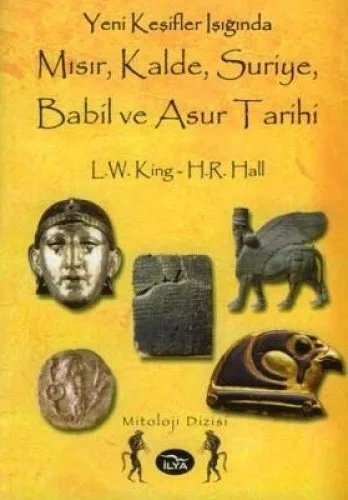
King, Leonard William, and Henry Reginald Holland Hall. Yeni Keşifler Işığında Mısır, Kalde, Suriye, Babil ve Asur Tarihi. Translated by Arıcan Uysal. İstanbul: İlya Yayınevi, 6th printing, 2012.
Relevant pages: 387–389. Chapter IX, discussion of the Twenty-Sixth Dynasty, Apries, Amasis, Naukratis, Tekhtnebf, and the Ptolemaic period.
Related reading
- The Rise of the Assyrian Empire: Why Did Its Capital Move from Ashur to Nineveh?
- Hammurabi’s Government: How Did the Babylonian King Control His Empire?
- Gudea of Lagash: How Did a Sumerian Ruler Build a Temple Through Divine Guidance?
- The First Sumerian City-States: How Did Lagash and Girsu Compete for Power?
About the Author