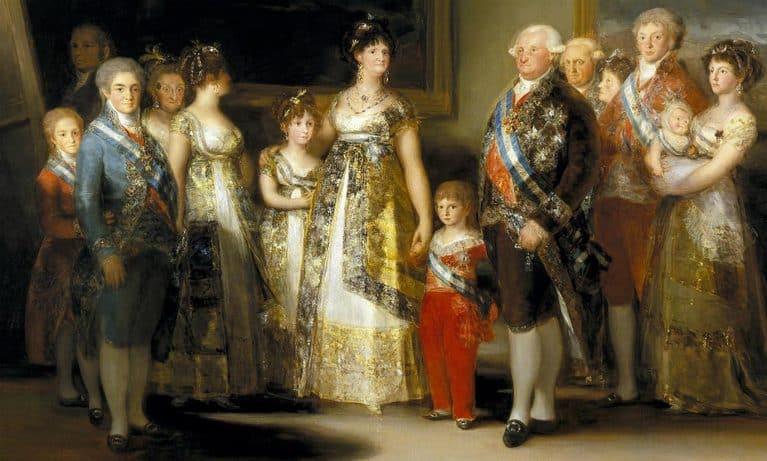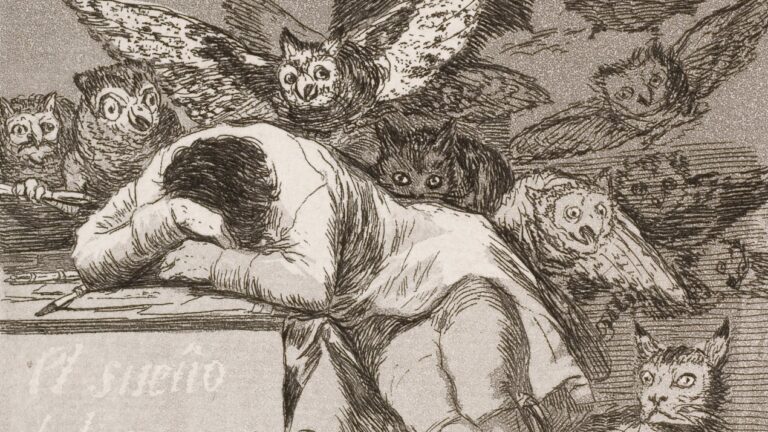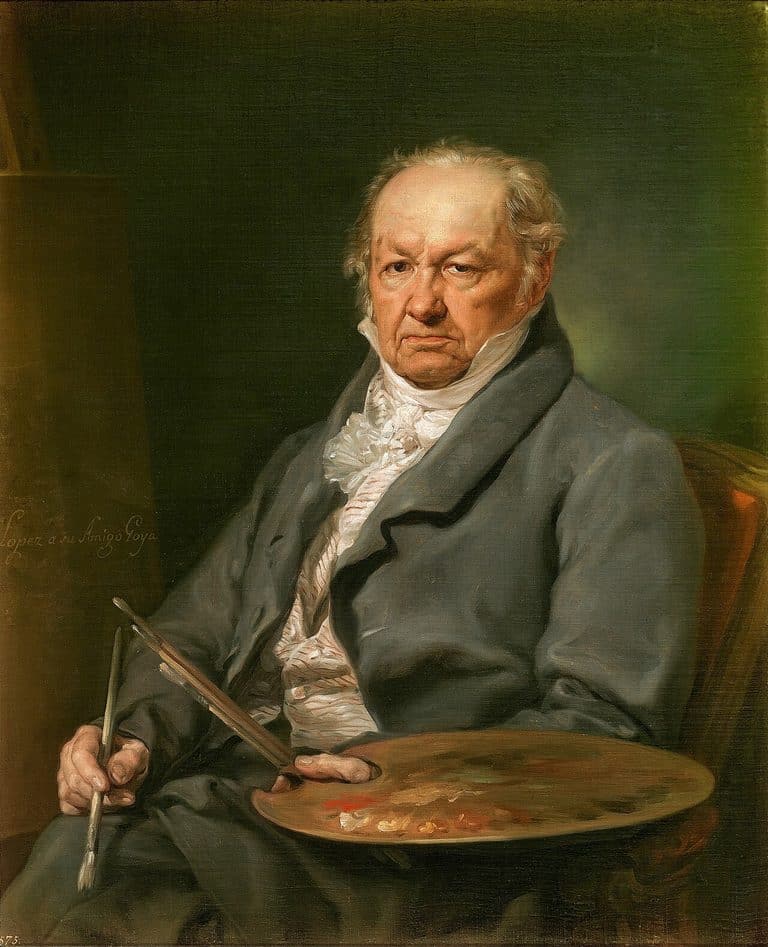
Francisco Goya was one of the most influential artists in the history of Spanish art. Throughout his career, he created portraits, murals, etchings, and historical scenes. However, the influence of Goya on modern art extends far beyond the variety of subjects he explored. His expressive brushwork, unconventional treatment of human figures, and interest in the darker aspects of human experience opened new possibilities for later generations of artists.
Rather than simply following established artistic traditions, Goya challenged conventional ideas about beauty, representation, and reality. Consequently, many of his works acquired new significance long after his death.
Challenging the Boundaries of Traditional Academic Painting
During the early stages of his career, Goya gained recognition through royal commissions and decorative projects. Nevertheless, his later paintings developed a more expressive visual language. He increasingly employed loose brushstrokes, dramatic contrasts, and figures that departed from traditional ideals of beauty.
In his book Francisco Goya, Tim McNeese highlights the influence of Goya’s late works on subsequent generations of artists. In particular, the Black Paintings initially appeared difficult to understand within the artistic conventions of their time. Later audiences, however, interpreted these works as important precursors to modern art (McNeese, 2008, pp. 129–138).
This development demonstrates that artistic significance cannot be measured solely by contemporary acceptance. A painting may challenge the expectations of its own era while introducing a visual language that later generations recognize as innovative.
Moreover, Goya’s willingness to explore disturbing subjects distinguished him from artists who primarily pursued idealized representations. His work often reveals the tensions, fears, and contradictions that shape human existence.
The Milkmaid of Bordeaux and Goya’s Late Style
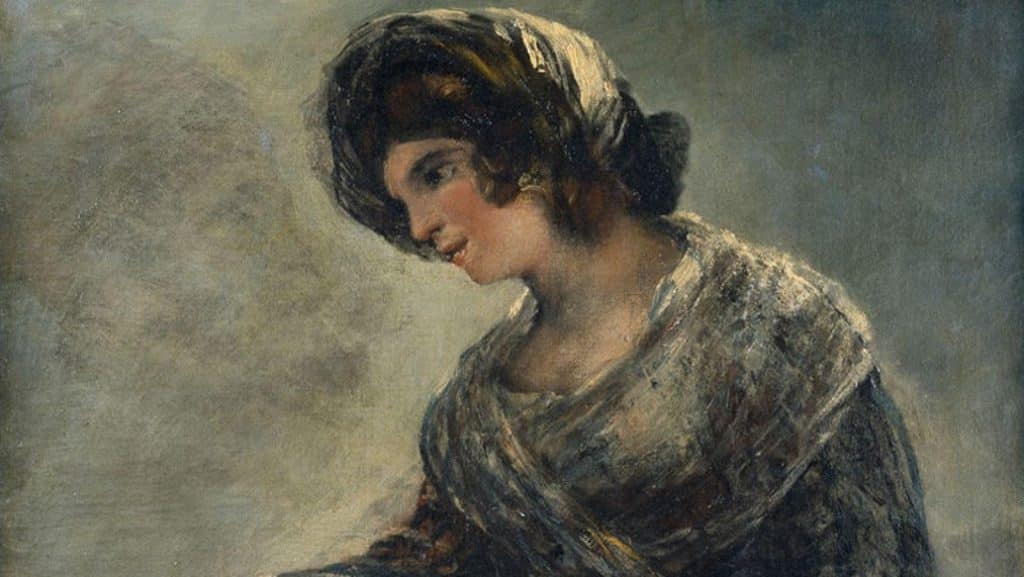
One of Goya’s most remarkable late works is The Milkmaid of Bordeaux, painted during his final years in France. The painting demonstrates a distinctive approach to color, light, and brushwork.
According to McNeese, its loose brushstrokes and lighter tonal range recall certain artistic tendencies that became more prominent in Impressionism (2008, pp. 132–135).
However, describing the painting as an example of Impressionism would be historically inaccurate. Impressionism emerged as a distinct artistic movement after Goya’s death, under different historical and cultural conditions. Instead, it is more precise to identify similarities between Goya’s handling of paint and light and the experiments pursued by later artists.
The painting illustrates how Goya could move beyond established conventions without belonging to a movement that developed decades later. His late style demonstrates an artistic freedom that makes his work particularly relevant to discussions of modern art.
Furthermore, The Milkmaid of Bordeaux reveals the expressive potential of seemingly simple subjects. Through subtle variations in color and texture, Goya creates an image that feels immediate and spontaneous rather than rigidly controlled.
How Did Goya Influence the Development of Modern Art?
Goya matters to modern art partly because of his willingness to question the established rules of painting. He explored psychological tension, distorted forms, and unsettling imagery, thereby expanding the expressive possibilities of visual art.
His approach also encouraged later viewers to reconsider the relationship between artistic technique and emotional meaning. Rather than treating painting solely as a means of reproducing appearances, Goya demonstrated how an image could communicate uncertainty, vulnerability, and psychological complexity.
Although Goya did not belong to modern artistic movements such as Impressionism, his experimental approach offers important points of comparison with later developments. His influence is best understood through these artistic connections rather than by assigning him to a movement that emerged after his lifetime.
Conclusion: Goya and Modern Art
The contribution of Goya to modern art lies not in his founding a specific artistic movement, but in his ability to push traditional painting beyond its established boundaries. Instead of idealizing reality, he explored its fragile, contradictory, and sometimes disturbing dimensions.
Through his expressive brushwork, unconventional imagery, and psychologically complex subjects, Goya created works that continued to challenge audiences long after their original production. Ultimately, his art demonstrates how an artist can transcend the expectations of an era and open new possibilities for future generations. For this reason, Goya remains a key reference point in any discussion of modern art.
References
McNeese, Tim. (2008). Francisco Goya. New York: Chelsea House Publications, Facts On File, pp. 129–138.
About the Author