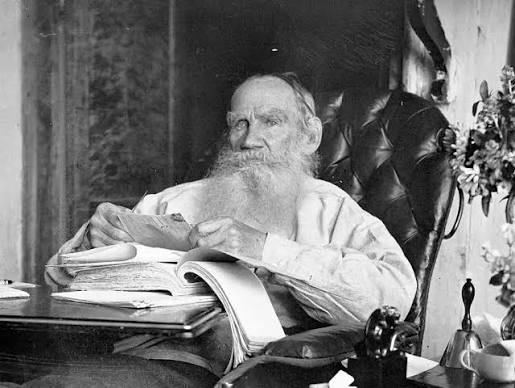
In What Is Art?, Lev N. Tolstoy harshly criticizes Ludwig van Beethoven and Richard Wagner. In his view, both composers depart from the fundamental purpose of art. That purpose, he insists, is to communicate simple, sincere emotions between people and to unite humanity through a universal sense of brotherhood. This article examines how Tolstoy builds his case against Wagner and Beethoven, chapter by chapter.
1. Tolstoy’s Critique of Beethoven (Chapters XIV and XVI)
Tolstoy appreciates the simple and powerful melodies of Beethoven’s early works. However, he rejects several compositions from the composer’s later period. These are particularly the works written after his hearing deteriorated, including the Piano Sonata No. 101 and the Ninth Symphony. His objections rest on three main arguments.
Deafness and Intellectual Construction (Chapter XIV)
According to Tolstoy, Beethoven could no longer perceive living sounds directly once he began losing his hearing. Consequently, his compositions increasingly relied on intellectual rules and artificial calculations. They no longer grew out of emotions experienced directly and spontaneously. As a result, Tolstoy argues, some of Beethoven’s later works turned into formless improvisations and expressions resembling intellectual delirium.
Incomprehensibility and Elitism (Chapters XIV and XVI)
Tolstoy considers Beethoven’s late music excessively complicated and artificial. In his view, these works convey little to broad sections of the public. Instead, they function as intellectual puzzles for a small elite. Specialized musical education, he claims, has “emasculated” the tastes and perceptions of this elite.
Division Rather Than Unity (Chapter XVI)
Genuine art, Tolstoy argues, should unite all people through a shared emotional experience. Beethoven’s Ninth Symphony even incorporates Friedrich Schiller’s poem celebrating the brotherhood of humanity. Yet, for Tolstoy, it ultimately fails to achieve this purpose. Its complex and highly specialized musical structure separates a cultivated elite from the rest of society. In other words, it divides people rather than bringing them together.
2. Tolstoy’s Critique of Wagner (Chapter XIII and Appendix II)
Tolstoy regards Richard Wagner as the foremost exponent of counterfeit art rather than genuine artistic expression. He draws particularly on his experience of Wagner’s The Ring of the Nibelung. From it, he develops several major criticisms. (For the composer’s revolutionary years, see our article on Richard Wagner and Mikhail Bakunin in the Dresden Uprising of 1849.)
The Combination of Methods of Counterfeit Art (Chapter XIII)
Tolstoy argues that Wagner skillfully combines all four methods of producing counterfeit art: borrowing, imitation, startling effects, and interest. Wagner does not communicate a genuinely experienced emotion. Instead, he manipulates his audience through borrowed themes from ancient mythology and imitations of natural sounds. Darkened auditoriums, theatrical effects, and complex harmonies designed to sustain attention complete the picture.
The Illusion of the Synthesis of the Arts (Gesamtkunstwerk) (Chapter XIII)
Wagner’s theory subordinates music to poetry and drama and combines different artistic disciplines within a single work. To Tolstoy, this seems contrary to the natural character of art. Merging distinct forms such as music and drama, he believes, disrupts their organic integrity. Therefore, the result is only an artificial imitation of art.
The Mechanical Nature of the Leitmotif Technique (Chapter XIII)
Tolstoy also objects to Wagner’s practice of assigning recurring orchestral motifs to individual characters, objects, and situations. Whenever a ring, sword, dragon, fire, or spear appears or is mentioned, a corresponding musical theme may be heard. For Tolstoy, this technique reduces artistic expression to a mechanical, intellectual puzzle. It is no longer a spontaneous communication of feeling.
Hypnosis and Illusion Instead of Aesthetic Emotion (Chapter XIII)
Tolstoy describes Wagner’s stage subjects—including dwarfs, dragons, and bears—as childish and similar to theatrical spectacles. Moreover, he does not attribute the audience’s admiration to genuine artistic communication. He traces it instead to prolonged nervous stimulation and a kind of “hypnosis.” Hours spent in darkened auditoriums, surrounded by elaborate stage effects and overwhelming musical sounds, produce this state.
Conclusion: Why Tolstoy Rejects Wagner and Beethoven
Tolstoy’s criticism of Wagner and Beethoven emerges from his broader ethical theory of art. He does not simply object to musical complexity or technical innovation in themselves. Rather, he questions artistic practices that, in his judgment, put intellectual sophistication, formal experimentation, and elite appreciation above the sincere communication of human emotion.
For Tolstoy, the ultimate measure of art is its capacity to unite people through feelings they can genuinely share. When music becomes inaccessible to ordinary listeners, it risks losing its essential social and moral purpose. The same is true when it depends on theatrical illusion and artificial techniques. Thus, the debate between Tolstoy, Wagner and Beethoven remains a key reference point for anyone asking what art is for. For more on Tolstoy’s life and works, see the Encyclopaedia Britannica entry on Leo Tolstoy.
Bibliographic reference
Tolstoy, L. N. (2011). What Is Art? (Translated into Turkish by Mazlum Beyhan). Istanbul: Türkiye İş Bankası Kültür Yayınları, Hasan Âli Yücel Classics Series.
About the Author

2 thoughts on “Why Does Tolstoy Criticize Wagner and Beethoven?”