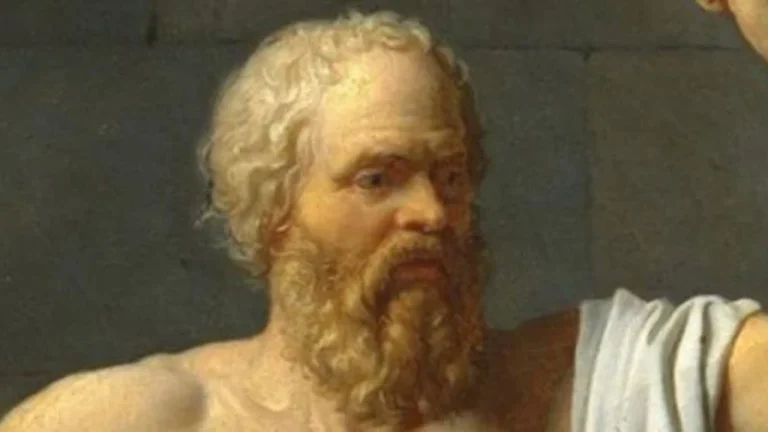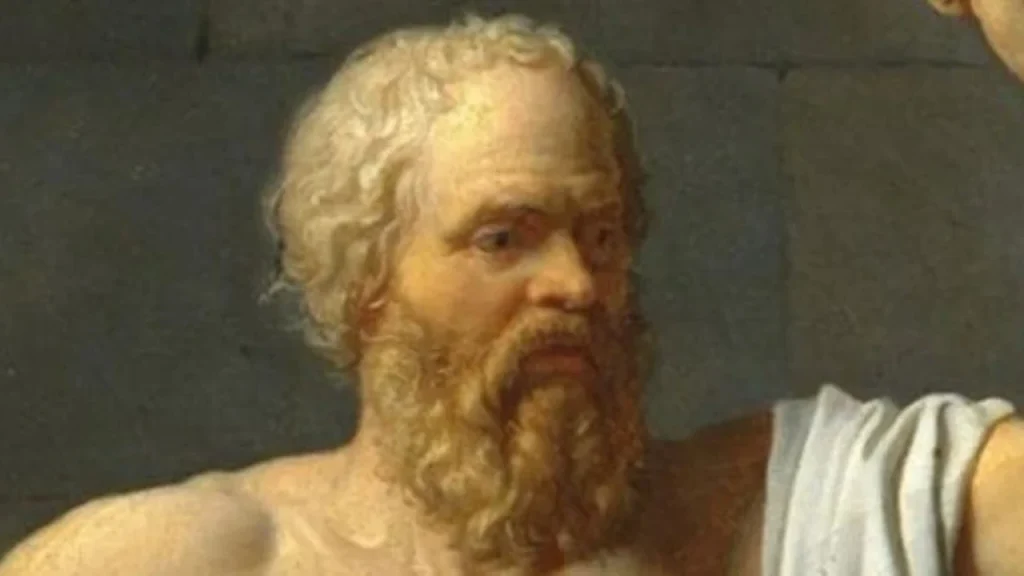
Socrates remains one of the most influential figures in the history of Western philosophy. His trial and death in Athens in 399 BCE created a lasting philosophical discussion about justice, morality, law, and the meaning of a philosophical life. Yet one question remains particularly striking: Why did Socrates refuse to escape when he apparently had an opportunity to save his life?
Plato presents the final period of Socrates’ life primarily through three important works: Apology, Crito, and Phaedo. Together, these dialogues construct a philosophical narrative about Socrates’ trial, his imprisonment, his refusal to escape, and his final hours. (Perseus)
Socrates and the Death Sentence in Athens
In 399 BCE, Socrates stood trial in Athens. Plato’s Apology presents his defense and portrays a philosopher who refuses to abandon his intellectual mission simply because the court threatens him with death.
Moreover, Socrates does not describe philosophy as an ordinary occupation. Instead, he presents philosophical examination as an essential part of human life. In the Apology, he argues that he would not abandon philosophy even if the Athenians offered him freedom on the condition that he stop questioning and examining people. (Perseus)
Therefore, his defense concerns more than the immediate danger of execution. Rather, Plato portrays Socrates as defending a conception of life based on continuous philosophical inquiry.
Socrates Had an Opportunity to Escape
The dialogue Crito presents Socrates in prison after his trial. His friend Crito visits him and proposes a plan for escape.
Crito raises several practical arguments. He worries about Socrates’ reputation, his children, and the consequences that his death might have for his friends. Nevertheless, Socrates refuses to make personal survival the decisive consideration.
Instead, he asks a fundamental philosophical question: Would escaping constitute an unjust action?
The answer matters more to Socrates than the possibility of saving his life. According to the philosophical argument presented in Crito, a person should not commit injustice even when another person has treated him unjustly. (Stanford Encyclopedia of Philosophy)
Consequently, Socrates rejects the escape plan. His decision demonstrates the importance that he places on moral consistency.
Why Did Socrates Refuse to Escape?
Socrates’ refusal to escape becomes clearer when we consider the principles presented throughout Plato’s dialogues.
First, he believes that one should examine an action before deciding whether to perform it. Second, he argues that doing wrong remains wrong even when someone has suffered wrongdoing. Finally, he refuses to allow fear of death to determine his moral decisions.
The Apology reinforces this position. Socrates argues that human beings do not possess certain knowledge about what happens after death. Therefore, fearing death as though it were certainly the greatest evil would involve claiming knowledge that one does not possess. (Perseus)
Thus, Socrates’ refusal to escape does not simply represent passive acceptance of punishment. Rather, Plato presents it as the result of a philosophical examination of justice, law, morality, and death.
The Hemlock and Socrates’ Death
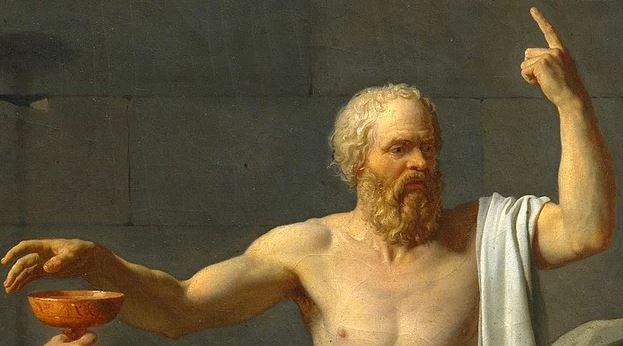
Socrates eventually died after drinking a poisonous preparation of hemlock. Plato describes this event in detail in the Phaedo.
According to the dialogue, Socrates receives the cup from the man responsible for administering the poison. He drinks it calmly and then walks until his legs become heavy. Afterwards, he lies down while the poison gradually takes effect. (Perseus)
The Phaedo therefore provides the most detailed literary account of Socrates’ final moments. Modern scholarship commonly identifies the poison with Conium maculatum, a species of hemlock associated with Athenian executions. (Stanford Felsefe Ansiklopedisi)
However, the precise medical details of the ancient execution remain a subject of scholarly discussion. The philosophical significance of the scene, nevertheless, lies primarily in Socrates’ attitude toward death.
Socrates Continued Philosophy Until His Final Hours
Perhaps the most remarkable feature of Socrates’ final day concerns his continued engagement with philosophy.
According to the Phaedo, Socrates spends his final hours discussing philosophical questions with his companions. The conversation focuses especially on death and the nature of the soul. (Perseus)
Instead of treating philosophy as something separate from ordinary life, Plato presents Socrates as practicing philosophy until the very end. Consequently, his final conversation becomes an extension of the intellectual activity that defined his life.
Moreover, Socrates encourages his companions to focus on truth rather than simply mourning his death. This emphasis gives the final scene a distinctly philosophical character.
The Immortality of the Soul in Plato’s Phaedo
The immortality of the soul forms one of the central philosophical themes of the Phaedo. Socrates and his companions examine whether the soul survives physical death.
At one point, the dialogue develops an argument that connects the soul with immortality. The relevant discussion appears in Phaedo 105e, where Socrates and Cebes discuss whether the soul can admit death. (Perseus)
Furthermore, the dialogue presents philosophy as preparation for death. In Phaedo 67e, Socrates connects philosophical practice with learning how to confront death. (Perseus)
This idea helps explain why Plato places such extensive philosophical discussion immediately before Socrates’ execution.
Socrates’ Death as a Philosophical Statement
Socrates’ death has significance beyond the historical circumstances of his trial. Plato connects the event with a broader question about whether a person can remain consistent with his principles when those principles become personally costly.
First, Socrates refuses to abandon philosophical inquiry. Second, he rejects the escape proposed by Crito. Third, he accepts the consequences of his decision. Finally, he continues philosophical discussion until his final moments.
As a result, Plato creates a strong connection between Socrates’ philosophy and his conduct. His death becomes part of the philosophical argument rather than merely the conclusion of a legal case.
Nevertheless, scholars distinguish between the historical Socrates and the Socrates whom Plato presents in his dialogues. The relationship between the historical philosopher and Plato’s literary representation remains an important subject of classical scholarship. (Stanford Felsefe Ansiklopedisi)
References
- Plato, Apology — Perseus Digital Library.
- Plato, Crito — Perseus Digital Library.
- Plato, Phaedo — Perseus Digital Library.
- Plato, Phaedo, 67e — Perseus Digital Library.
- Plato, Phaedo, 105e — Perseus Digital Library.
- Stanford Encyclopedia of Philosophy, “Socrates”.
- Stanford Encyclopedia of Philosophy, “Ancient Political Philosophy”.
- Internet Encyclopedia of Philosophy, “Plato: Phaedo”.
About the Author