The Philosopher Who Wrote Nothing
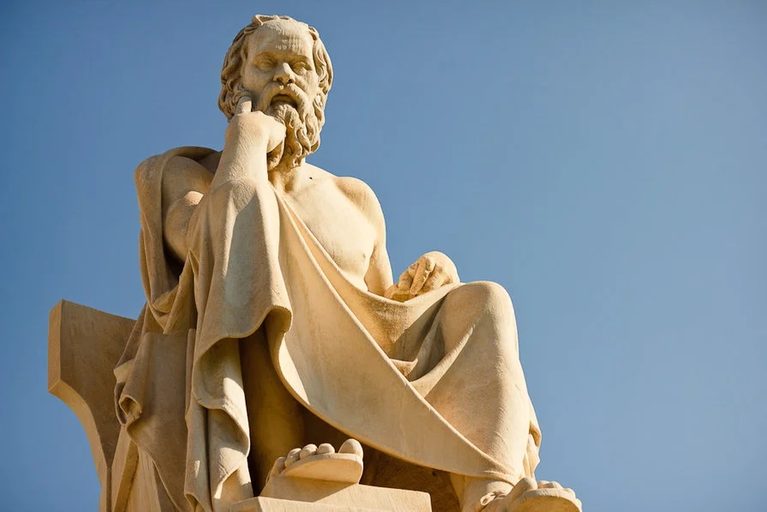
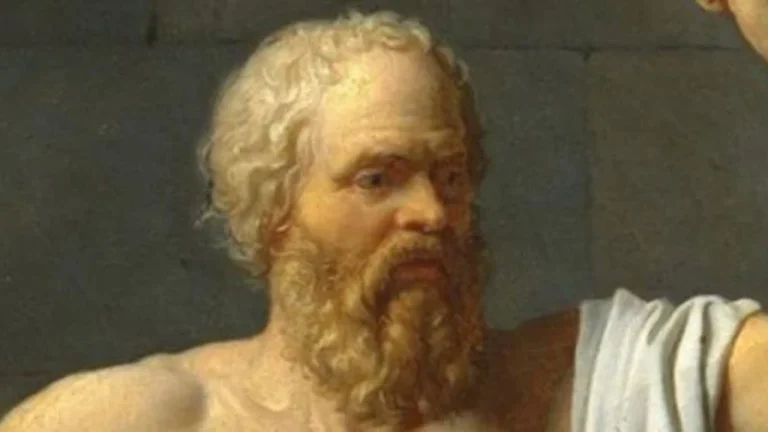
Socrates remains one of the most influential figures in the history of Western philosophy. Yet, remarkably, the historical Socrates left no philosophical writings of his own. Our knowledge of his life, methods, and ideas therefore depends on accounts written by other people.
According to the Stanford Encyclopedia of Philosophy’s entry on Socrates, the principal surviving sources include Plato, Xenophon, and Aristophanes, while Aristotle and other ancient authors provide additional evidence. Consequently, scholars cannot reconstruct Socrates’ philosophy simply by examining a text written in his own hand.
This situation creates one of the central methodological questions in ancient philosophy: Who was the historical Socrates, and how closely does Plato’s Socrates correspond to him?
Who Was the Historical Socrates?
Socrates lived in Athens approximately between 469 and 399 BCE. He became famous for questioning people about virtue, justice, knowledge, morality, and the meaning of a good life. Centuries later, Renaissance art still placed him among the great thinkers, as in Raphael’s School of Athens.
However, no philosophical book written by Socrates survives. Instead, researchers reconstruct his intellectual profile from several ancient testimonies.
The Stanford Encyclopedia of Philosophy identifies Plato, Xenophon, and Aristophanes as the three major surviving sources for understanding Socrates. Each writer, nevertheless, presents a different portrait.
Therefore, the historical Socrates does not emerge from a single authoritative biography. Rather, scholars reconstruct him by comparing several incomplete and sometimes conflicting accounts.
Plato’s Socrates
Plato provides the most extensive and influential literary portrait of Socrates. In dialogues such as Apology, Euthyphro, Crito, and Meno, Socrates appears as a persistent questioner who examines conventional assumptions.
Plato, however, does not provide modern-style historical transcripts. His dialogues combine philosophical argument, dramatic structure, characterization, and literary composition.
For this reason, scholars cannot automatically assume that every argument expressed by Plato’s Socrates originated with the historical philosopher. The Stanford Encyclopedia of Philosophy’s discussion of the Socratic Problem explains why researchers continue to debate which features of Plato’s dialogues can reasonably be attributed to Socrates himself. (Stanford Felsefe Ansiklopedisi)
Moreover, Plato’s works contain philosophical developments that may reflect Plato’s own intellectual project. Thus, the distinction between Socratic philosophy and Platonic philosophy remains essential.
Xenophon’s Socrates
Xenophon offers another important portrait of Socrates. His Memorabilia, Apology, and Symposium portray Socrates as a practical moral thinker who discusses education, friendship, personal conduct, and everyday life.
Interestingly, Xenophon’s Socrates often appears different from Plato’s Socrates. Xenophon emphasizes practical advice, whereas Plato frequently presents Socrates as an examiner of philosophical concepts.
This difference does not necessarily mean that one author simply invented his version of Socrates. Instead, it demonstrates the complexity of the ancient Socratic tradition.
The Stanford Encyclopedia of Philosophy notes that Xenophon’s writings constitute one of the principal sources for reconstructing the historical Socrates, while also emphasizing the methodological difficulties involved in using his works as historical evidence. (Stanford Felsefe Ansiklopedisi)
Aristophanes and the Comic Socrates
Aristophanes introduces an entirely different perspective. His comedy Clouds, performed in 423 BCE, portrays Socrates as an intellectual associated with unconventional theories and rhetorical techniques.
Nevertheless, Clouds is a comedy rather than a biography. Aristophanes therefore uses exaggeration and satire for dramatic purposes.
Even so, the play remains historically significant. Aristophanes belonged to Socrates’ own generation and provides an early surviving representation of him.
The Stanford Encyclopedia of Philosophy describes Aristophanes as the earliest surviving source who knew Socrates during his lifetime. At the same time, the source warns that comedy presents particular difficulties for historians because a comic character does not necessarily correspond directly to the historical person. (Stanford Felsefe Ansiklopedisi)
Consequently, Clouds should neither be treated as a literal biography nor dismissed as completely irrelevant historical evidence.
The Socratic Problem
The difficulty of distinguishing the historical Socrates from the literary figures created by ancient authors has become known as the Socratic Problem.
The problem arises because different writers attribute different characteristics, arguments, and methods to Socrates. Plato presents one version, Xenophon another, and Aristophanes yet another.
Furthermore, even Plato’s dialogues do not always present a completely consistent Socrates. Different dialogues place Socrates in different philosophical situations and sometimes associate him with different arguments.
The Stanford Encyclopedia of Philosophy’s detailed discussion of the Socratic Problem describes several historical methods that scholars have used to distinguish Socrates’ own philosophy from Plato’s philosophical contributions. (Stanford Felsefe Ansiklopedisi)
Therefore, the question cannot be solved simply by selecting one ancient author and rejecting the others.
Why Plato’s Socrates Cannot Simply Equal the Historical Socrates
Plato’s importance creates a particular methodological challenge. His dialogues constitute the richest surviving philosophical material associated with Socrates, but Plato also had his own philosophical agenda.
The Stanford Encyclopedia of Philosophy’s article on Plato emphasizes that Socrates was a real historical figure and that Plato was not the only writer who portrayed him. Aristophanes and Xenophon also created literary representations of Socrates, while fragments from other Socratic writers have survived as well. (Stanford Felsefe Ansiklopedisi)
Consequently, Plato should not be treated merely as a stenographer who recorded Socrates’ conversations word for word.
Instead, Plato transformed the Socratic figure into a central character within a sophisticated philosophical literary tradition.
Comparing the Ancient Sources
| Source | Representation of Socrates | Historical significance |
|---|---|---|
| Plato | Philosophical questioner and central dialogue character | Provides extensive philosophical material |
| Xenophon | Practical moral adviser and teacher | Offers an independent Socratic portrait |
| Aristophanes | Comic and satirical intellectual | Provides an early contemporary representation |
| Aristotle | Later philosophical commentator | Offers retrospective evidence about Socratic thought |
These sources complement one another, but they do not provide identical accounts. The Stanford Encyclopedia of Philosophy therefore treats the differences between them as central to the historical reconstruction of Socrates. (Stanford Felsefe Ansiklopedisi)
Why the Historical Socrates Matters
The distinction between Socrates and Plato’s literary Socrates matters because historians of philosophy must determine which ideas can reasonably be attributed to which thinker.
For example, if scholars attribute every philosophical argument spoken by Plato’s Socrates directly to the historical Socrates, they risk confusing Plato’s philosophy with Socratic philosophy.
Moreover, Socrates’ lack of written works makes the problem especially difficult. As the Stanford Encyclopedia of Philosophy’s discussion of ancient political philosophy explains, Socrates left no philosophical writings, and his surviving intellectual legacy comes through the testimony of others. (Stanford Felsefe Ansiklopedisi)
Therefore, source criticism becomes essential.
The Importance of Source Criticism
Modern scholarship approaches Socrates through comparison rather than certainty. Researchers examine the similarities and differences among Plato, Xenophon, Aristophanes, Aristotle, and other ancient testimonies.
Furthermore, scholars consider the literary purpose of each source. A philosophical dialogue, a comedy, and a historical memoir do not follow identical conventions.
For instance, Aristophanes used comedy, whereas Plato used philosophical dialogue. Xenophon combined recollection, moral instruction, and literary presentation.
Consequently, each source requires a different method of interpretation.
Historical Socrates and Platonic Socrates
The distinction can therefore be summarized in a simple way.
The historical Socrates refers to the fifth-century BCE Athenian philosopher whom scholars attempt to reconstruct from surviving evidence.
The Platonic Socrates, by contrast, refers to the character who appears in Plato’s dialogues and who serves Plato’s philosophical and literary purposes.
These two figures may overlap substantially. Nevertheless, scholars cannot assume that they are identical.
The Stanford Encyclopedia of Philosophy notes that attempts to identify the “real Socrates” have produced different scholarly approaches, none of which has eliminated the problem completely. (Stanford Felsefe Ansiklopedisi)
References
- Stanford Encyclopedia of Philosophy — “Socrates”
Socrates — Stanford Encyclopedia of Philosophy - Stanford Encyclopedia of Philosophy — “Early Attempts to Solve the Socratic Problem”
The Socratic Problem — Stanford Encyclopedia of Philosophy - Stanford Encyclopedia of Philosophy — “Plato”
Plato — Stanford Encyclopedia of Philosophy - Stanford Encyclopedia of Philosophy — “Ancient Political Philosophy”
Ancient Political Philosophy — Stanford Encyclopedia of Philosophy - Plato. Apology, Euthyphro, Crito, and Meno. In Plato: Complete Works, edited by John M. Cooper. Hackett Publishing, 1997.
- Xenophon. Memorabilia. Translated by Amy L. Bonnette. Cornell University Press, 1994.
- Aristophanes. Clouds. Translated by Peter Meineck. Hackett Publishing, 2000.
About the Author