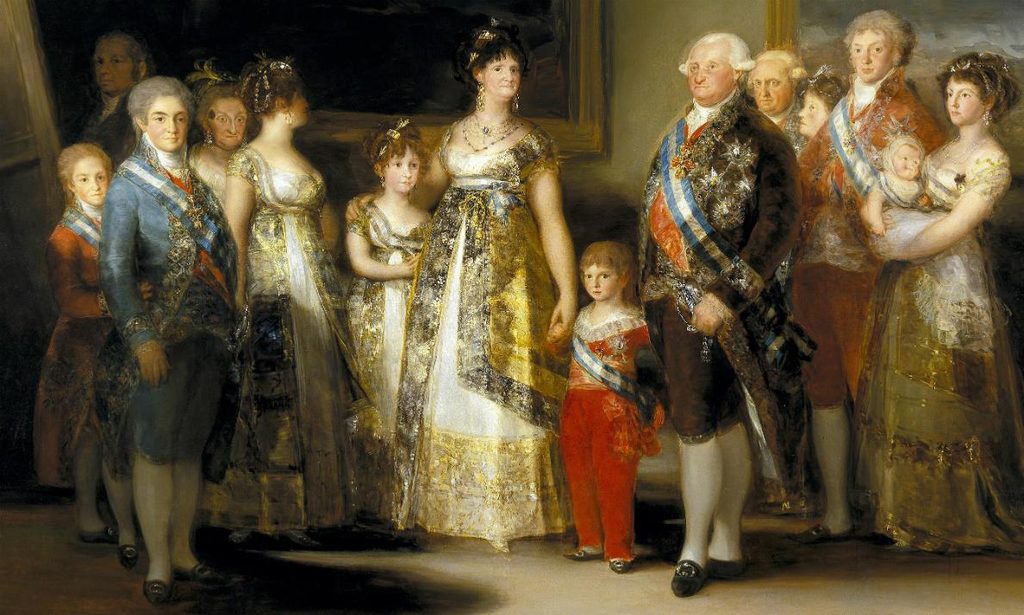
Francisco Goya’s Charles IV of Spain and His Family, painted in 1800, is one of the most significant royal portraits in Spanish art history. At first glance, the painting appears to celebrate the grandeur of the Spanish monarchy and the authority of the royal dynasty. However, its composition, facial expressions, and the artist’s own position introduce more complex interpretations. Today, the painting hangs in the Museo del Prado in Madrid.
Rather than simply glorifying the royal family, Goya presents a portrait that invites viewers to examine how power, status, and authority appear in art. Consequently, the painting remains an important subject of debate among art historians.
How Does Goya Represent the Spanish Royal Family?
According to Tim McNeese, Charles IV of Spain and His Family ranks among Goya’s important portraits. McNeese also draws attention to the artist’s self-portrait in the background on the left side of the composition (2008, pp. 101–103).
By including himself in the painting, Goya emphasizes his role beyond that of a court painter. He appears as an independent observer who studies royal authority and transforms it into a visual representation. This detail adds another dimension to the relationship between the artist and his powerful subjects.
The royal figures wear elaborate aristocratic clothing and prestigious decorations. Nevertheless, their physical appearances, postures, and relationships do not entirely match the idealized harmony often associated with traditional royal portraiture.
Furthermore, Goya’s realistic approach gives the figures a distinctive presence. Instead of presenting an entirely idealized image of monarchy, he depicts members of the royal family with individual features and expressions. As a result, viewers may question the relationship between outward splendor and personal character.
Did Goya Secretly Mock the Royal Family?
One of the most frequently discussed interpretations of Goya’s royal portrait is the suggestion that he subtly mocked the Spanish monarchy. McNeese considers the appearance of certain figures and the artist’s placement within the composition relevant to this interpretation (2008, p. 102).
However, an important distinction must be made between interpretation and historical fact. Although some viewers find the facial expressions unflattering or critical, these impressions do not prove that Goya deliberately intended to humiliate the monarchs. Such claims belong to the broader debate surrounding the painting rather than constituting an established fact about the artist’s intentions.
Nevertheless, this ambiguity contributes to the painting’s lasting significance. While the portrait displays the royal family’s wealth and status, it also encourages viewers to question how political authority becomes a visual spectacle.
Moreover, Goya’s position within the composition raises questions about the relationship between the artist and the institutions that employ him. His presence suggests that the painter is not merely a passive participant in royal representation. Instead, he occupies the role of an observer who records the world of power from his own perspective.
Why Is Charles IV of Spain and His Family Important?
Goya’s royal portrait offers more than a historical record of the Spanish monarchy. It provides an opportunity to examine the conventions of court painting and the ways artists represent authority.
Traditional royal portraits often emphasize dignity, prestige, and political legitimacy. Goya retains many of these visual elements while introducing a more naturalistic approach to the people he depicts. Consequently, the painting allows different interpretations to coexist without requiring a single definitive conclusion.
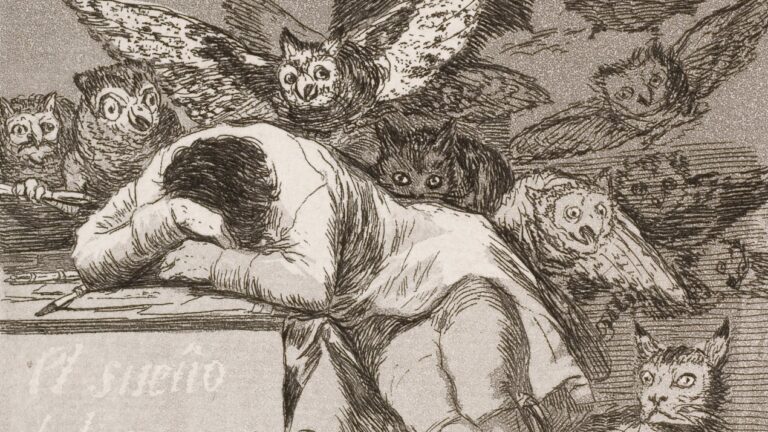
Its significance therefore lies partly in the questions it raises. Does a royal portrait simply celebrate its subjects, or can it also reveal the complexities of power? Goya’s painting continues to encourage such discussions. Similar questions about power and critique also shape his Los Caprichos and his later Black Paintings.
Conclusion
Charles IV of Spain and His Family demonstrates that royal portraiture involves more than the glorification of rulers. Through his realistic representation of the royal figures and his own presence in the composition, Goya creates a complex image of monarchy and artistic observation.
Although the claim that Goya deliberately mocked the royal family remains open to interpretation, the painting invites viewers to examine the relationship between appearance, authority, and representation. Ultimately, this ambiguity helps explain why the work remains an important subject in the study of Spanish art history.
References
McNeese, Tim. (2008). Francisco Goya. New York: Chelsea House Publications, Facts On File, pp. 101–103.
About the Author