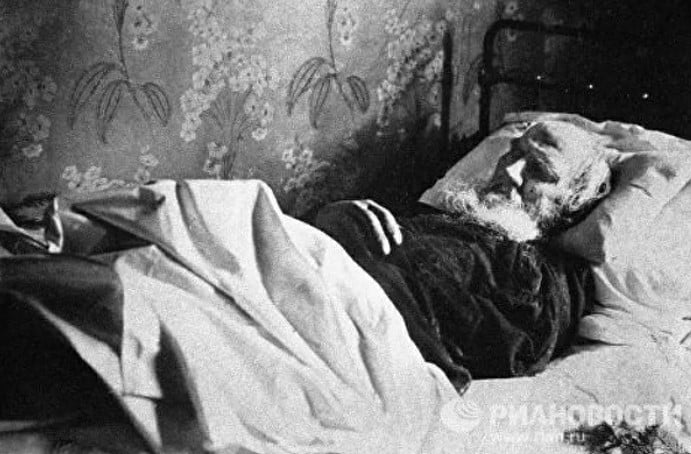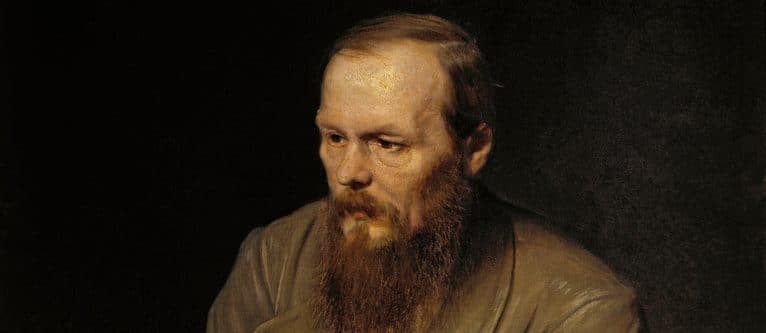
Written between 1895 and 1910, the late diaries of Leo Tolstoy offer a profound examination of death and immortality, spiritual consciousness, and the meaning of human existence. Rather than interpreting death as absolute annihilation, Tolstoy approaches it as a transformation in the relationship between bodily life and spiritual being. Moreover, his reflections challenge conventional assumptions about personal identity, memory, time, and the afterlife. He argues that genuine immortality does not necessarily depend on the preservation of individual memories; instead, it emerges through spiritual awareness, moral development, and the enduring principle of love. Consequently, death becomes not merely an inevitable biological event but also an essential dimension of ethical and spiritual life.
Drawing on R. F. Christian’s edition of Tolstoy’s Diaries, Volume 2: 1895–1910, this article examines how Tolstoy understood death and immortality through five interconnected themes: transformation, memory and immortality, old age, the illusion of time, and the meaninglessness of suicide. Ultimately, Tolstoy’s late reflections present spiritual growth and love as more fundamental measures of existence than physical duration.
1. Introduction: Tolstoy on Death and Immortality
Leo Tolstoy’s reflections on death constitute a central element of his late religious and philosophical thought. Between 1895 and 1910, his diaries reveal an increasingly sustained effort to understand the relationship between physical existence, spiritual consciousness, and eternity. Rather than treating death as a purely biological phenomenon, Tolstoy investigates its implications for human identity and moral responsibility.
Furthermore, his approach challenges the assumption that human existence derives its meaning primarily from bodily survival. For Tolstoy, people frequently experience fear because they identify themselves exclusively with their physical bodies and individual personalities. However, he argues that spiritual consciousness offers a broader understanding of existence, one that transcends the limitations of the biological self. These ideas also connect closely to Tolstoy’s radical philosophy and his way of life at Yasnaya Polyana.
Christian’s Tolstoy’s Diaries, Volume 2: 1895–1910 provides an important documentary basis for examining these ideas. The diary entries reveal how Tolstoy connects reflections on mortality with everyday experiences, family bereavements, religious convictions, and ethical self-examination (Christian, ed., Tolstoy’s Diaries, Vol. 2).
Accordingly, understanding how Tolstoy approached death and immortality requires an examination of several related questions. What survives when the body dies? Does immortality require the continuation of personal memory? How should people understand old age and the approaching end of life? These questions ultimately lead Tolstoy toward a conception of existence grounded in spiritual development and universal love.
2. Death as Transformation Rather Than Annihilation
One of the defining features of Tolstoy’s late philosophy concerns his rejection of death as absolute nonexistence. In his diary entry of November 14, 1896, he explores the relationship between the material world, sensory perception, and the transformation associated with death. His reflections suggest that human beings cannot simply equate the limits of their physical perception with the limits of reality.
In this context, Tolstoy employs the idea of transformation to reconsider the apparent finality of death. Just as a change in scenery does not necessarily imply the disappearance of the entire world, the end of bodily life need not establish the absolute annihilation of existence. Nevertheless, this analogy expresses a philosophical and religious interpretation rather than an empirically demonstrated account of survival after death.
Tolstoy’s distinction between the bodily self and spiritual consciousness also helps explain his rejection of excessive fear. When individuals identify themselves exclusively with their physical bodies, death naturally appears as the destruction of everything they value. By contrast, when they direct their attention toward spiritual awareness and love, they can approach mortality with greater composure.
Moreover, Tolstoy’s position challenges materialistic assumptions about personal identity. He does not simply ask whether the body continues to exist; instead, he questions whether bodily existence provides the most adequate definition of the self. Consequently, death becomes a philosophical problem concerning the nature of consciousness, not merely the termination of biological functions.
3. Tolstoy on Memory, Spiritual Consciousness, and Immortality After Death
Tolstoy’s reflections on memory introduce a particularly distinctive dimension to his understanding of immortality. In his diary entry of January 6, 1903, he considers the possibility that the disappearance of personal memories might represent a blessing rather than a tragedy. This interpretation challenges the widespread belief that immortality requires the uninterrupted preservation of an individual’s autobiographical identity.
Ordinarily, people associate personal survival with the ability to remember their experiences, recognize their relationships, and maintain a continuous sense of self. Tolstoy, however, questions whether this continuity constitutes the essence of eternal existence. If individuals retained every painful memory and every burden of guilt indefinitely, their supposed immortality might become an extension of suffering rather than a source of fulfillment.
Instead, Tolstoy places greater emphasis on spiritual consciousness, moral development, and love. These qualities matter because they express the ethical direction of a person’s life rather than merely recording its events. Thus, he distinguishes between the accumulation of personal experiences and the deeper transformation that those experiences can produce.
How Tolstoy Links Death, Immortality, and Personal Identity
Furthermore, his conception of immortality challenges the assumption that the individual personality must remain unchanged forever. Spiritual continuity may involve a transformation of identity rather than the endless repetition of an existing personality. In this sense, Tolstoy directs attention away from the preservation of memories and toward the moral significance of existence.
His reflections also raise a question about eternity and the beginning of life. In his diary entry of January 21, 1910, he considers the relationship between existence before birth and existence after death. According to the reasoning he explores, if the soul possesses an eternal dimension beyond ordinary time, its existence cannot be understood solely through the chronological boundaries of an individual lifetime.
Nevertheless, this view of immortality belongs to the metaphysical outlook Tolstoy developed; it does not establish the empirical existence of a soul before birth or after death. Its philosophical significance lies instead in the challenge it presents to conventional understandings of time, identity, and human mortality.
4. Old Age, Bodily Decline, and Spiritual Development
Tolstoy’s late diaries repeatedly connect old age with the changing relationship between physical strength and spiritual awareness. In his entry of February 5, 1902, he considers the possibility that spiritual activity may intensify as bodily capacities diminish. This idea reverses the assumption that physical decline necessarily entails a corresponding decline in the significance of human existence.
As the body grows weaker, individuals may become increasingly conscious of their mortality. However, Tolstoy interprets this awareness as an opportunity for spiritual concentration rather than merely a source of anxiety. The approaching end of life encourages reflection on moral responsibility, personal conduct, and the meaning of existence.
Consequently, old age acquires an ethical significance within his philosophy. Rather than treating death as an event that people must resist at all costs, Tolstoy considers the preparation for death an essential responsibility. His diary entries of January 18 and September 2, 1906, develop the idea that dying constitutes a final task that requires attention and spiritual seriousness.
This perspective does not suggest that suffering, illness, or physical deterioration automatically produces wisdom. Instead, Tolstoy emphasizes the importance of the attitude through which individuals confront their limitations. A person can approach death with greater clarity by examining personal motives, cultivating compassion, and reducing attachment to material concerns.
Moreover, Tolstoy describes the anticipation of death through images of movement and discovery. His diary entry of April 29, 1904, evokes the mixture of curiosity, apprehension, and expectation that accompanies an encounter with the unknown. Such imagery expresses his conviction that mortality need not exclude hope.
In this framework, death becomes the threshold of an unresolved spiritual question. Tolstoy does not offer scientific proof of immortality after death; rather, he explores how the possibility of transcendence can reshape the experience of living.
5. Family Bereavement and the Illusion of Time
Tolstoy’s reflections on death emerge not only from abstract philosophical speculation but also from personal loss. The death of his young son Vanechka, together with the deaths of other family members, encouraged him to reconsider the relationship between the duration of life and its intrinsic value. His diary entries of February 26, March 12, and April 6, 1895, connect mortality with questions about spiritual growth and the limitations of bodily existence.
These reflections challenge the assumption that a long life necessarily possesses greater meaning than a short one. Chronological duration measures the passage of years, but it does not adequately describe the depth of a person’s emotional or spiritual experience. A brief life can profoundly affect others, while a much longer life may yield little moral development.
Therefore, Tolstoy distinguishes between physical time and what he understands as spiritual existence. From the perspective of ordinary experience, people measure life through birthdays, historical events, and the sequence of personal memories. Yet spiritual growth depends less on the number of years someone lives than on the quality of consciousness and love that person develops.
Childhood, Old Age, and the Meaning of Existence
Furthermore, Tolstoy’s reflections on children and older people suggest that chronological age does not determine the full significance of existence. In his diary entry of April 22, 1907, he explores the relationship between age and a deeper conception of life that resists ordinary temporal measurement.
His argument does not require the literal denial of time in the physical world. Rather, it distinguishes measurable duration from existential value. Although time governs bodily life, it cannot, in Tolstoy’s interpretation, provide the sole measure of spiritual development.
Consequently, bereavement becomes an occasion for philosophical reassessment. The loss of a loved one exposes the inadequacy of measuring human significance exclusively through longevity. At the same time, it reinforces the importance of love as a relationship whose ethical and emotional consequences extend beyond the time people spend together.
6. Suicide and the Contradiction of Escaping Life
Tolstoy’s philosophy of death also addresses the question of suicide. In his diary entry of May 1, 1910, he considers the relationship between suicide, the purpose of existence, and the possibility of spiritual development. His reasoning follows from his broader conviction that life provides the conditions through which individuals pursue goodness and transform their moral consciousness.
From this perspective, suicide presents a philosophical contradiction. If human existence offers opportunities for moral growth, then abandoning life cannot automatically resolve the difficulties that make existence painful. Tolstoy therefore interprets the desire to escape life as a possible consequence of misunderstanding its deeper purpose.
He illustrates this position through an analogy involving someone who leaves a forest while searching for mushrooms. The person abandons the very place in which the desired object can be found. Similarly, Tolstoy suggests that abandoning life in the search for goodness misunderstands the relationship between ethical action and human existence.
However, this argument reflects Tolstoy’s philosophical position rather than a complete psychological explanation of suicide. Suicidal thoughts can arise from severe psychological distress and complex personal circumstances, and they cannot adequately be reduced to a failure of philosophical understanding.
Within Tolstoy’s ethical framework, the central point remains that goodness emerges through the ongoing struggle to understand oneself, respond to suffering, and act with compassion. Life therefore possesses significance not simply because it continues, but because it offers opportunities for moral action.
7. Tolstoy on Death, Immortality, and Spiritual Enlightenment
Several entries in Tolstoy’s late diaries explore the possibility that approaching death changes a person’s awareness of existence. In his entries of January 3 and April 29, 1904, and January 18 and September 2, 1906, he considers the relationship between mortality, spiritual understanding, and the anticipation of an unknown reality.
Tolstoy’s reflections on his sister Masha’s death, recorded on November 27, 1906, also belong to this broader inquiry. The experience of losing someone close to him encouraged further contemplation of whether death might involve a transformation in consciousness that the living cannot fully comprehend.
Nevertheless, Tolstoy does not provide an independently verifiable account of consciousness after death. His descriptions of enlightenment express a religious and philosophical interpretation of mortality. Their importance lies in the way they challenge the assumption that ordinary sensory experience exhausts the possibilities of human understanding.
Moreover, his reflections distinguish between different forms of knowledge. Empirical observation concerns phenomena accessible to human perception, whereas religious conviction addresses questions about meaning, eternity, and ultimate reality. Tolstoy attempts to relate these forms of understanding without reducing spiritual questions to material observation alone.
This distinction also clarifies his attitude toward death. Rather than claiming complete knowledge of death or immortality, Tolstoy considers the possibility that human understanding remains limited by its dependence on bodily experience. Accordingly, the unknown nature of death becomes an invitation to humility rather than an automatic justification for fear.
8. Tolstoy’s Funeral Wishes and the Symbolism of the Green Stick
Tolstoy’s late reflections on death also influenced his wishes concerning burial and religious ceremony. In his diary entry of August 11, 1908, he addresses funeral arrangements and his preference for simplicity. His opposition to elaborate ceremonies reflects his broader criticism of institutional religion when its outward practices overshadow the ethical substance of spiritual life.
The symbolism of the Green Stick holds particular significance in this context. The Green Stick belongs to the imaginative world of Tolstoy’s childhood and became associated with the hope of discovering a secret capable of bringing happiness and unity to humanity. In his later outlook, the image acquired a wider symbolic meaning connected with universal love and human reconciliation.
His interest in the Green Stick therefore links the end of his physical life with an enduring ethical aspiration. Rather than emphasizing the grandeur of a funeral or the permanence of a physical monument, Tolstoy directs attention toward the values that should guide human relationships.
Furthermore, his burial wishes reveal the consistency between his practical decisions and his philosophical principles. Simplicity, humility, and resistance to unnecessary ceremony reflect his conviction that spiritual significance does not depend on external displays.
The Green Stick thus represents more than a childhood memory. It evokes Tolstoy’s hope that humanity might overcome hostility through mutual understanding and love. In this sense, his reflections on death ultimately return to the ethical responsibilities of the living.
References
Christian, R. F., ed. Tolstoy’s Diaries, Volume 2: 1895–1910. London: Faber & Faber.
Tolstoy, Leo. Tolstoy’s Diaries, Volume 2: 1895–1910. Edited by R. F. Christian. Diary entries dated February 26, March 12, and April 6, 1895; November 14, 1896; November 14, 1898; July 12, 1900; February 11 and November 29, 1901; February 5, 1902; January 6, 1903; January 3 and April 29, 1904; January 18, September 2, and November 27, 1906; April 22, 1907; August 11, 1908; and January 21 and May 1, 1910.
Related reading
- Leo Tolstoy’s Final Escape: His Diaries, Spiritual Crisis, and Death at Astapovo in 1910
- How Did Tolstoy’s Excommunication by the Church Unfold?
- Tolstoy’s Response to His Excommunication by the Church
- Leo Tolstoy’s Literary Criticism of Anton Chekhov and Maxim Gorky: Diaries, Conversations, and Literary Aesthetics in Yasnaya Polyana and Crimea
- Leo Tolstoy and Mahatma Gandhi: Nonviolence, Pacifism, and the Ethics of Resistance (1909–1910)
About the Author