Tolstoy’s Final Journey and the Search for Spiritual Freedom
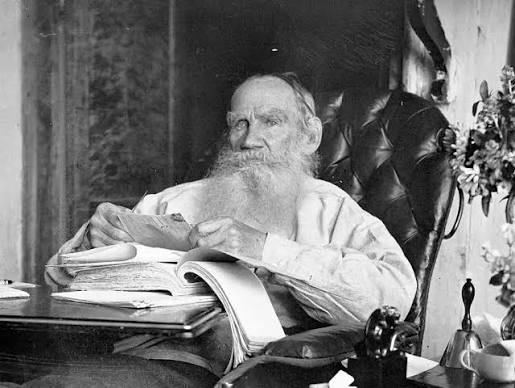
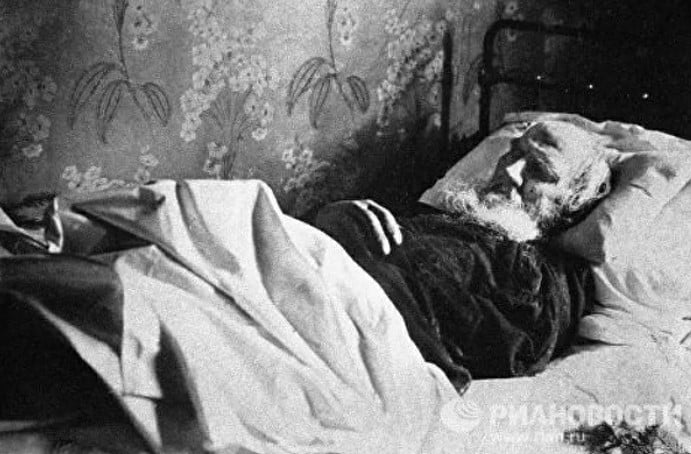
Tolstoy’s final journey began on 28 October 1910, when he left Yasnaya Polyana. This departure marked one of the most dramatic episodes in the final years of his life. At the age of eighty-two, the celebrated Russian novelist left his family home in an attempt to escape domestic conflict and pursue a life more consistent with his religious and philosophical convictions. However, his journey did not bring the lasting peace he sought. Instead, illness forced him to stop at Astapovo railway station, where he spent his final days before dying on 7 November 1910.
Tolstoy’s diaries provide an important perspective on this episode because they reveal the psychological tensions behind his departure. Moreover, they illuminate the relationship between his personal suffering, his criticism of material wealth, and his lifelong search for spiritual authenticity. Although his escape appeared sudden, it emerged from years of conflict between his public philosophy and the circumstances of his private life.
This article examines Tolstoy’s final journey through the chronology of his departure, his visits to Orthodox monasteries, and his final days at Astapovo. It also considers the historical significance of his diaries as documents of intellectual and spiritual crisis. For a related discussion of his thought, see our article on Tolstoy’s definition of art.
1. The Night of 28 October 1910: Domestic Conflict and the Decision to Leave
Tolstoy’s departure began during the night of 28 October 1910. According to the account presented in Tolstoy’s Diaries, Volume 2: 1895–1910, edited and translated by R. F. Christian, the elderly writer awoke during the early hours and noticed activity near his study. His wife, Sofia Andreyevna, had long been involved in disputes concerning his manuscripts, private papers, and personal writings.
Their relationship had deteriorated over many years. On the one hand, Tolstoy sought a life of simplicity, moral independence, and spiritual discipline. On the other hand, his family circumstances involved questions of property, literary rights, inheritance, and the future of his works. Consequently, their domestic disagreements reflected a broader conflict between Tolstoy’s ideals and the practical realities of family life.
During this particular night, Tolstoy reportedly experienced intense anxiety and counted his pulse at approximately ninety-seven beats per minute. His physical response illustrates the emotional strain surrounding his decision. Nevertheless, he eventually concluded that he could no longer remain in the house under those conditions.
He therefore wrote a farewell letter and awakened his physician, Dushan Makovitsky, and his daughter Alexandra, commonly known as Sasha. Together, they began preparing for departure while attempting to avoid a confrontation with Sofia. Furthermore, Tolstoy feared that his wife might discover their plans and react in a way that would prevent him from leaving.
The episode reveals that Tolstoy’s escape involved more than a disagreement between husband and wife. Rather, it represented his attempt to regain control over the final stage of his life and to reconcile his personal conduct with his ethical principles.
2. Leaving Yasnaya Polyana: Darkness, Fear, and the Railway Journey
Before six o’clock in the morning, Tolstoy and his companions prepared to leave Yasnaya Polyana. The departure itself proved physically difficult. In the darkness, Tolstoy lost his way among bushes and trees, stumbled over uneven ground, and lost his hat. Eventually, he returned to the house to obtain another hat and a lantern before continuing toward the stables.
These seemingly minor details give the episode a striking human dimension. Although Tolstoy had achieved international recognition as the author of War and Peace and Anna Karenina, his departure began with confusion, physical discomfort, and fear. Thus, the contrast between his literary stature and his vulnerability becomes particularly evident.
After reaching the railway station at Shchyokino, Tolstoy feared that someone might pursue him and force him to return. However, as the train moved farther away from Yasnaya Polyana, his immediate anxiety gradually gave way to sorrow and compassion.
The journey also reflected his rejection of social privilege. From Gorbachovo onward, he reportedly travelled in third-class accommodation among ordinary passengers. Instead of seeking the privacy and comfort available to a famous aristocratic writer, he accepted the crowded conditions of ordinary railway travel. In this respect, his choice corresponded with his longstanding criticism of class distinctions and material luxury.
Nevertheless, this stage of Tolstoy’s final journey did not resolve his inner conflict. Although physical distance separated him from his home, his emotional attachment to his family and his concern about the consequences of his departure remained powerful.
3. Optina Monastery and the Search for Religious Consolation
On 28 October, Tolstoy reached Optina Monastery, an important centre of Russian Orthodox spirituality. The monastery had particular significance for Russian intellectual and religious life because of its association with spiritual elders, contemplative practice, and the search for moral renewal.
Tolstoy’s relationship with institutional Christianity remained complicated. Although he developed a deeply religious interpretation of life, he rejected several central doctrines and practices of the established Orthodox Church. Consequently, his visits to religious institutions did not necessarily indicate a return to conventional religious authority. Instead, they reflected his continuing interest in spiritual guidance and the moral meaning of suffering.
The following day, Tolstoy learned that Sofia had attempted suicide by entering a pond after reading his farewell letter. Their children reportedly rescued her. This news intensified the emotional burden of his departure and demonstrated that his decision had consequences extending far beyond his own spiritual aspirations.
Tolstoy subsequently travelled to Shamardino, where his sister Maria lived in a convent. There, he encountered a passage in his reading collection that appeared especially relevant to his situation: “This suffering is necessary for me and beneficial to my soul.”
According to the account of this episode, the passage corresponded to the date of his departure, 28 October. Tolstoy interpreted the coincidence as a source of consolation. Moreover, the incident illustrates the importance of reading and reflection in his search for meaning during periods of personal crisis.
However, this moment of reassurance did not eliminate his uncertainty. Rather, it offered temporary relief within a journey marked by conflicting emotions, physical exhaustion, and unresolved family responsibilities.
4. Illness on Tolstoy’s Final Journey: The Unexpected Stop at Astapovo
Tolstoy’s final journey continued toward Kozelsk, but his physical condition deteriorated rapidly. On 31 October, during a further stage of the railway journey, he developed severe chills and a high fever. The temperature reportedly approached 40 degrees Celsius, forcing him to interrupt his travels.
The train stopped at Astapovo, a small railway station in what was then the Russian Empire. The stationmaster, Ivan Ozolin, offered Tolstoy accommodation in his own residence. As a result, the writer’s attempt to establish distance from his previous life ended in an unexpected and increasingly public medical crisis.
Astapovo soon attracted journalists, physicians, relatives, admirers, and religious representatives. News of Tolstoy’s illness spread rapidly, transforming the modest station into the centre of international attention. Meanwhile, his physical weakness limited his ability to control the circumstances surrounding his final days.
The irony of the situation was profound. Tolstoy had left Yasnaya Polyana in search of independence, yet illness placed him in a confined space where other people increasingly determined the conditions of his life. Nevertheless, he continued to reflect on his moral principles and the meaning of his decisions.
His experience at Astapovo therefore represents both a personal tragedy and a historically significant episode in the relationship between literary celebrity, religious dissent, and public life in late imperial Russia.
5. Tolstoy’s Final Diary Entries: Duty, Acceptance, and Moral Responsibility
Tolstoy’s final diary entries reveal his continuing effort to interpret his circumstances through an ethical and philosophical framework. In the account supplied for this article, his last recorded reflections include the French expression “Fais ce que dois, advienne que pourra,” which means “Do what you must, come what may.”
The phrase expresses a principle that remained central to Tolstoy’s moral thought: individuals should act according to their understanding of duty rather than allow fear of consequences to determine their conduct. Nevertheless, his final circumstances complicated this ideal because his departure had caused considerable distress to the people closest to him.
The reported diary passage also suggests that Tolstoy eventually considered the outcome potentially beneficial to himself and others. Such a conclusion does not necessarily indicate that he regarded every consequence of his decision as desirable. Rather, it reflects his continuing attempt to find moral meaning in events that had escaped his control.
Furthermore, his final reflections demonstrate the enduring importance of self-examination in his intellectual life. Throughout his career, Tolstoy questioned conventional assumptions about social status, religion, morality, and personal happiness. During his final days, he continued to confront those questions under the pressure of serious illness.
His diary therefore offers more than a chronological account of his last journey. It documents the efforts of an ageing writer to understand his own conduct and to preserve a sense of ethical responsibility during a period of extreme vulnerability.
6. Tolstoy’s Final Refusal of Church Rituals
Tolstoy’s relationship with the Russian Orthodox Church remained contentious until the end of his life. His religious writings challenged established ecclesiastical authority and rejected doctrines that he considered inconsistent with the ethical teachings of Jesus. These positions contributed to the Church’s formal excommunication of him in 1901.
According to the supplied account, Tolstoy had expressed his opposition to receiving conventional church rites during his final illness. His position reflected a longstanding distinction between personal faith and institutional religion. In his view, genuine spirituality required moral transformation, compassion, and a commitment to truth rather than mere conformity to religious ceremonies.
However, his refusal created an emotionally charged situation for his family and for the religious authorities who gathered near his deathbed. His final days consequently became a public confrontation over the meaning of faith, religious authority, and individual conscience.
Tolstoy died at Astapovo on 7 November 1910, aged eighty-two. His death brought an end to a life that had profoundly influenced Russian literature, Christian ethical thought, and international debates about nonviolence and social responsibility.
7. Historical Significance of Tolstoy’s Final Journey
Tolstoy’s escape from Yasnaya Polyana remains significant because it exposes the tensions between philosophical conviction and personal experience. His criticism of property, privilege, and social inequality shaped his public identity, yet his private life involved complex questions concerning family obligations, literary ownership, and inheritance.
At the same time, Tolstoy’s final journey illustrates the limits of individual attempts to achieve complete spiritual independence. He could leave his estate, but he could not entirely escape his emotional attachments or the consequences of his decisions. Moreover, his illness transformed a private act into a public event that attracted worldwide attention.
His diaries are particularly valuable because they preserve the uncertainties that a simplified biographical narrative might overlook. Rather than presenting Tolstoy as an entirely consistent moral authority, they reveal a person struggling to reconcile ideals with lived experience.
Ultimately, Astapovo became a symbolic setting for the final chapter of Tolstoy’s life. The railway station represented the intersection of movement and confinement, freedom and dependence, personal choice and physical limitation. His death there reinforced the enduring interest in the relationship between his literary achievements, his religious philosophy, and his private struggles.
References
- Christian, R. F., ed. and trans. Tolstoy’s Diaries, Volume 2: 1895–1910. London: Faber & Faber.
- Tolstoy, Leo. A Confession. Translated by Aylmer Maude. Originally published in 1882.
- Tolstoy, Leo. The Kingdom of God Is Within You. Translated by Constance Garnett. Originally published in 1894.
- Tolstoy, Leo. What I Believe. Translated by Constantine Popoff. Originally published in 1884.
- Wilson, A. N. Tolstoy. London: Hamish Hamilton, 1988.
Related reading
- How Did Tolstoy’s Excommunication by the Church Unfold?
- Death and Immortality in Tolstoy’s Late Diaries (1895–1910): Spiritual Consciousness, Love, and the Illusion of Time
- Tolstoy’s Response to His Excommunication by the Church
- Leo Tolstoy’s Literary Criticism of Anton Chekhov and Maxim Gorky: Diaries, Conversations, and Literary Aesthetics in Yasnaya Polyana and Crimea
- Leo Tolstoy and Mahatma Gandhi: Nonviolence, Pacifism, and the Ethics of Resistance (1909–1910)
About the Author