Wagner and Bakunin: Two Radical Figures in the Revolutions of 1848–1849
The relationship between Richard Wagner and Mikhail Bakunin offers a remarkable example of the intersection between art, political radicalism, and revolutionary action in nineteenth-century Europe. In May 1849, the two men found themselves on the same side during the Dresden Uprising, a revolt that challenged royal authority in the Kingdom of Saxony. However, their paths to revolutionary politics differed considerably: Wagner approached political activism through his artistic ambitions and dissatisfaction with the existing social order, whereas Bakunin pursued a more uncompromising struggle against authoritarian institutions.
Their participation in the uprising reveals more than an unusual episode in the lives of a celebrated composer and a prominent anarchist. Instead, it illuminates the radical political imagination of the revolutionary era and raises questions about the relationship between intellectual conviction and direct political action.
The Dresden Uprising: Historical Background for Wagner and Bakunin
The European revolutions of 1848 challenged monarchies, demanded constitutional government, and advanced competing visions of national unity and social reform. Nevertheless, conservative forces gradually regained the initiative in several German states, provoking renewed resistance in 1849.
In Dresden, the immediate crisis concerned the rejection of the Frankfurt National Assembly’s constitutional project and the struggle to preserve democratic reforms. On 3 May 1849, armed insurgents began their revolt. After King Frederick Augustus II and his government left the city, revolutionaries established a provisional government and organized resistance against Saxon and Prussian troops. The fighting continued until 9 May, when government forces regained control.
Consequently, the uprising represented both a local confrontation over political authority and part of a broader European struggle over constitutionalism, popular sovereignty, and republican government.
Richard Wagner: The Composer as a Political Revolutionary
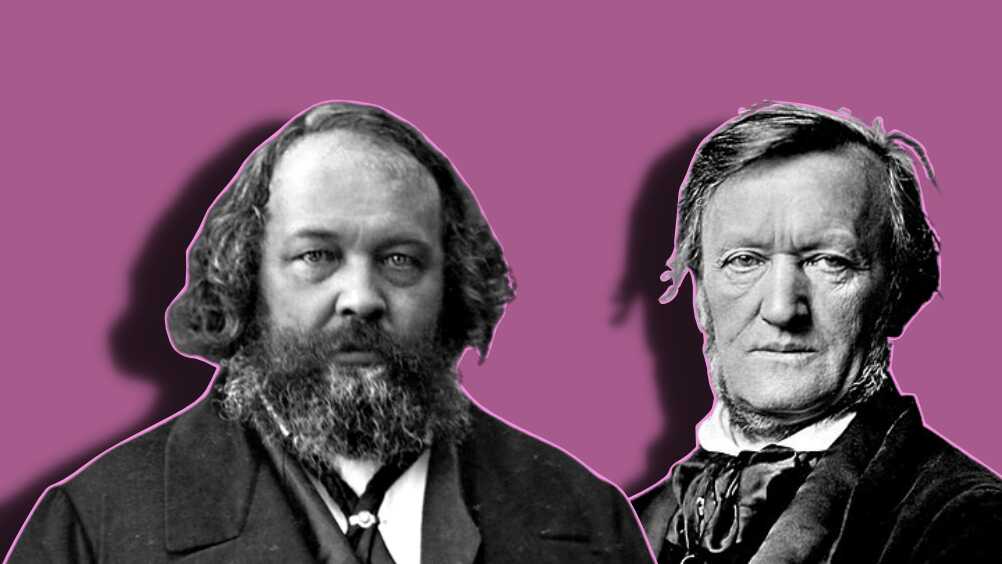
Richard Wagner, composer and political radical.
1813–1883
Richard Wagner was not simply a composer who occasionally expressed political opinions. During his years in Dresden, he developed an increasingly radical critique of established social institutions and the cultural conventions of his time. From 1843 to 1849, he served as Royal Saxon Court Kapellmeister, a prestigious position that placed him within the very establishment he came to criticize.
Wagner’s Character and Revolutionary Convictions
Wagner combined artistic ambition with an intense desire to transform society. He disliked the subordination of art to commercial interests and conventional expectations. Moreover, he increasingly connected artistic renewal with the possibility of political and social emancipation.
His relationship with the revolutionary movement reflected a tension in his character. On the one hand, he held an official position within the Saxon monarchy. On the other hand, he sympathized with democratic and republican aspirations. Rather than remaining a detached observer, he wrote political articles and associated with radical intellectuals, including Bakunin and the revolutionary editor August Röckel.
During the Dresden Uprising, Wagner contributed to the revolutionary cause. Historical accounts describe him as a participant in supporting activities rather than a principal military commander. Therefore, claims that he and Bakunin jointly led the capture of government buildings or fought together continuously on the barricades require qualification.
Wagner’s Revolutionary Writings and Artistic Works
Wagner’s political engagement extended beyond the streets of Dresden. His essays reveal how he connected revolutionary change with his vision of artistic renewal.
Art and Revolution (1849)
Wagner argues that genuine artistic transformation requires a fundamental reconsideration of society. Drawing on ancient Greek culture and his critique of modern commercial life, he imagines a world in which art serves collective human fulfillment rather than narrow economic interests.
Primary source: Richard Wagner Society International.
The Artwork of the Future (1849)
Wagner develops his theory of a comprehensive artwork that unites music, drama, poetry, and visual expression. Furthermore, he links this artistic ideal to a transformed social order, although his political and aesthetic theories evolved considerably throughout his career.
Wagner’s operas also provide important context for his revolutionary imagination. Der Ring des Nibelungen explores power, greed, domination, and the destructive consequences of political ambition. Wagner developed the cycle over several decades, however, so it would be misleading to interpret the entire work as a direct product of the Dresden revolt. Its early conceptual development nevertheless overlaps with his radical political period. For Wagner’s later influence on philosophy, see Friedrich Nietzsche and Music.
Mikhail Bakunin: The Revolutionary Who Rejected Authority
Mikhail Bakunin, revolutionary theorist.
1814–1876
Mikhail Bakunin approached politics with a more consistently revolutionary commitment than Wagner. A Russian political exile, he participated in revolutionary networks across Europe and developed a radical opposition to centralized state power, compulsory authority, and established hierarchies. His ideas later became central to the development of revolutionary anarchism.
Bakunin’s Character: Rebellion as a Way of Life
Bakunin possessed an exceptionally restless political temperament. Rather than seeking gradual reform within existing institutions, he increasingly advocated their radical transformation. He viewed political freedom as incompatible with systems that concentrated power in the hands of monarchs, bureaucrats, or other ruling authorities.
However, his revolutionary outlook involved more than personal defiance. Bakunin sought international cooperation among democratic, nationalist, and revolutionary movements. During the late 1840s, he built connections with German, Polish, Czech, and other European radicals.
Unlike Wagner, whose revolutionary activism developed alongside his artistic career, Bakunin placed political struggle at the center of his life. Nevertheless, both men shared a willingness to challenge established authority and accept personal risks for their convictions.
Bakunin’s Political Works
The Reaction in Germany (1842)
This early essay expresses Bakunin’s increasingly radical engagement with German philosophy and political change. Its famous association with the principle of destruction as a creative force anticipates the revolutionary spirit that later defined his political thought.
God and the State (published posthumously in 1882)
Bakunin attacks religious and political authority, arguing that institutions claiming absolute truth or unquestionable legitimacy threaten human freedom. Although the text appeared decades after the Dresden Uprising, it clarifies the anti-authoritarian philosophy that matured throughout his life.
Bakunin’s political thought did not remain static. Consequently, historians should distinguish his views during the 1848–1849 revolutions from the more developed anarchist positions he articulated in later decades.
Wagner and Bakunin at the Dresden Barricades
The Dresden Uprising brought Wagner and Bakunin into the same revolutionary environment. Both opposed the restoration of conservative authority, and both participated in the wider democratic movement that challenged the Saxon monarchy.
Nevertheless, historical precision matters when reconstructing their roles. Wagner supported the insurgents through political writing and practical activities. Bakunin participated in revolutionary organizing and offered political and strategic counsel. However, the evidence does not establish that the two men jointly commanded the uprising or personally led the seizure of government buildings. Historical scholarship also cautions against treating Bakunin as the sole military leader of the revolt.
The uprising ended on 9 May 1849, after Saxon and Prussian forces defeated the insurgents. Wagner escaped and eventually settled in Zurich, where he continued his musical and theoretical work. Bakunin faced arrest, imprisonment, and a prolonged period of political persecution. Thus, the defeat shaped both men’s subsequent lives, although their experiences of exile and repression differed significantly.
What Did Wagner and Bakunin Have in Common?
Their alliance rested on several overlapping convictions, even though their ultimate aims were not identical.
- Opposition to established authority: Both rejected aspects of the political and social order that dominated nineteenth-century Europe.
- Commitment to transformation: Wagner sought a radical renewal of artistic and social life, whereas Bakunin pursued a fundamental reorganization of political authority.
- International intellectual networks: Both engaged with radical ideas that crossed national boundaries.
- Personal risk: Their participation in the revolutionary movement brought serious consequences, including exile and persecution.
However, Wagner’s political thought remained closely connected to his changing theories of art, culture, and collective identity. Bakunin, by contrast, increasingly developed an explicit critique of the state and institutional authority. Their common participation in Dresden therefore reflects a convergence of political interests rather than complete ideological agreement.
References and Further Reading
1. Deutschlandmuseum. “The May Uprising in Dresden.” Historical overview of the uprising and its political context.
2. Nikolajewsky, B. “M. A. Bakunin in the Dresdner Zeitung.” International Review for Social History. Cambridge University Press.
3. Institut für Sächsische Geschichte und Volkskunde. “Mikhail Alexandrovich Bakunin (1814–1876).” Sächsische Biografie.
4. “Dresden.” In Wagner in Context. Cambridge University Press.
5. Richard-Wagner-Verband International. “The Man: Richard Wagner.” Biographical overview of Wagner’s Dresden years and political involvement.
6. Eckhardt, Wolfgang. “Von der Dresdner Mairevolution zur Ersten Internationale.” Research on Bakunin and the Dresden revolutionary movement.
About the Author

1 thought on “Richard Wagner and Mikhail Bakunin in the Dresden Uprising of 1849: Revolution, Character, and Artistic Legacy”