Dostoevsky in Siberian Exile: The Katorga Years
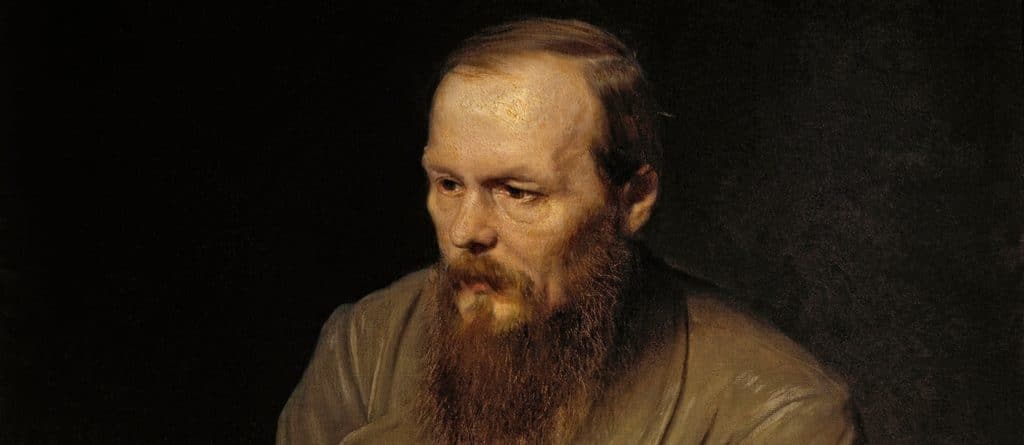
Following the traumatic mock execution at Semenovsky Square, guards placed Dostoevsky in shackles and sent him into Siberian exile. He spent four years in the penal labor camp (katorga) in Omsk, alongside hardened criminals, murderers, and peasant thieves (Frank, 2017, pp. 15–16, 215). This sentence of hard labor forced him to leave behind the world of abstract theories and Romantic revolutionary ideals. Instead, he had to confront the painful realities of the Russian people firsthand (Frank, 2017, pp. 15–16).
Before his experience at the katorga, Dostoevsky’s faith took the form of a “secular” Christianity—one devoted to improving life in this world through social transformation (Frank, 2017, pp. 15–16). During his years in exile, however, this abstract humanism collapsed. In its place emerged a deeply rooted Orthodox Christian faith grounded in the “hope of eternity.” He came to regard this hope as the ultimate foundation of moral existence and human endurance in the face of suffering (Frank, 2017, pp. 15–16).
Discovering the Christian Spirit Within the Russian People
During the early months of his imprisonment, peasant prisoners showed Dostoevsky profound hostility. The reason was his educated noble background (dvorianstvo). Over time, however, he discovered that even the most morally degraded among these men retained an uncorrupted Orthodox Christian spirit within them (Frank, 2017, p. 16). Two pivotal experiences came to symbolize this discovery:
- The Easter Liturgy: During the Easter service, the priest recited the prayer, “Even if I am a thief, accept me, O Great Lord.” Hardened peasant criminals bowed their heads in prayer, their chains rattling. In that moment, Dostoevsky witnessed what he understood as the enduring religious essence of the Russian people (Frank, 2017, p. 16).
- The Memory of the Peasant Marey: Amid the brutal turmoil of prison life, a childhood memory suddenly resurfaced in Dostoevsky’s mind. He recalled Marey, a serf at the family estate in Darovoe. Marey had once comforted him when the thought of wolves frightened him. Remembering Marey’s spontaneous, tender, and selfless human kindness, Dostoevsky began to reconstruct his understanding of the peasant class (Frank, 2017, p. 16).
Human Freedom and the Principle of Free Will
Through his observations at the katorga, Dostoevsky developed one of the fundamental principles of his philosophical anthropology. In his view, the human need to exercise free will and preserve personal freedom can never be completely eradicated (Frank, 2017, p. 16).
This capacity for self-determination shapes the integrity of the individual personality. Therefore, when rational utopian systems suppress it or force it into predetermined patterns, people may resort to irrational, destructive, and even self-destructive actions. They do so simply to assert their freedom and prove their independent existence (Frank, 2017, p. 16).
This insight became the philosophical backbone of Dostoevsky’s subsequent critiques of radicalism, which he developed after returning from exile.
How Siberian Exile Shaped Dostoevsky as a Novelist
The years of Siberian exile did not only change Dostoevsky’s faith. They also gave him the raw material for his greatest novels. He later described prison life in Notes from the House of the Dead. Moreover, the questions he faced in Omsk return again and again in his fiction. Murderers who still carry a spark of conscience have their roots here. So do suffering that leads to spiritual renewal and the stubborn human need for freedom. In short, the katorga turned a young utopian into a writer of tragic depth. For an overview of his life and works, see the Encyclopaedia Britannica biography of Dostoevsky. To learn more about the family estate where he met Marey, read Dostoevsky’s Father: The Roots of Guilt.
Reference
Frank, J. (2017). Dostoyevski: Çağının bir yazarı [Dostoevsky: A Writer in His Time] (Ü. İnce, Trans.; C. Alpan, Ed.). Everest Yayınları.
Related reading
- Political Activism and the Ordeal of Execution: The Petrashevsky Circle and Semenovsky Square
- Early Aesthetic and Literary Influences: Schiller, Scott, Pushkin, and French Romanticism
- A Reaction Against the Radicalism of the 1860s: The Critique of “Rational Egoism” and Notes from Underground
- Family Dynamics and the Father Figure: The Reflections of Dr. Mikhail Dostoevsky in Literary Works
- Ideological Murder and Moral Collapse: Crime and Punishment and Demons
About the Author