The Artist Who Exposed the Darkness of His Age
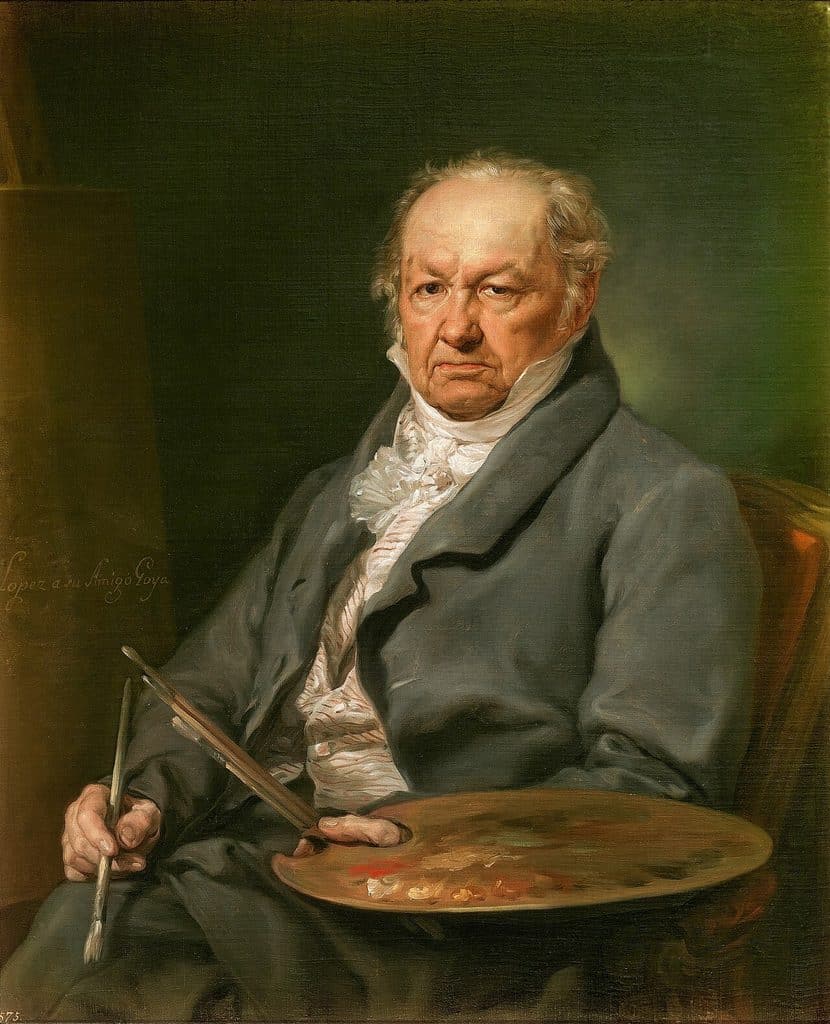
Francisco de Goya y Lucientes (1746–1828) occupies a pivotal position in the history of European art. Initially celebrated for his portraits of Spanish royalty and aristocratic society, Goya gradually developed a more critical and psychologically intense approach to painting. His work eventually moved beyond conventional court art to confront political violence, social hypocrisy, human suffering, and the disturbing depths of the imagination. This Francisco Goya biography follows that transformation from the royal court to the darkest corners of human experience.
Tim McNeese’s biography Francisco Goya (2008) traces this transformation through the artist’s early life, professional ambitions, relationship with the Spanish monarchy, and response to the upheavals that reshaped Europe. Above all, Goya’s career demonstrates how an artist can move from serving powerful patrons to questioning the political and moral structures of his own society.
Consequently, his paintings remain essential to understanding the relationship between art, history, and individual experience.
1. Francisco Goya Biography: Early Life and Artistic Education in Spain
Francisco Goya was born on March 30, 1746, in Fuendetodos, a small village near Zaragoza in northeastern Spain. His family subsequently lived in Zaragoza, where the young artist began developing the skills that would eventually establish his reputation.
Goya studied under the painter José Luzán and later benefited from his association with Francisco Bayeu, an established artist who became his brother-in-law. Like many ambitious painters of eighteenth-century Spain, Goya sought opportunities in Madrid, where royal commissions and connections with influential patrons could determine professional success.
His early career, however, was not an immediate triumph. He encountered setbacks while pursuing formal recognition and opportunities to advance his artistic education. Nevertheless, these difficulties did not prevent him from developing a distinctive visual language.
The Museo Nacional del Prado’s biography of Goya documents his formative years and subsequent rise within Spain’s artistic establishment.
2. Royal Patronage and the World of Eighteenth-Century Spain
Goya’s career changed significantly after he established himself in Madrid. His work for the royal tapestry manufactory introduced him to scenes of everyday Spanish life, including popular entertainment, leisure, and traditional customs. These compositions differed from grand historical narratives because they brought ordinary people and familiar activities into the visual world of elite art.
As his reputation grew, Goya received increasingly prestigious commissions. In 1786, he became a court painter to Charles III, and in 1799, he was appointed First Court Painter to Charles IV.
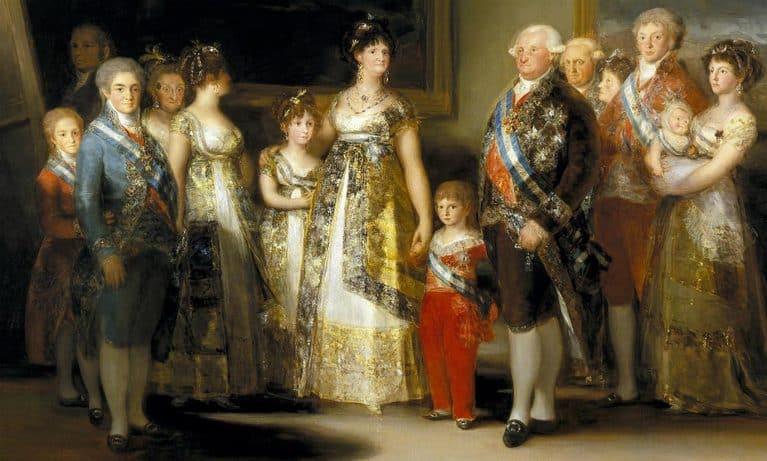
His royal portraits demonstrate an extraordinary ability to observe individual character. Rather than presenting every sitter as an idealized embodiment of authority, Goya often emphasized physical presence, personal expression, clothing, and the complicated relationship between appearance and status.
His celebrated The Family of Charles IV exemplifies this approach. Although the painting fulfills the conventions of a royal family portrait, its direct characterization has encouraged viewers to examine the personalities and power relationships within the royal household.
For further context, the National Gallery’s overview of Goya discusses his development from court painter to an artist associated with the darker currents of Romanticism.
3. Illness, Deafness, and a Changing Artistic Vision
A severe illness in the early 1790s left Goya permanently deaf. Although the precise medical cause remains uncertain, the experience marked a significant turning point in his life.
His artistic interests increasingly encompassed subjects that extended beyond conventional portraiture and decorative commissions. He explored fantasy, irrational behavior, social prejudice, superstition, and the contradictions of human nature.
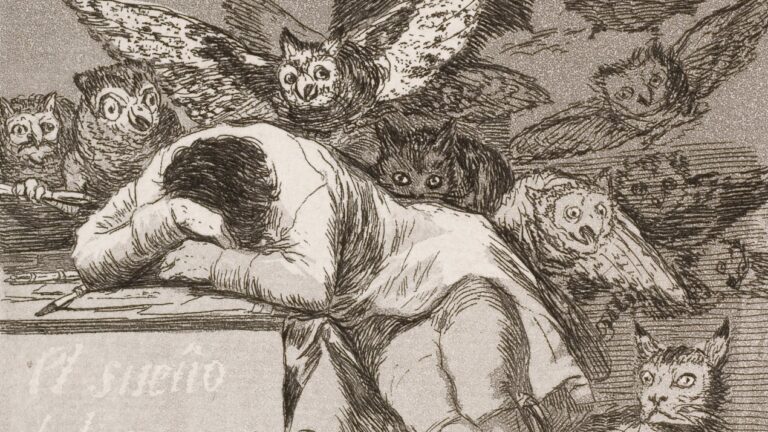
One of the most important expressions of this critical perspective was Los Caprichos, a series of prints published in 1799. Through satire and unsettling imagery, Goya examined the customs and institutions of his society.
The series is particularly significant because it demonstrates how printmaking enabled him to communicate ideas beyond the confines of individual commissioned paintings. Rather than merely recording what he observed, he questioned the beliefs and behaviors that shaped public life.
Moreover, his use of exaggeration, shadow, and ambiguous symbolism gave these works a psychological intensity that distinguished them from much conventional eighteenth-century art.
4. The Peninsular War and the Horrors of Political Violence
The French invasion of Spain in 1808 transformed the country and profoundly affected Goya’s artistic vision. The conflict, part of the wider Napoleonic Wars, brought occupation, resistance, repression, and widespread suffering.
Goya’s response was neither a simple celebration of military victory nor an uncomplicated expression of national pride. Instead, he confronted the brutality experienced by ordinary people caught between opposing forces.
His print series The Disasters of War, created during and after the conflict, presents executions, famine, mutilation, and the suffering of civilians. These images resist the heroic conventions traditionally associated with military art.
In this respect, Goya’s work anticipates later artistic investigations of war as a human catastrophe rather than a spectacle of glory.
The Second of May 1808 and The Third of May 1808
In 1814, Goya produced two major paintings commemorating the Madrid uprising against French occupation and the subsequent repression.
The Second of May 1808 depicts the chaotic violence of the uprising. Its crowded composition, forceful movement, and intense contrasts communicate the confusion of urban combat.
By contrast, The Third of May 1808 focuses on the execution of Spanish civilians by French soldiers. A central figure in a white shirt stands illuminated before the firing squad, his open arms suggesting both vulnerability and defiance. The soldiers, arranged in a rigid formation, appear almost anonymous, emphasizing the impersonal machinery of violence.
Rather than glorifying the victors, Goya directs attention toward the suffering of the condemned. The result is one of the most influential antiwar images in Western art.
The Museo del Prado’s Goya collection provides additional information about these paintings and their historical context.
5. The Black Paintings: Goya’s Darkest Artistic Achievement
During the final years of his life in Spain, Goya created a group of deeply unsettling works that became known as the Black Paintings. He painted these compositions directly onto the walls of his country house, the Quinta del Sordo, which he acquired in 1819.
The paintings include disturbing figures, distorted bodies, mysterious gatherings, and scenes associated with violence, fear, and the fragility of human existence. Among the best-known works is Saturn Devouring His Son, a terrifying interpretation of the mythological figure Saturn consuming one of his children.
The painting abandons the balanced idealization associated with classical mythology. Instead, Goya presents a monstrous figure whose expression and physical intensity evoke panic and brutality.
Other works in the series, including The Dog and Witches’ Sabbath, offer similarly ambiguous visions. Their meanings remain open to interpretation, and their emotional force often exceeds any single explanation.
Why Are the Black Paintings Important?
The Black Paintings represent a radical departure from the conventions of official art. Their restricted palette, energetic brushwork, and psychologically charged imagery suggest an artist less concerned with public approval than with confronting disturbing questions about humanity.
The paintings were originally murals in Goya’s private residence. They were transferred to canvas in the nineteenth century and eventually entered the collection of the Museo del Prado.
The museum’s scholarly overview of the Black Paintings explains their history, original setting, and subsequent transfer.
Their expressive distortions and emotional intensity have led many art historians to connect Goya’s late work with developments that later became important to modern art, including Expressionism. Such connections should not obscure the paintings’ historical setting; rather, they demonstrate how Goya’s visual experiments continued to resonate beyond his own century.
6. Francisco Goya’s Final Years in Bordeaux: The Last Chapter of His Biography
In the final chapter of the Francisco Goya biography, exile shaped everything. In 1824, Goya left Spain and settled in Bordeaux, France, amid political tensions under Ferdinand VII. His departure reflected the difficult circumstances facing those who opposed the restoration of absolutist rule.
Although he was approaching the end of his life, Goya continued to experiment. He explored lithography, developed new graphic works, and produced drawings that retained the sharp observation and imaginative freedom of his earlier career.
His final period illustrates the persistence of artistic curiosity despite age, illness, political displacement, and personal hardship.
Goya died in Bordeaux on April 16, 1828, at the age of eighty-two. His career had encompassed royal commissions, social satire, historical painting, graphic experimentation, and intensely personal images that challenged conventional expectations.
7. Francisco Goya’s Legacy in Modern Art: Why His Biography Still Matters
For readers of any Francisco Goya biography, one point stands out. His importance lies partly in his ability to move between different artistic roles. He was a court painter, a portraitist, a satirist, a chronicler of war, and an investigator of psychological darkness.
His works reveal how artistic representation can question rather than merely reinforce political authority. They also demonstrate that scenes of violence and suffering can possess historical significance without glorifying the forces responsible for them.
Furthermore, Goya’s willingness to depict irrationality, fear, and moral ambiguity helped expand the expressive possibilities of European painting and printmaking.
His influence on later artists cannot be reduced to a single movement. Instead, his legacy emerges through a continuing interest in the relationship between imagination and reality, public power and private experience, and beauty and horror.
For these reasons, Goya remains a central figure in discussions of the transition from eighteenth-century artistic traditions to the more subjective and experimental approaches associated with modern art.
Conclusion: What Francisco Goya’s Biography Reveals About an Artist Beyond His Century
As this Francisco Goya biography shows, the artist’s journey reflects the turbulent history of Spain and the wider transformations of Europe. From his early career in Zaragoza to his work for the Spanish monarchy, from his disturbing depictions of war to the extraordinary Black Paintings, he continually expanded the subjects and emotions that art could address.
Tim McNeese’s Francisco Goya provides a biographical framework for understanding this development. Read alongside museum scholarship, it helps illuminate the historical circumstances that shaped the artist’s career and the enduring importance of his work.
Ultimately, Goya’s achievement lies in his refusal to offer easy answers. His art exposes the contradictions of power, the vulnerability of ordinary people, and the unsettling complexity of the human imagination. That combination of historical insight and psychological intensity continues to make his work relevant to contemporary audiences.
Bibliography
- McNeese, Tim. Francisco Goya. The Great Hispanic Heritage. New York: Chelsea House Publications, 2008.
- Baticle, Jeannine. Goya: Painter of Terrible Splendor. New York: Harry N. Abrams, 1994.
- Hughes, Robert. Goya. New York: Alfred A. Knopf, 2003.
- Tomlinson, Janis. Francisco Goya y Lucientes, 1746–1828. London: Phaidon Press, 1994.
- Museo Nacional del Prado. Francisco de Goya y Lucientes: Artist Biography and Collection.
- Museo Nacional del Prado. The Black Paintings.
- National Gallery, London. Francisco de Goya.
About the Author