Peter Paul Rubens (1577–1640) stands among the most important artists in the history of European Baroque painting. His works bring together dramatic movement, monumental figures, vivid colour, and an extraordinary range of intellectual references. Yet his mythological paintings cannot be fully understood as purely visual achievements. Rubens possessed a profound knowledge of classical history, Greek and Roman mythology, ancient literature, and iconography, and he transformed this knowledge of antiquity into sophisticated visual narratives.
Rubens did not regard the ancient world simply as a remote historical period. Instead, he drew upon ancient stories, literary sources, and sculptural models to create images capable of conveying moral, philosophical, political, and emotional ideas. His paintings thus became a meeting point between the world of antiquity and seventeenth-century European culture.
Rubens and the Classical World
Rubens received an unusually comprehensive humanist education for a painter. He studied classical languages and ancient history, and his subsequent travels in Italy brought him into direct contact with Greco-Roman art. His years in Italy, particularly between 1600 and 1608, proved decisive, exposing him to ancient sculpture, Renaissance painting, and the artistic culture of Rome. [1]
More importantly, Rubens did not regard ancient art simply as a repository of ready-made motifs. He made numerous drawings after ancient sculptures, gems, cameos, and other works of art. The Metropolitan Museum of Art notes that Rubens advocated a profound knowledge of ancient sculpture and its selective imitation, ideas he discussed in his De Imitatione Statuarum. [1]
His engagement with antiquity therefore went far beyond borrowing classical motifs. He studied the human body, gesture, movement, costume, and the visual language of representation through ancient models.
The Ancient Texts Behind Rubens’s Mythological Paintings
Rubens’s knowledge of classical literature also played an important role in his choice of subjects. The Getty Research Institute notes that Rubens read classical texts in their original languages, including Ovid’s Metamorphoses in Latin and Plutarch’s Parallel Lives in Greek. [2]
His mythological paintings consequently contain literary references that educated viewers of his time would have been expected to recognize. Rubens had the remarkable ability to transform a brief episode from a literary source into an expansive and complex visual narrative.
The Fall of Phaeton, for example, is based on the account in Ovid’s Metamorphoses. Rubens depicts the moment when Phaeton’s disastrous journey comes to an end through Jupiter’s intervention. The painting connects the mythological narrative with the disruption of cosmic order, the changing of the seasons, and the destructive consequences of uncontrolled ambition. [3]
Understanding Ovid’s account, therefore, fundamentally enriches our reading of the painting.
Mythology Is More Than Visual Spectacle
At first glance, Rubens’s mythological scenes may appear to celebrate physical beauty, movement, sensuality, and dramatic action. Yet the intellectual structure of these works extends far beyond visual spectacle.
The Getty Research Institute observes that Rubens used mythology to explore themes such as nature, abundance, love, transformation, and human emotion. He also endowed mythological figures with recognizable emotional qualities, transforming ancient gods and heroes into psychologically compelling characters. [2]
For Rubens, mythology thus functioned as a flexible visual language. A myth could simultaneously evoke the literary traditions of antiquity and express ideas that resonated with seventeenth-century audiences.
History and Moral Meaning
Rubens also drew extensively upon ancient history. His Decius Mus series offers a particularly revealing example of how historical narrative could carry philosophical and ethical meaning.
In Decius Mus Addressing the Legions, Rubens incorporated Roman military standards, armour, clothing, and other historical details. The National Gallery of Art particularly associates the work with ideas of Stoic virtue, determination, and nobility. Rubens’s engagement with the writings of Justus Lipsius is also significant in this context. [4]
Rubens was therefore not simply attempting to reconstruct ancient Rome. He selected historical details in order to reinforce the ethical force of the narrative.
Iconography and the Language of Symbols
Iconography is essential to an understanding of Rubens’s classical subjects. His paintings frequently combine literary narratives with recognizable attributes, gestures, costumes, animals, and symbolic figures.
In The Fall of Phaeton, for instance, Rubens includes winged female figures representing the Hours or the seasons. Their movements convey the disruption of cosmic order brought about by Phaeton’s reckless actions. [3]
Likewise, in Decius Mus Addressing the Legions, Roman military symbols strengthen the historical and moral character of the scene. Elements such as the eagle, the Aquila, the open hand, and the SPQR standard associate the figures with the political and military institutions of the Roman Republic. [4]
The individual objects within Rubens’s paintings therefore carry meanings that extend well beyond their purely visual function.
Rubens and Ancient Sculpture
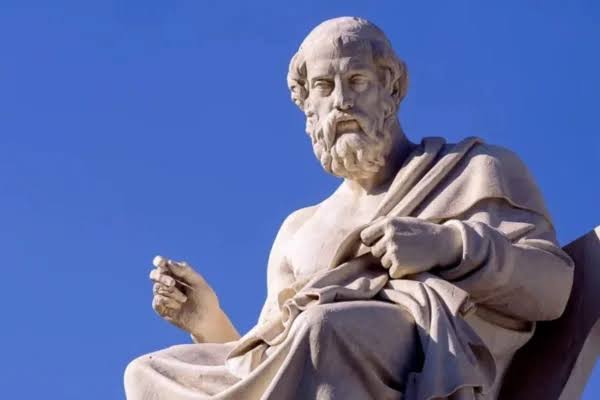
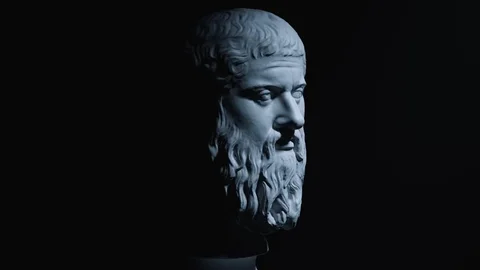
Rubens’s fascination with ancient sculpture profoundly shaped his treatment of the human body. During his years in Italy, he studied ancient sculptures intensively and produced numerous drawings after them. He admired their idealised forms and regarded them as important sources for his own painting. [5]
Yet Rubens did not simply copy classical sculpture. Instead, he transformed its poses, anatomical structures, and expressive possibilities according to the demands of Baroque composition.
The result is a distinctive synthesis of classical physical ideals and intense movement. Muscles twist, bodies turn, arms extend, and garments respond dramatically to the force of movement. Through this synthesis, Rubens reinterpreted classical antiquity through the dynamic language of the Baroque.
The Feast of Acheloüs: An Encyclopedic Vision of Antiquity
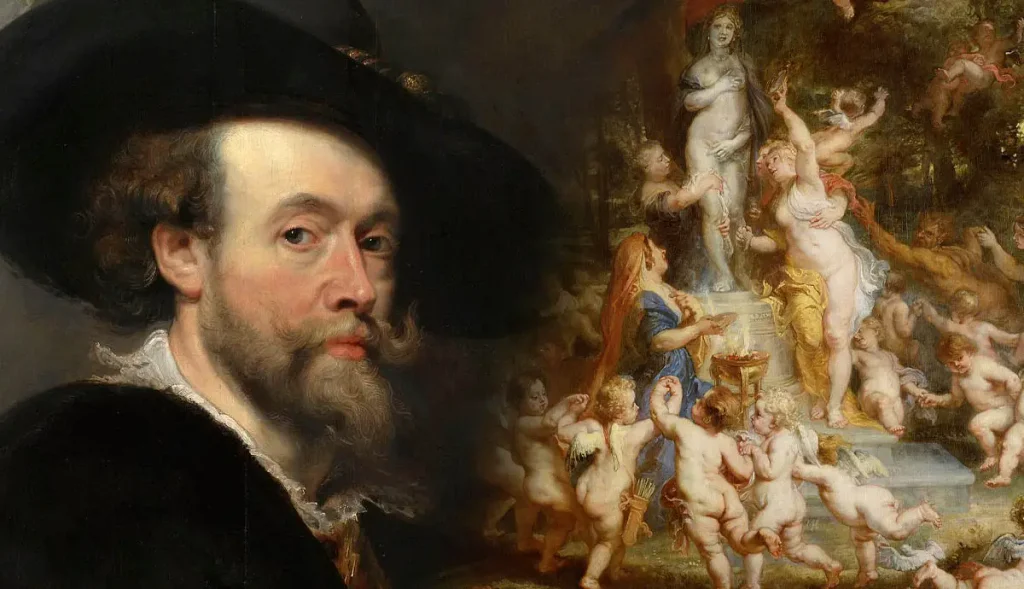
The Feast of Acheloüs offers another compelling example. Rubens worked on the painting with Jan Brueghel the Elder around 1615. While Rubens designed and painted the figures, Brueghel contributed the landscape and still-life elements. [6]
The composition brings together Greek mythology, ancient sculpture, the human body, landscape, and the abundance of nature within a single visual universe. The Metropolitan Museum of Art describes the work as an encyclopedic display created for an elite collector. [6]
In this sense, Rubens transformed classical mythology into a broad intellectual and visual system—one in which mythology, art, nature, and human experience are brought into dialogue.
Classical Learning and the Baroque Imagination
Rubens’s approach to antiquity demonstrates that Baroque art did not simply reject classical ideals. Instead, Rubens fused his classical education with the dynamism of Baroque visual culture.
He took stories from antiquity and transformed them through dramatic diagonals, energetic gestures, monumental bodies, and powerful contrasts of light and colour. The National Gallery of Art characterises Rubens’s compositions through their movement and emotional intensity. [4]
Yet beneath this energetic surface, the classical foundation remains firmly present. Ancient literature supplied the narratives; sculpture provided models for the human body; and iconography supplied the symbolic structures through which those narratives could be understood.
Rubens’s art is therefore not simply an interpretation of antiquity, nor is it merely an expression of the Baroque. It is a dialogue between the two: a continual transformation of the classical past through the imagination of one of Europe’s great Baroque painters.
References
- Metropolitan Museum of Art — Bust of Pseudo-Seneca
- Getty Research Institute — Rubens: Picturing Antiquity — Rubens and Mythology
- National Gallery of Art — The Fall of Phaeton
- National Gallery of Art — Decius Mus Addressing the Legions
- National Gallery of Art — Classical Mythology in European Art
- Metropolitan Museum of Art — The Feast of Acheloüs
- National Gallery of Art — Agrippina and Germanicus
Related reading
- Rembrandt’s The Night Watch: Five Surprising Facts Behind His Most Famous Painting
- Picasso, African and Oceanian Art: Les Demoiselles d’Avignon in the Context of Colonialism
- Francisco Goya: From Court Painter to Chronicler of War and Violence
- Goya’s Black Paintings: The Dark World of the Quinta del Sordo
About the Author