Raphael (1483–1520) occupies a central position in High Renaissance painting. Although audiences often associate him with Madonnas, religious compositions, and monumental frescoes, portraiture formed an important part of his artistic career. In fact, Raphael portraits offer some of the clearest insights into the High Renaissance view of the individual. Raphael approached portraiture not simply as an exercise in physical likeness, but as a sophisticated way to represent identity, social position, character, and psychological presence.
Moreover, his portraits reveal how Renaissance artists increasingly treated the individual as a subject worthy of close visual and intellectual attention. Raphael combined precise observation with carefully controlled composition. Consequently, his sitters appear both recognizable and socially meaningful.
Raphael Portraits and the Renaissance Context
During the Renaissance, portraiture gained new importance as wealthy families, political figures, religious leaders, and intellectuals sought visual representations of themselves. Raphael responded to this culture with portraits that balanced individual appearance and social identity.
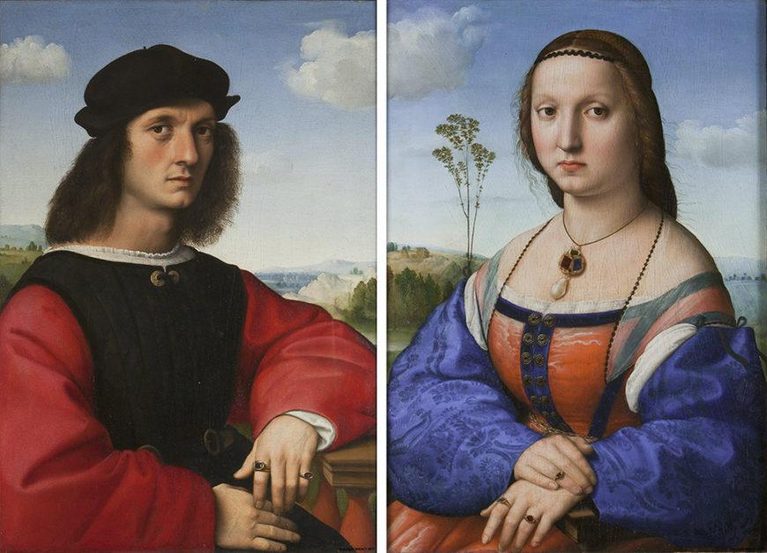
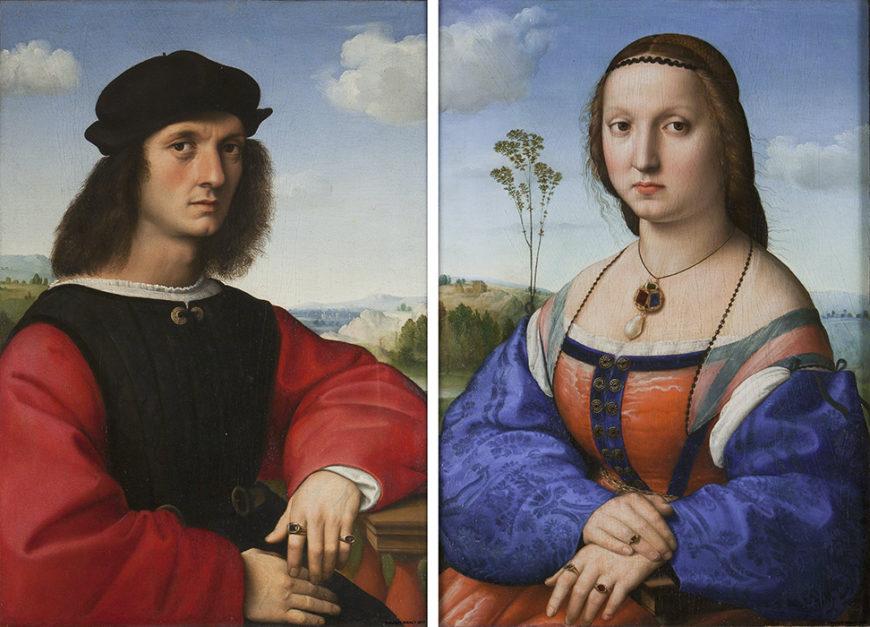
His approach differed from the highly atmospheric method associated with Leonardo da Vinci. The Uffizi notes that Raphael’s portraits of Agnolo and Maddalena Doni employ clearer forms and colors, while the faces, fabrics, and jewelry receive detailed attention. (Gallerie degli Uffizi)
Therefore, Raphael did not simply reproduce a person’s physical appearance. Instead, he constructed an image in which clothing, posture, objects, and facial expression contributed to the sitter’s identity.
The Portrait of Agnolo and Maddalena Doni
Raphael’s portraits of Agnolo Doni and Maddalena Doni, now in the Uffizi Galleries, demonstrate this method particularly well.
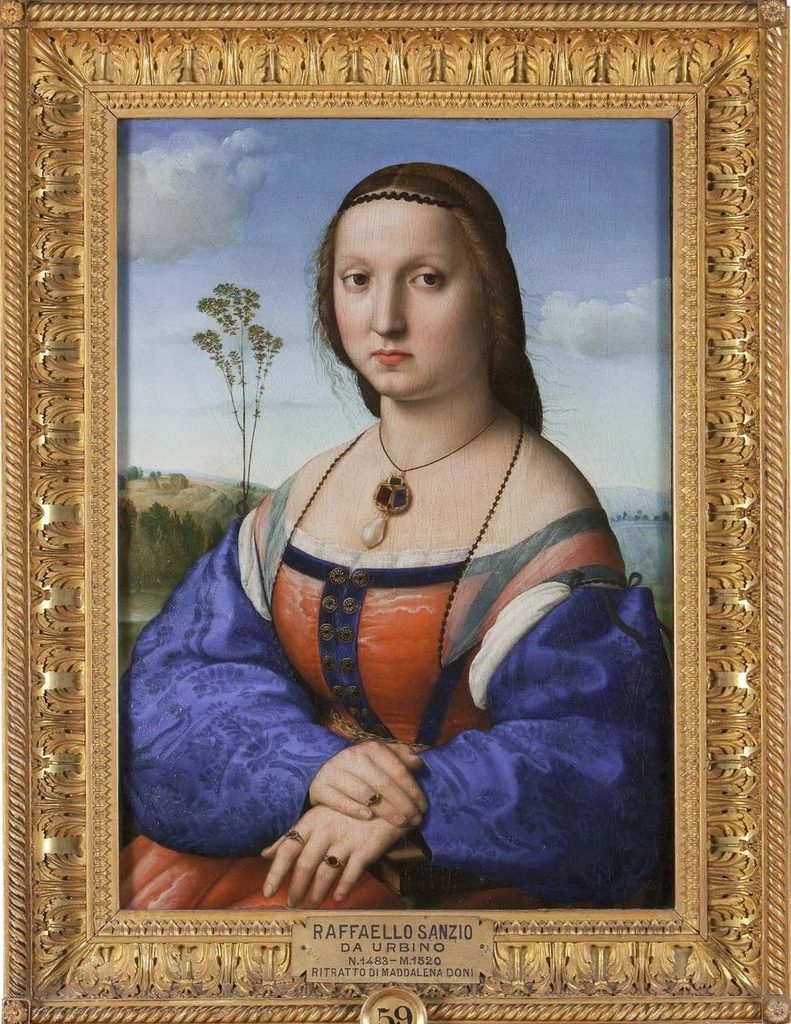

Raphael places the figures prominently in the foreground and gives their faces considerable descriptive attention. Furthermore, the clothing and jewelry communicate information about wealth, taste, and social position.
Maddalena Doni’s pendant provides a particularly interesting example. The jewel contains a unicorn-shaped mount, precious stones, and a pearl. According to the Uffizi, these elements carried symbolic associations with marital fidelity and virginal purity. (Gallerie degli Uffizi)
Thus, the portrait communicates more than personal appearance. It also constructs a visual language of marriage, status, wealth, and virtue.
Pope Julius II: Portraiture and Psychological Presence
Raphael’s Portrait of Pope Julius II provides an even more striking example of his approach to individual identity.
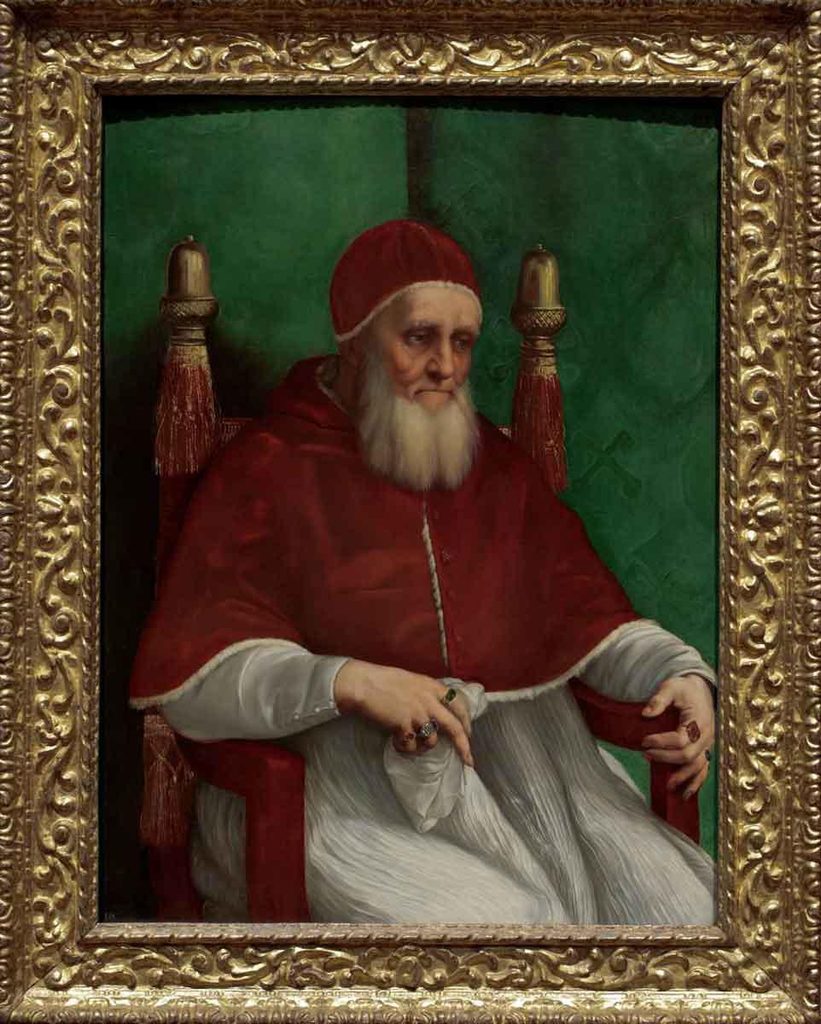
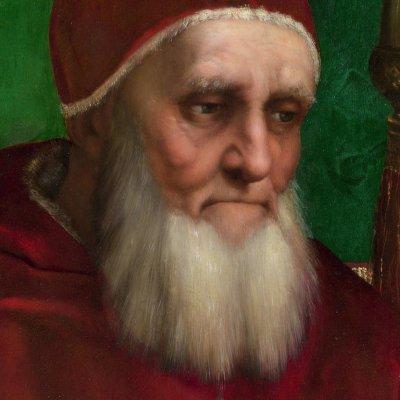
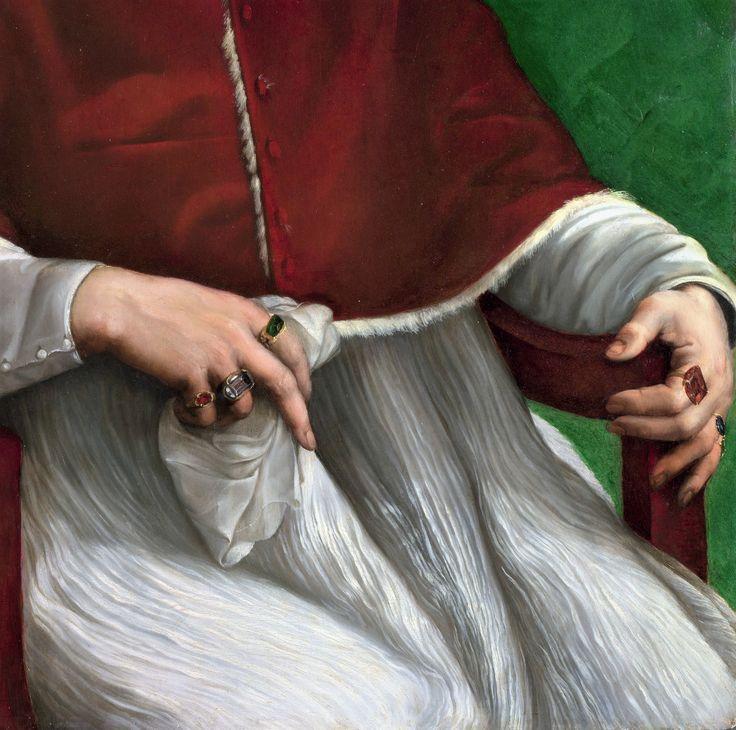
Raphael depicts Julius II as an elderly and visibly tired man rather than presenting him simply as an abstract symbol of papal authority. His expression conveys reflection and physical strain. At the same time, his clothing, chair, and position communicate his exceptional social status.
The National Gallery dates the painting to around 1511 and identifies the work as an oil painting on poplar. The museum also emphasizes the extraordinary intimacy of Raphael’s representation of the Pope. (Ulusal Galeri)
Furthermore, the two golden acorns on the chair refer to the della Rovere family name because rovere means “oak” in Italian. Raphael therefore integrates heraldic symbolism into an otherwise psychologically attentive portrait. (Ulusal Galeri)
How Raphael Portraits Turned Status into Visual Language
One of Raphael’s greatest achievements in portraiture lies in his ability to communicate social identity without sacrificing individuality. Raphael portraits balance the private self and the public role. In this respect, they echo the question of recognition discussed in Hegel’s master–slave dialectic.
A sitter’s clothing, jewelry, posture, furniture, and surrounding space all contribute to the meaning of the image. Consequently, viewers can read the portrait on several levels.
First, they can recognize the individual. Second, they can identify the person’s social position. Finally, they can interpret the personality that Raphael constructs through expression and pose.
In this sense, Raphael transformed portraiture into a sophisticated visual system.
Baldassare Castiglione and the Ideal Renaissance Gentleman
Raphael’s portrait of Baldassare Castiglione offers another important example.
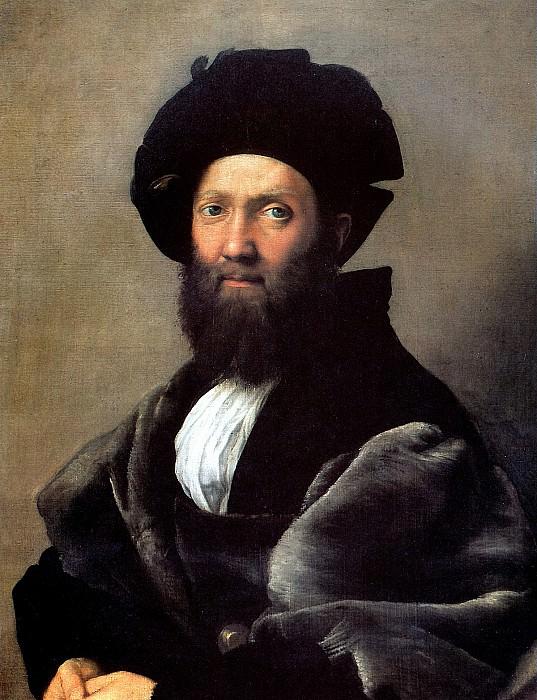
Castiglione was a diplomat, writer, and humanist who became famous for The Book of the Courtier. His portrait therefore carries particular significance because the sitter himself represented Renaissance ideals of education, refinement, and courtly behavior.
Raphael presents Castiglione with restrained elegance rather than excessive ornament. The dark clothing and controlled pose create an image of intellectual and social refinement.
Moreover, the portrait avoids the theatrical display that viewers might expect from a powerful political figure. Instead, Raphael emphasizes composure and self-control.
The Face as a Psychological Space
Raphael’s portraits demonstrate an important development in Renaissance art: the face could communicate more than physical identity.
The artist carefully controls gaze, expression, posture, and head position. As a result, the viewer encounters a person who appears psychologically present rather than merely represented.
This quality becomes particularly evident in the portrait of Julius II. The Pope’s expression does not simply communicate authority. Instead, it suggests fatigue, contemplation, and vulnerability. The National Gallery describes the work as an unusually intimate portrayal of the elderly Pope. (Ulusal Galeri)
Therefore, Raphael’s realism does not depend exclusively on anatomical accuracy. Psychological observation also forms a crucial part of his realism.
Self-Portrait and Artistic Identity
Raphael also turned portraiture toward himself.
His self-portrait in the Uffizi, dated to 1506, presents the young artist with a calm expression and distinctive Renaissance clothing. The Uffizi compares this image with Raphael’s self-representation in The School of Athens and notes the similarities in facial features and expression. (Gallerie degli Uffizi)
This connection carries particular importance. Raphael did not merely paint powerful patrons and wealthy individuals; he also participated in the Renaissance tradition of presenting the artist as an identifiable intellectual personality.
Thus, portraiture became a means through which Raphael could construct artistic identity as well as personal identity.
Raphael Portraits and Leonardo’s Influence
Leonardo da Vinci’s influence appears particularly clearly in Raphael’s early portraiture.
However, Raphael did not simply reproduce Leonardo’s sfumato. The Uffizi’s analysis of the Doni portraits emphasizes Raphael’s preference for clearer forms, stronger spatial organization, and more explicit descriptive detail. (Gallerie degli Uffizi)
Therefore, Raphael transformed Leonardo’s innovations rather than merely copying them.
This distinction matters because Renaissance artists frequently learned through observation, adaptation, and competition. In Raphael’s case, such influences ultimately contributed to an individual portrait style.
The Influence of the Portrait of Julius II
Raphael’s portrait of Julius II had a particularly significant later influence.
The National Gallery explains that Raphael’s three-quarter-length format became an influential model for ecclesiastical portraiture for approximately two centuries. Artists including Titian, El Greco, Velázquez, Domenichino, Reni, and Guercino adopted aspects of the formula. (Ulusal Galeri)
Furthermore, the National Gallery’s scholarly catalogue connects Raphael’s composition to later ruler and “state” portraits. (Ulusal Galeri)
Consequently, Raphael’s portraiture influenced not only individual artists but also the broader visual language of European political representation.
Raphael Portraits: Realism Beyond Physical Likeness
Raphael’s portraits reveal that Renaissance realism involved more than copying the visible surface of a human face.
Instead, Raphael combined several elements:
- facial likeness
- psychological expression
- social status
- clothing and material culture
- symbolic objects
- body posture
- spatial composition
For this reason, his portraits remain important to art historians who study the relationship between appearance and identity. Ultimately, Raphael portraits show that realism can serve identity as much as appearance.
In fact, Raphael’s achievement lies partly in his ability to make these different elements function together without overwhelming the individual sitter.
Bibliography
- National Gallery, London. “Raphael: National Gallery Catalogues: The Sixteenth Century Italian Paintings, Volume 4.” Carol Plazzotta and Tom Henry, 2022. National Gallery — Raphael Catalogue
- National Gallery, London. “Raphael | Pope Julius II.” Collection catalogue, NG27. National Gallery — Portrait of Pope Julius II
- Uffizi Galleries. “The Portraits of Agnolo and Maddalena Doni by Raphael.” Uffizi Galleries — Doni Portraits
- Uffizi Galleries. “Raphael: Self Portrait.” Uffizi Galleries — Raphael Self-Portrait
- National Gallery, London. “Studying Raphael.” Research and conservation project. National Gallery — Studying Raphael
About the Author